Pumping Tracker: Logging Sessions, Volumes and Storage
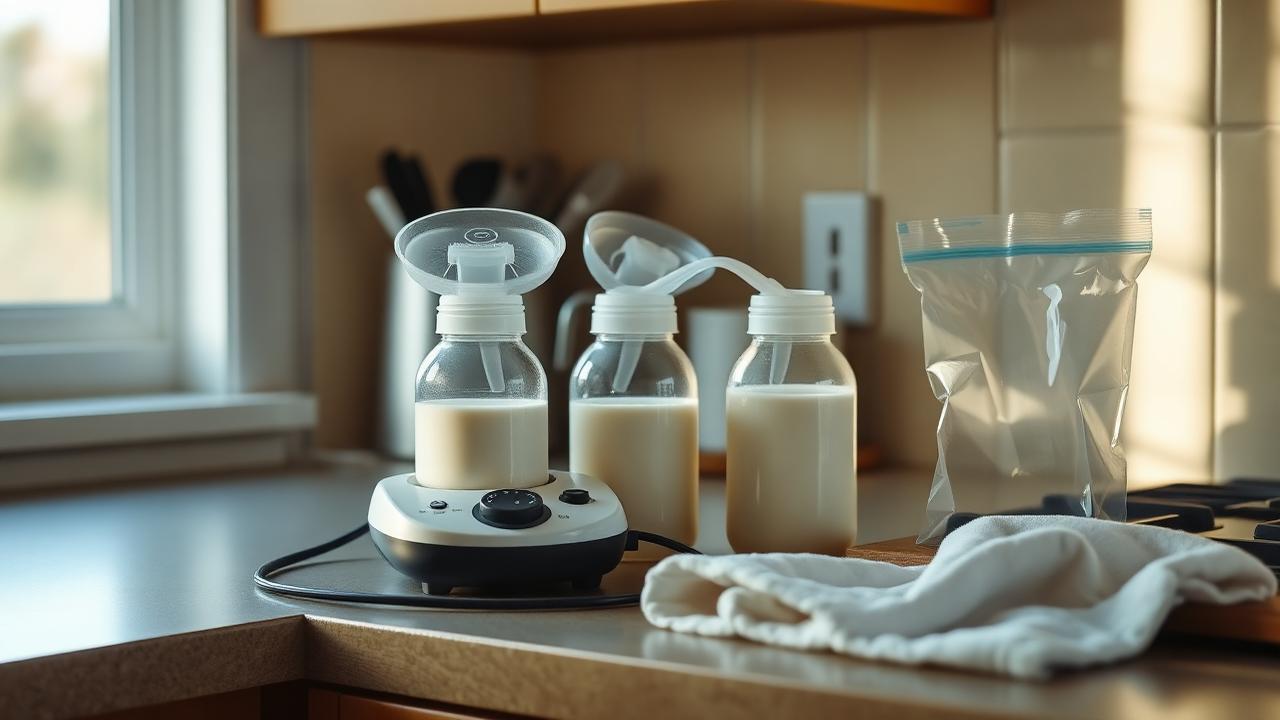
Log pumping sessions, volumes, and your milk stash to see supply patterns, manage your freezer inventory, and feel confident in your expressing journey.
If you’re expressing breast milk, you know it’s a labour of love. Between the pump parts, the washing and sterilising, the labelling and the storing, there is a lot to manage. It can feel like a full-time job on top of caring for your baby. In the blur of those early months, trying to remember how much you pumped this morning, let alone yesterday, can feel impossible. This is where a little organisation can bring a lot of calm.
Using a tool to log your pumping sessions isn’t about adding another task to your plate. It’s about lightening your mental load. When you have a clear record of your output, you can stop worrying and start seeing patterns. You gain a tangible sense of your supply, an accurate inventory of your freezer stash, and valuable insights that can help you reach your personal feeding goals, whatever they may be.
Whether you’re exclusively pumping, building a supply for returning to work, or just expressing occasionally for a night out, a dedicated breast pumping tracker transforms chaos into clarity. It provides the data you need to feel confident in the incredible work you are doing to nourish your baby.
Why this matters
As a Maternal Health Nurse, I see many parents juggle the logistics of expressing. Keeping track of your pumping journey offers practical benefits that go far beyond just satisfying curiosity.
It gives you a clear view of your milk supply
Your milk supply isn't static; it fluctuates based on hormones, stress, hydration, and how often milk is removed. A pumping tracker helps you see the rhythm of your own body. You might notice you pump more in the morning, or see a slight dip just before your period returns. By logging each session, you can zoom out from a single 'disappointing' pump and look at your daily or weekly averages. This bigger picture is often far more reassuring and provides a more accurate understanding of your supply over time.
It simplifies milk storage and inventory
Managing a stash of expressed breast milk can be a challenge. You need to know what you have, where it is, and when it needs to be used by. A tracker acts as your digital inventory manager. By logging whether each bottle or bag goes into the fridge or freezer, you create a clear record. This helps you follow the 'first in, first out' (FIFO) rule, ensuring you always use the oldest milk first and minimise waste. No more finding a mystery bag of milk at the back of the freezer and wondering how old it is.
It helps you make informed feeding decisions
When you know how much milk you typically express, you can plan ahead with confidence. If you're preparing bottles for your partner or another caregiver to use while you're away, your pumping log gives you a realistic idea of what to expect. Combining this information with a Baby Feeding Tracker gives you a complete picture of milk in versus milk out, helping you ensure your baby's needs are being met, especially if you're combination feeding.
It aids in problem-solving
If you experience a dip in supply, a detailed log is an invaluable tool. You and your lactation consultant (IBCLC) or maternal health nurse can look back at the data to identify potential causes. Did you accidentally drop a pumping session? Have your pumping durations become shorter? Are you more stressed than usual? The notes in your tracker can provide clues that help you get your supply back on track.
It provides motivation and validation
Pumping is hard work. On tough days, it can be incredibly validating to look at a log that shows, in black and white, the litres of milk you have produced for your baby. It’s a concrete record of your dedication and effort. This visual confirmation can provide a powerful boost of motivation to keep going, celebrating every precious millilitre.
How the Pumping Tracker works
The Parenting Hub Global Pumping Tracker is designed to be simple, intuitive, and genuinely helpful. Think of it as a smart, digital diary for your expressing journey, capturing all the essential information without overwhelming you.
At its core, the tracker is a place to log three key pieces of information for every session: the time and duration you pumped, the volume of milk you collected, and where you stored it. When you start a session, a timer begins, which you can use to automatically capture the duration. Afterwards, you enter the total volume and tag it for the 'Fridge' or 'Freezer'.
The tracker then does the heavy lifting for you. It automatically calculates your total output for the day, the week, and the month, presenting it in easy-to-read charts. This allows you to see trends at a glance. The 'Stash' feature provides a real-time inventory of your stored milk, organised by date, so you can quickly see how much you have available. When you use milk to feed your baby, you simply mark it as 'Used', and your inventory updates automatically.
Because it’s part of the integrated Parenting Hub Pro suite, the data doesn't exist in a silo. Your pumping information sits alongside your baby's data in the Nappy Tracker and Baby Growth Tracker. This holistic view is crucial, because pumping output is only one part of the story. The ultimate signs of a well-fed baby are consistent weight gain and plenty of wet and dirty nappies.
Step-by-step guide
Getting started with the Pumping Tracker is straightforward. Following these steps will help you build a comprehensive and useful log of your expressing journey.
- Start a New Session. In the tracker, tap the ‘Start New Pump’ button. This will immediately begin a timer, which is perfect for tracking your session in real-time. If you prefer to log after the fact, you can manually enter the times later.
- Log the Duration and Details. Once you've finished pumping, stop the timer or enter the total duration. You can also add helpful details like whether you used a single or double pump, which can influence session length and output.
- Enter the Volume. Measure the milk you've collected from both breasts. Enter the total amount in the 'Total Volume' field. For more detailed tracking, you can use the 'Left' and 'Right' fields. This is especially useful if you're trying to increase supply on one side or notice a significant difference between them.
- Assign a Storage Location. Select where you're storing the milk: 'Fridge' for milk you plan to use in the next few days, or 'Freezer' for your long-term stash. The tracker uses this information to manage your inventory and help you use the oldest milk first.
- Add a Note (Optional but Recommended). This is your space for context. Did this session feel different? Were you power pumping? Did you feel particularly full or empty? Notes like “First pump of the day,” “Felt stressed,” or “After a long sleep” can be invaluable for understanding fluctuations in your output later on.
- Save Your Session. Tap 'Save'. Your session is now logged. The tracker will automatically add the volume to your daily totals and update your charts.
- Manage Your Stash. Navigate to the 'Stash' view. Here, you’ll see a list of all your stored milk, neatly organised with the date it was pumped. This makes it easy to see what you need to use next.
- Update When Milk is Used. When you take a bag or bottle of milk from your stash to feed your baby, find it in your stash list and mark it as ‘Used’. This is a crucial step to keep your inventory accurate and avoid thinking you have more milk on hand than you actually do.
Common mistakes (and how to fix them)
Using a tracker is helpful, but a few common slip-ups can make it less effective. Here’s what to watch out for and how to course-correct.
Mistake: Forgetting to log sessions consistently
In the whirlwind of new parenthood, it's easy to finish pumping, put the milk away, and completely forget to log it. Inconsistent data makes it hard to see reliable patterns.
The fix: Build a habit of logging a session immediately after you finish, perhaps while your pump parts are soaking. If you do forget, don't worry. Just add the session later with your best estimate for the time and volume. An estimated entry is better for your averages than a missing one.
Mistake: Only tracking the final volume
Just logging “120ml” doesn’t tell the whole story. Was that from a quick 10-minute pump or a long 30-minute session? Without context, the numbers are less meaningful for understanding your supply.
The fix: Always log the duration of your pumping session. Use the notes feature to add context that could influence output, such as time of day, your stress levels, or if you were power pumping. This rich data helps you and any supporting health professional understand the 'why' behind the numbers.
Mistake: Obsessing over every millilitre
It's easy to get fixated on the output of a single session and feel disheartened if it's lower than usual. This can create unnecessary stress, which ironically can inhibit milk flow.
The fix: Remind yourself that fluctuations are completely normal. Your body isn't a machine. Focus on the daily or weekly trends shown in the tracker's charts. Use the data to see the big picture, not to judge yourself for one pump that was less than you hoped for. You can even use a tool like the Daily Routine Tracker to see how your wider schedule of sleep and activity might be impacting things.
Mistake: Not updating your milk inventory
You’ve meticulously logged every millilitre going into the freezer, but you forget to log what’s coming out. This leads to an inaccurate stash count and can cause panic when you realise you have less milk than you thought.
The fix: Make it a rule: when a bag of milk leaves the freezer to be thawed, it gets marked as 'Used' in the tracker immediately. This two-second action keeps your inventory accurate and ensures you have a reliable picture of your reserves.
When to seek professional advice
A breast pumping tracker is a brilliant tool for monitoring, but it’s not a substitute for professional medical advice. As a Maternal Health Nurse, I encourage you to reach out to a GP, midwife, or International Board Certified Lactation Consultant (IBCLC) if you experience any of the following:
- A sudden, significant drop in milk supply. If your output plummets and you can’t link it to a clear reason (like dropping pumping sessions, illness, or the return of your period), it's worth investigating with a professional.
- Pain while pumping. Expressing should not be painful. Discomfort or pain can be a sign of an incorrect flange size, settings that are too high, or an underlying issue like a blocked duct or nipple trauma. An IBCLC can help you troubleshoot and find a comfortable solution.
- Signs of mastitis. If you develop a fever, chills, or body aches, and have a tender, red, hot, or swollen wedge on your breast, contact your GP promptly. These are classic signs of mastitis, which requires medical assessment and management.
- Concerns about your baby's health or intake. Pumping output alone doesn't tell you if your baby is getting enough milk. The most reliable signs are your baby's nappies and weight gain. If the Nappy Tracker shows consistently fewer than 5-6 heavily wet nappies per day for a baby over a week old, or if the Baby Growth Tracker shows your baby is not gaining weight appropriately, seek advice from your maternal health nurse or doctor.
- Blood in your milk. While small amounts of blood can sometimes occur in the early days ('rusty pipe syndrome') and be harmless, it’s always best to have it checked by a healthcare professional to rule out any other causes.
Remember, these tools are here to support you, but your healthcare team is your primary source for guidance and care. Never hesitate to reach out.
Try the free tracker
Ready to bring some calm and clarity to your pumping journey? You can start logging your sessions, volumes, and milk stash right now. Tracking your hard work can be incredibly empowering and helps you feel more in control. Get started with the Parenting Hub Global’s free Pumping Tracker and see the difference it makes.
Related Parenting Hub resources
- Pumping Tracker: Log sessions, volumes, and your milk stash.
- Baby Feeding Tracker: Keep a record of all breastfeeds, bottles, and solids.
- Nappy Tracker: Count wet and dirty nappies to ensure your baby is getting enough milk.
- Baby Growth Tracker: Plot your baby's growth on WHO percentile charts.
- Daily Routine Tracker: Find a gentle rhythm that works for you and your baby.
- Complete Baby Care Guide: Your ultimate resource for navigating life with your new baby.
Related reading: track your baby’s daily routine