Sun Safety for Babies Under 12 Months: An Australian Summer Guide
Australian UV is strong enough to burn a baby’s skin in minutes. Here is how to keep babies under 12 months safe this summer with shade, clothing, hats and timing.
Australia has some of the highest UV levels in the world, and a baby’s skin is thinner and more sensitive than an adult’s. Sunburn can happen in as little as ten minutes on a clear summer day, and babies cannot tell you when they are getting too hot. The good news is that sun safety for little ones is mostly about simple habits that quickly become second nature.
This guide follows the approach recommended by Cancer Council Australia and the SunSmart program, and it is written for the realities of an Australian summer, from beach mornings to backyard afternoons.
Why babies need extra protection
Babies under 12 months have less melanin, the pigment that offers some natural protection from UV radiation. Their skin also absorbs more of what is put on it, which is why the main advice for young babies focuses on physical protection rather than relying on sunscreen. Sun exposure in childhood is strongly linked to skin cancer risk later in life, so the habits you build now genuinely matter.
Babies also regulate their temperature less efficiently than older children. Shade protects against heat as well as UV, which makes it doubly important on hot days.
Check the UV, not the temperature
UV radiation cannot be seen or felt. A cool, cloudy or windy day can still have a high UV index, while a hot evening may have very little. Sun protection is recommended whenever the UV index is 3 or above, which in most of Australia is much of the day for most of the year.
The free SunSmart app and the Bureau of Meteorology both show daily sun protection times for your location. Planning outings for early morning or late afternoon, outside those times, is one of the easiest ways to protect your baby.
Shade is your first line of defence
Keep babies under 12 months in the shade as much as possible. Good options include:
- Dense tree shade or a well-constructed shade structure
- A pram with a sun canopy, extended fully
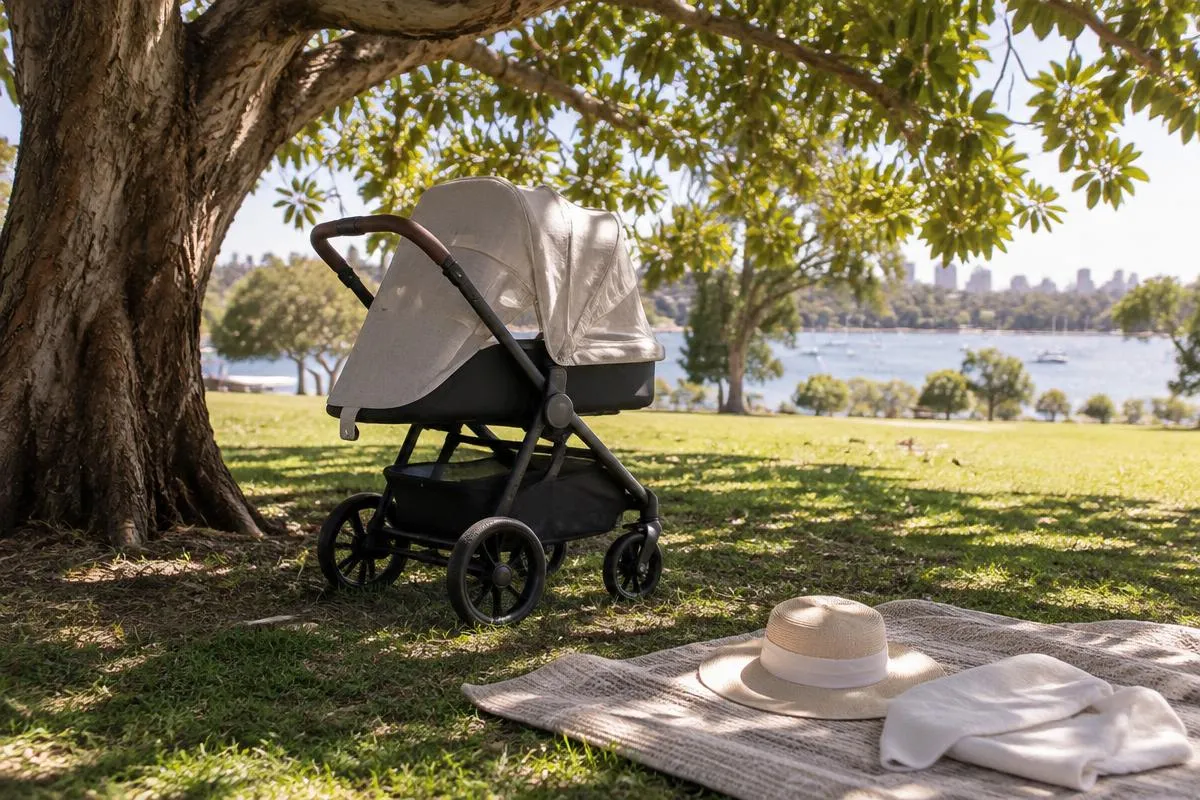
- A breathable, purpose-made pram shade cover that lets air flow freely
Avoid draping a blanket, muslin or towel over the pram. It may look like shade, but it can trap heat quickly and reduce airflow, raising the temperature inside the pram to unsafe levels. Remember that UV reflects off sand, water and concrete, so even shaded babies near these surfaces need clothing and a hat as well.
Clothing and hats
Loose, lightweight clothing that covers as much skin as possible is ideal. Look for closely woven fabrics, and choose long sleeves and long legs where it is comfortable. Many baby garments now carry a UPF rating, with UPF 50+ offering excellent protection.
A broad-brimmed, bucket or legionnaire-style hat protects the face, neck and ears. Babies often pull hats off, so a soft adjustable strap helps, and starting the habit early means hats become routine by toddlerhood. Remove hats and straps whenever your baby is sleeping or unsupervised.
What about sunscreen?
The Australasian College of Dermatologists and Cancer Council advise that widespread regular use of sunscreen is not recommended for babies under six months. Shade, clothing and hats are the main protection. If small areas of skin cannot be covered, a sunscreen formulated for babies or sensitive skin may be used sparingly.
For babies over six months, apply SPF 50+ broad-spectrum, water-resistant sunscreen to exposed skin 20 minutes before going outdoors and reapply every two hours. Test a small patch on the inner arm first to check for a reaction. Sunscreen should always be used alongside other protection, never instead of it.
Keeping cool and hydrated
Shade helps with heat, but on very hot days the safest place for a young baby is often indoors in a cool, well-ventilated room. Breastfed babies may want to feed more often in hot weather, and that is perfectly normal. Formula-fed babies may need extra feeds too. Babies under six months do not usually need water; speak to your child health nurse if you are unsure.
Never leave a baby in a parked car, even for a moment. The temperature inside a car can double within minutes, even with windows down.
When to seek help
Sunburn in a baby should always be taken seriously. See your GP if your baby’s skin is red, hot or blistered after sun exposure. Seek urgent medical care or call 000 if your baby:
- Is unusually drowsy, floppy or difficult to wake
- Has fewer wet nappies, a dry mouth or a sunken fontanelle
- Has a fever, vomiting or is refusing feeds
- Has widespread blistering
For non-urgent advice, Healthdirect (1800 022 222) offers a 24-hour nurse line, and your Maternal Health Nurse is always a great source of support.
A simple sun-safe checklist for outings
Before you head out, a quick mental checklist makes sun protection automatic:
- Check today’s sun protection times on the SunSmart app
- Pack a broad-brimmed hat and a spare in the nappy bag
- Choose loose, long-sleeved clothing in a light, closely woven fabric
- Fit a breathable shade cover to the pram rather than a blanket
- Bring water for yourself and plan a shady spot to feed
For babies over six months, add a baby-friendly SPF 50+ sunscreen for any small patches of skin you cannot cover. Keeping these items together in one pouch means you never have to think twice. ## Building sun-safe habits for life
The routines you start now, checking the UV, reaching for the hat, choosing shade, will carry through toddlerhood and beyond. Children learn by watching, so wearing your own hat and sunglasses makes it feel normal. A little preparation lets you enjoy an Australian summer outdoors with peace of mind.