Toilet Training Stalled? Stool Withholding and How to Reset
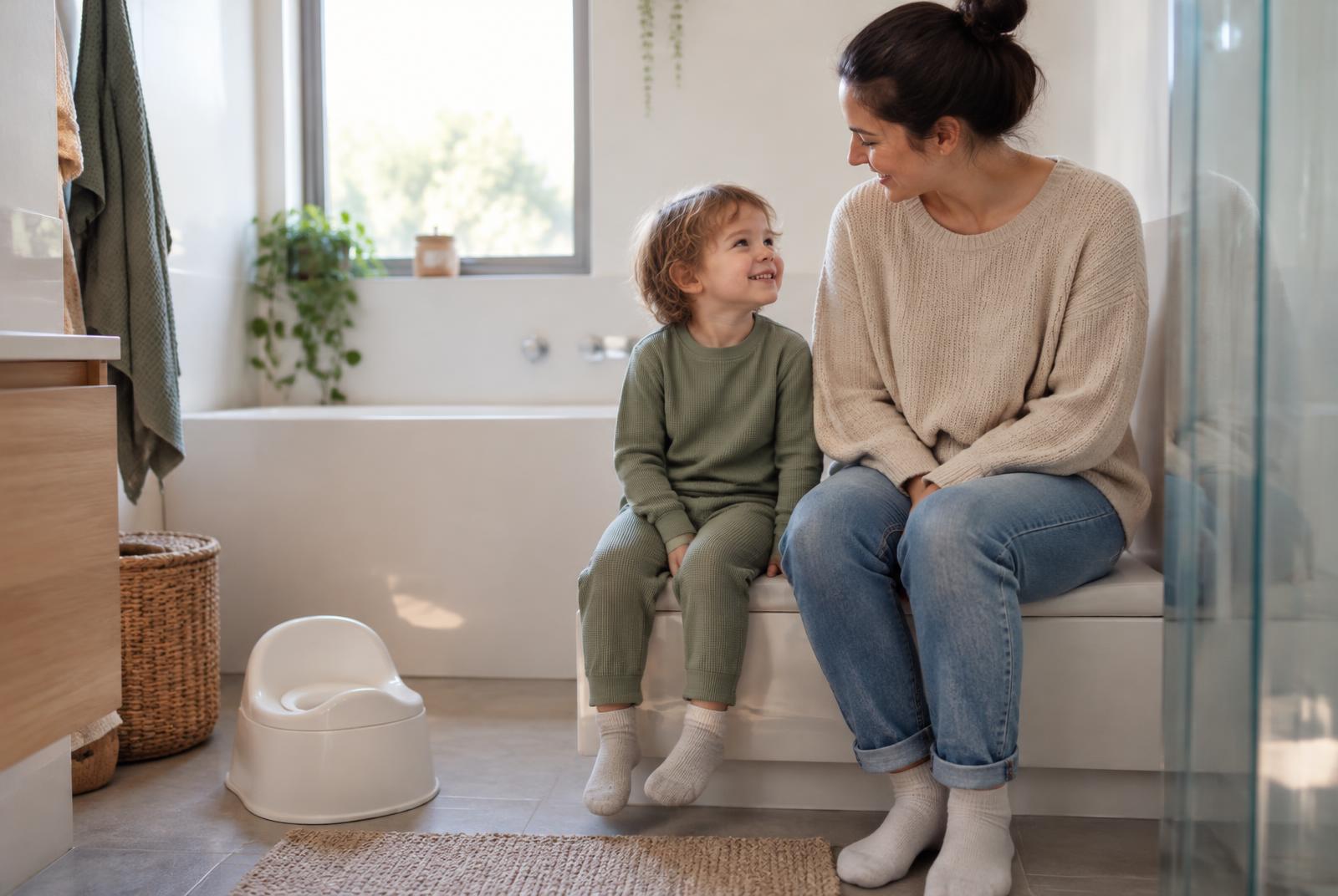
Toilet training often goes well for wees and then stalls with poos. Here is why toddlers hold on, how constipation keeps the cycle going, and gentle ways to reset.
It is very common for toilet training to go well for wees and then stall with poos. Many toddlers start holding on, asking for a nappy to poo in, or hiding to go. The most common reason is that a poo once hurt, so their body learns to hold it in. Holding on makes poos bigger and harder, which hurts more, and the cycle continues. Softening poos, removing pressure and building a calm, regular toilet routine usually breaks the cycle. Constipation that lasts more than a couple of weeks should be checked by your GP.
Why toddlers withhold
- A painful poo. Even one hard, painful poo can create fear.
- Feeling unsafe on the toilet. Dangling feet, a big seat or a loud flush can feel scary.
- Control. Toddlers are discovering independence, and poo is one thing they can decide about.
- Busy play. They do not want to stop, so they ignore the urge.
- Change. A new sibling, starting daycare or moving house can unsettle routines.
Signs your toddler is holding on
- Standing on tiptoes, crossing legs, clenching buttocks or going red in the face while trying not to go.
- Hiding behind furniture when the urge comes.
- Hard, large or pellet-like poos, or going fewer than three times a week.
- Small smears of soft poo in underpants. This can be overflow leaking around a blockage, not a behaviour problem.
- Tummy aches, a poor appetite or grumpiness.
Step one: soften the poo
Your toddler needs to experience poos that do not hurt before the fear can fade.
- Offer water often through the day. Water is the best drink.
- Include fibre: fruit such as pears, prunes, kiwi fruit and berries, vegetables, legumes and wholegrain cereals.
- Keep cow''s milk to around 500 ml a day for toddlers. Large amounts can fill them up and contribute to constipation.
- Encourage active play every day.
- If poos are still hard, see your GP. A stool softener is often recommended and may be needed for several months. Do not stop it as soon as things improve, as relapse is common.
Step two: take the pressure off
Pressure, even gentle reminders every half hour, can make a worried toddler hold on harder.
- Keep your tone relaxed and matter of fact. Avoid showing frustration about accidents.
- If your toddler is very anxious, it is okay to offer a nappy for poos for a while, ideally in the bathroom, while you work on softening.
- Stop talking about toilet training for a few days if it has become a battle.
- Praise trying and sitting, not just results.
Step three: build a sitting routine
The body naturally wants to empty the bowel about 15 to 30 minutes after meals. Use this.
- Invite your toddler to sit on the toilet or potty for a few minutes after breakfast and dinner.
- Use a step under their feet so knees are a little higher than hips. This position relaxes the muscles that need to let go.
- Use a smaller child seat so they feel secure.
- Keep a special book or quiet toy for toilet time.
- Blowing bubbles or pretending to blow out candles can help them relax and push gently.
- Keep sits short, about three to five minutes, and finish positively whether or not anything happens.
Is it okay to take a break?
Yes. If your toddler is very distressed or not showing readiness signs, pausing for a few weeks is not failure. Readiness varies widely, and many children are not fully toilet trained for poos until well after three. Pushing on while a child is frightened often makes things take longer.
When to see your GP
See your GP if constipation lasts more than two weeks, poos are very large or painful, there is blood in the poo, your toddler is soiling, or they have tummy pain, vomiting, weight loss or a swollen tummy. Seek urgent care if your toddler has severe tummy pain, repeated vomiting, or seems very unwell. In an emergency, call 000. For general advice, Pregnancy, Birth and Baby is available on 1800 882 436.
This article is general information and does not replace advice from your own health professional.