White Noise Guide: Safe Volume, Distance and Timing
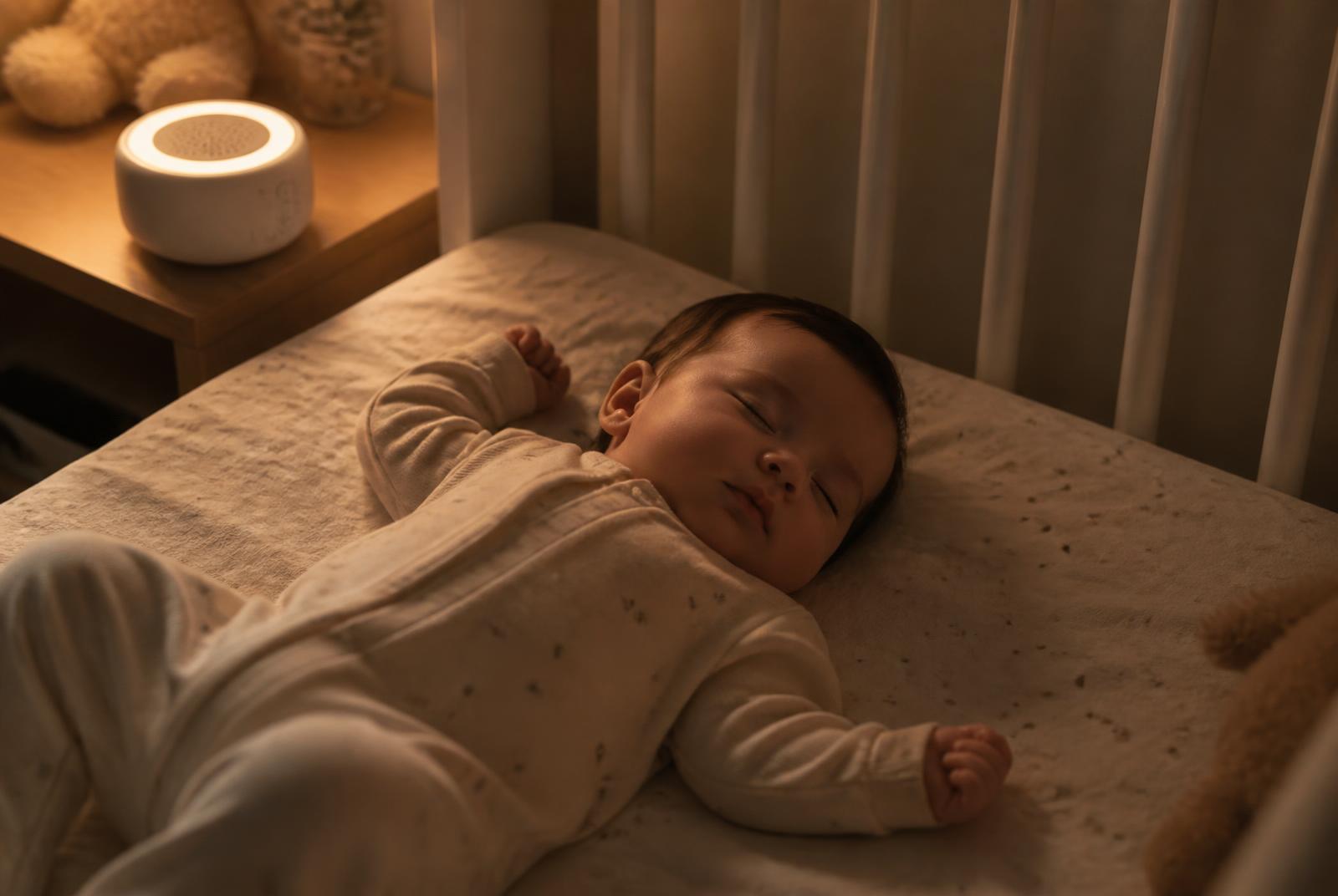
Our Maternal Health Nurse provides a practical guide to using white noise safely, covering volume, distance, timing, and when to stop.
Many parents find that white noise can be a wonderful tool for helping their baby settle and sleep. The constant, gentle sound can be incredibly soothing, reminding them of the shushing noises they heard constantly in the womb. It can also do a brilliant job of masking disruptive household sounds like a doorbell, a barking dog, or older siblings playing.
But like any tool in your parenting toolkit, it’s important to use it correctly. A baby’s hearing is delicate and still developing, so ensuring the sound you use is at a safe volume, distance, and for the right duration is essential. This guide is designed to give you the confidence to use white noise effectively and, most importantly, safely, creating a calm and secure sleep space for your little one.
As a Maternal Health Nurse, I see many families who are unsure about the specifics. How loud is too loud? Does it have to be on all night? Can it be too close to the cot? We'll answer all these questions and give you a clear, step-by-step approach.
Why this matters
A newborn’s ear canal is much smaller than an adult’s, which means sounds are perceived as being louder to them. Continuous exposure to noise that is too loud can potentially pose a risk to their developing auditory system. The goal of white noise is not to overpower other sounds, but to create a consistent, calming audio blanket.
Following evidence-based guidelines on volume and distance helps protect your baby’s hearing while still providing the sleep-promoting benefits. It’s a key part of creating a holistically safe space, just as important as the other checks you make. A safe soundscape is a core component of a healthy Sleep Environment Checklist, right alongside a safe cot and the right room temperature.
Furthermore, understanding how and when to use white noise helps you build positive sleep associations. When used consistently as part of a wind-down, the sound itself can become a powerful cue that it’s time for sleep. This can make settling much smoother, both at home and when you're out and about.
How the White Noise Guide works
To make this simple, we've built the advice in this article into our free White Noise Guide. It’s a practical checklist that walks you through setting up and using white noise safely, every single time. It takes the guesswork out of the process, so you don't have to remember decibel levels or distances in the middle of the night.
The guide helps you check off the key safety steps:
- Sound Choice: Selecting a suitable, non-stimulating sound.
- Volume Check: Measuring the sound level from where your baby actually sleeps.
- Safe Placement: Ensuring the machine is positioned at a safe distance.
- Timing: Deciding on a strategy for how long the sound plays.
Using the guide ensures you’re applying these safety principles consistently, turning white noise into a reliable part of your sleep strategy.
Step-by-step guide
Follow these steps to set up white noise in a way that is safe, effective, and supportive of healthy sleep habits. You can track your setup using our free White Noise Guide, which is part of the Bedtime Routine Planner.
- Choose a simple, constant sound. The best sounds are monotonous and low-pitched, like steady rain, a shower running, or pure 'pink' or 'brown' noise. Avoid sounds with jarring changes, melodies, or distinct noises like birds chirping or crashing waves, as these can be stimulating rather than soothing. The goal is a boring, consistent hum.
- Set the volume to a safe level. This is the most important step. The volume should be no louder than a soft shower, which is about 50 decibels (dB). The best way to check this is to download a free decibel meter app on your smartphone, place your phone in the cot where your baby’s head will be, and adjust the white noise machine until the app reads 50dB or less.
- Position the machine at a safe distance. Never place a white noise machine inside your baby’s cot, on the cot rail, or right next to it. It should be positioned at least 2 metres (about 7 feet) away from your baby's head to protect their hearing and ensure electrical safety.
- Integrate it into your routine. Turn the white noise on as one of the final steps in your baby’s bedtime routine. This helps them associate the sound with winding down for sleep. Using it for all sleeps, including naps, strengthens this association. You might find our Nap Calculator helpful for timing naps consistently.
- Decide on the duration. For newborns and young babies, playing the sound continuously through the night can help them transition between sleep cycles without fully waking. A sudden silence can be jarring. As your baby gets older and learns to connect their sleep cycles more independently, you might choose to use a timer to have it switch off after an hour or two.
- Plan for travel. A portable white noise machine or a dedicated app on a phone (always in airplane mode) can be a lifesaver when you’re away from home. The familiar sound helps recreate their safe sleep space, making it easier for them to settle in a new environment. For more support on your baby's sleep, explore our Baby Sleep Hub.
- Think about weaning (eventually). There’s no rush to stop using white noise, especially if it’s working well for your family. When you do decide to phase it out, you can do so gradually. Simply turn the volume down a tiny bit every few nights over a couple of weeks until it’s off completely.
Common mistakes
Navigating baby sleep can be tricky, and it's easy to make a few wrong turns with white noise. Here are some of the most common mistakes I see in my practice, along with how to fix them.
Mistake: The volume is too high.
Many parents worry the white noise won't be effective unless it's loud enough to drown out everything else. But a baby’s ears are sensitive, and a volume that seems reasonable to you can be far too loud for them.
The fix: Use a decibel meter app on your phone to measure the sound level at the cot, not next to the machine. Aim for a maximum of 50dB. It should sound like a gentle shower, not a loud vacuum cleaner.
Mistake: The machine is too close to the baby.
It can be tempting to place the machine on a bedside table right next to the cot for convenience. This dramatically increases the decibel level reaching your baby and introduces a potential electrical hazard into their sleep space.
The fix: Always place the machine on the other side of the room, at least 2 metres (7 feet) away from your baby. This diffuses the sound and keeps cords well clear of the cot.
Mistake: Using complex or stimulating sounds.
White noise apps and machines often come with a library of sounds, including lullabies, womb sounds with heartbeats, or nature scapes. These can contain changes in pitch and rhythm that can prevent the brain from switching off and may even startle a sleeping baby.
The fix: Stick to a simple, boring, continuous sound. A low-rumble brown or pink noise is often more soothing than a higher-pitched pure white noise. Avoid anything with a pattern or melody.
Mistake: Turning it off after the baby falls asleep.
If you switch the sound off once your baby is asleep, they may startle awake when they transition between sleep cycles (which happens every 45-60 minutes). The sudden silence can be just as disruptive as a loud noise.
The fix: Let the white noise run continuously throughout the nap or night, especially for babies under 6 months. This provides a consistent audio environment that helps them link their sleep cycles. If you're finding your baby is still waking frequently, our Overtired Baby Checker might offer some clues.
When to seek professional advice
While white noise is a helpful tool, it isn't a magic solution for all sleep challenges. It's important to trust your instincts and seek support if you have any concerns. A chat with your Maternal Health Nurse or GP is always a good idea.
Please contact a health professional if:
- You have any concerns about your baby’s hearing, such as if they don't seem to startle at loud noises or turn towards your voice.
- Your baby consistently seems distressed or agitated by the white noise rather than calmed by it.
- Your baby or toddler is having significant sleep difficulties that are not improving and are causing distress for them or your family.
- Your baby is extremely unsettled, crying inconsolably, or seems unwell. This always warrants a check-up with a doctor.
For hearing-specific questions, your doctor may refer you to an audiologist for a professional assessment.
Try the free tracker
Feeling more confident? Put this advice into practice with our free White Noise Guide. It’s a simple checklist within our Bedtime Routine Planner that helps you apply these safety steps every time you put your baby down to sleep, ensuring their sleep space is both calming and safe. You can find it in your dashboard when you sign up.
Start the free White Noise Guide
Related Parenting Hub resources
- Complete Baby Sleep Guide
- Sleep Environment Checklist
- Bedtime Routine Planner
- Nap Calculator
- Overtired Baby Checker
Related reading: using white noise with babies
Related reading: safe sleep guidance for babies