Building a Child’s Vocabulary Through Everyday Talk
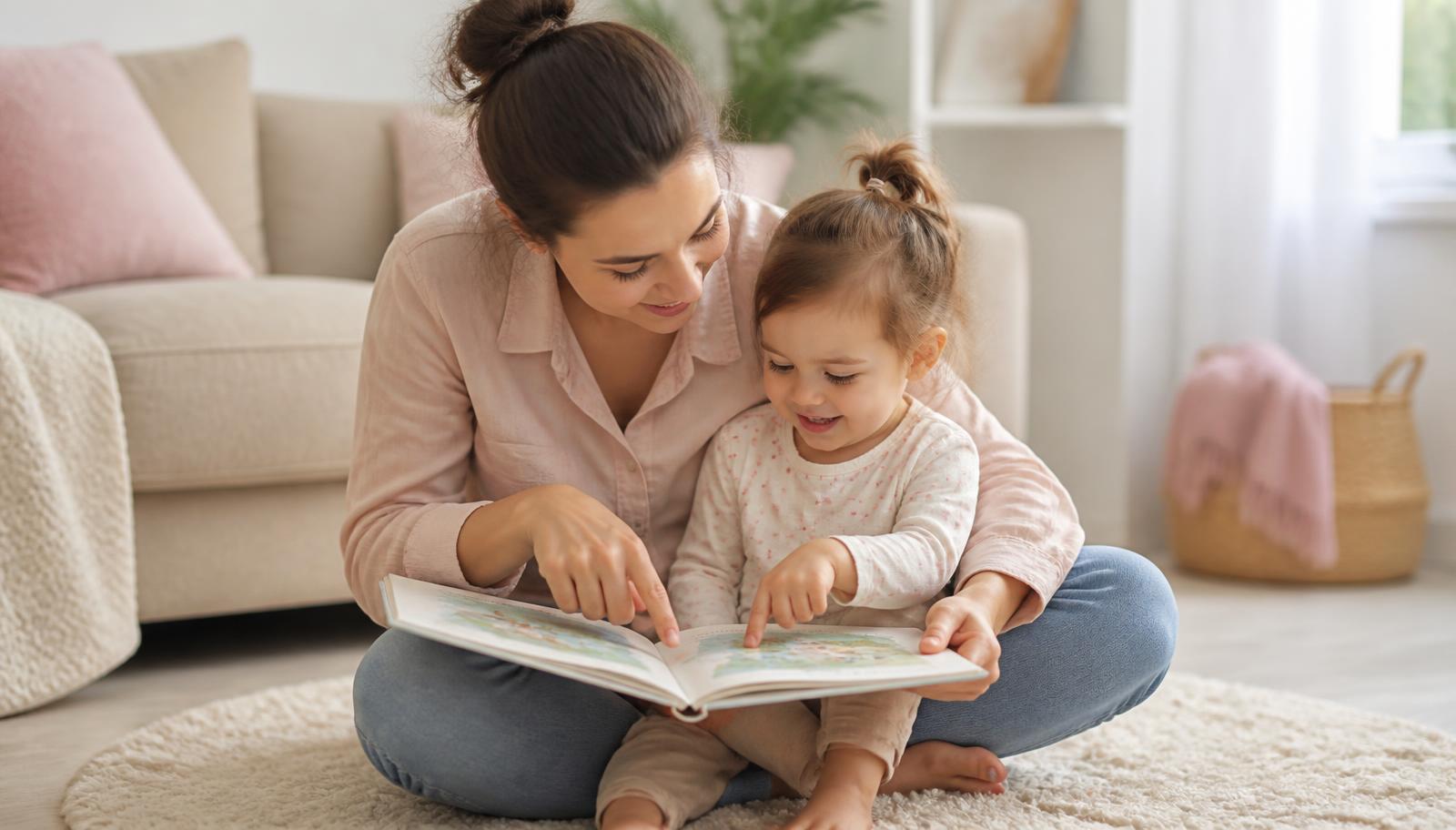
Build your toddler’s vocabulary through warm, responsive conversations, shared attention, books, songs and everyday routines.
To build your child’s vocabulary, talk with them often during ordinary moments and follow what interests them. Name what they notice, respond to their sounds, gestures and words, and add a little more information. If your toddler says “dog,” you might reply, “Yes, a fluffy brown dog is running.” This gives them useful words without turning conversation into a lesson.
The most helpful approach is warm and responsive: notice, wait, listen and reply. You do not need flashcards, constant questions or pressure to repeat words. Children learn language through meaningful back-and-forth interaction, shared experiences, play, songs and books. Communication develops at different rates, so focus on connection and gradual progress rather than comparison.
Follow your child’s attention
Children are more likely to connect a word with its meaning when it describes something already holding their attention. Watch where your child looks, points or reaches, then put that interest into simple language.
- Notice: “You found a feather.”
- Describe: “It feels soft and tickly.”
- Add an action: “The feather is floating down.”
You do not need to redirect your toddler to what you want to discuss. Joining their focus helps communication feel cooperative and shows that their interests matter.
Use responsive back-and-forth talk
A conversation can happen before a child says recognizable words. A look, point, facial expression, sound or movement can be their turn. Respond as though it carries meaning, then pause to let them take another turn.
Try waiting quietly for several seconds after you speak. Toddlers often need time to understand your words and plan a response. Avoid filling every silence or asking several questions in quick succession. Facing your child and getting near their level can also make it easier to share attention, while respecting children who prefer less direct eye contact.
Add one small step to what they say
Expanding your child’s message models slightly richer language while confirming that you understood them. Keep your response natural and only a little longer than their current communication.
- Child: “Car.” Adult: “A fast car.”
- Child: “Baby sleep.” Adult: “The baby is sleeping.”
- Child points to a cup. Adult: “You want your blue cup.”
- Child: “Cat goed.” Adult: “Yes, the cat went outside.”
There is no need to tell your child that their grammar or pronunciation is wrong. Simply repeat the idea correctly within your reply. This preserves the flow of conversation and gives them a model without embarrassment.
Use varied, specific words
Simple language is helpful, but it does not have to be limited to basic labels. Introduce interesting words within familiar situations and make their meaning clear through actions, objects or explanations.
Instead of always saying “big,” you might occasionally use “enormous,” then explain: “That truck is enormous—really, really big.” Talk about actions such as pouring, balancing and stretching; describing words such as smooth, chilly and enormous; and position words such as underneath, beside and between.
Repeat new words naturally across different days and settings. A child may need many meaningful encounters with a word before using it. Understanding generally comes before speaking, so a word can be part of their developing vocabulary even if you have not heard them say it.
Talk during everyday routines
Daily routines provide repetition and context, making them ideal for language learning. You do not have to narrate every action. Choose moments when your child is comfortable and available for interaction.
Getting dressed
Name body parts, clothing, colours, textures and actions: “Your foot goes through the stretchy sock. Now we pull it up.” Offer a manageable choice: “Striped shirt or green shirt?”
Meals and snacks
Talk about taste, temperature, shape and preparation: “The banana is soft. I’m slicing it into round pieces.” Follow your child’s cues if they need calm and less conversation while eating.
Bath time
Use action and position words: “The cup is empty. Let’s fill it. Now the duck is behind the bottle.” Never let language play distract from hands-on supervision around water.
Out and about
Describe what you both notice: “The bus is slowing down,” or “Those leaves are rustling.” For more practical toddler guidance, visit our toddler care hub.
Ask fewer, more meaningful questions
Questions can invite conversation, but too many can make a toddler feel tested. Balance questions with comments. Instead of repeatedly asking “What’s that?” say, “That digger has a huge scoop,” then pause.
When you do ask, choose questions that connect with your child’s experience. “What do you think the puppy will do next?” invites more language than quizzing them on a colour they already know. For a child using few words, offer choices they can answer by looking, pointing or speaking: “Do you want apple or pear?” Accept the communication, then model the word.
Share books without testing
Book sharing is about connection, not finishing every page or reading every printed word. Let your toddler hold the book, turn pages, revisit favourites or talk about one picture for as long as they wish.
- Point out what captures their attention.
- Connect pictures to their life: “That child has boots like yours.”
- Use expression, sound effects and gestures.
- Pause at a familiar part so they can contribute a sound, action or word.
- Explain an unfamiliar word briefly, then continue the story.
Repetition is valuable. Familiar books help children anticipate language and gradually join in. If your toddler moves away, you can stop and try another time rather than requiring them to sit still.
Use songs, rhymes and pretend play
Songs and rhymes make words memorable through rhythm, repetition and movement. Pause before a familiar word to give your child an opportunity—not an obligation—to fill it in. Actions can support understanding and participation.
Pretend play creates reasons to use language. While playing with toy animals, food or vehicles, describe what is happening and take turns adding ideas: “The bear is hungry. What could we make?” Follow your child’s storyline rather than directing every step.
Support communication in a multilingual family
Use the language or languages in which you feel most natural, expressive and connected. Rich conversation, stories and songs in home languages support communication and family relationships. Learning more than one language does not require parents to replace a familiar home language with one they use less confidently.
A multilingual child’s words may be distributed across their languages, and mixing languages can be a normal part of development. If you have concerns, seek advice from a professional experienced in multilingual language development who considers all the languages your child hears and uses.
Keep screens from replacing conversation
A video or app cannot respond to your child’s individual look, gesture or idea in the way a person can. Prioritise face-to-face play and conversation. If your family uses digital media, joining your child, discussing what you see and connecting it to real life can make the experience more interactive. Our play and learning resources offer more ideas for shared activities.
What to avoid
- Pressure to perform: Avoid repeatedly saying “Say it” or withholding something until your child names it.
- Frequent correction: Model the correct form naturally instead.
- Constant quizzing: Make more comments than test-style questions.
- Comparisons: Look at your child’s overall communication and progress rather than another child’s word count.
- Talking all day without pausing: Children need quiet space to respond and initiate.
A simple pattern to remember
Try notice, name, add and wait. Notice what interests your child, name it, add one useful detail, then wait for their response. For example: “You see the moon. It’s a bright crescent moon.” Pause and accept whatever comes next—a look, smile, sound, gesture or word. That responsive exchange is the heart of vocabulary building.
When to seek help
Contact your maternal health nurse, midwife, GP or a speech and language therapist if your child loses words or communication skills, rarely responds to sounds or their name, does not use gestures such as pointing or showing, appears not to understand familiar language, or is not making steady communication progress. Also seek advice if you have concerns about hearing, interaction, speech clarity or feeding, or if communicating is causing significant frustration for your child or family. You do not need to wait and see if your instincts tell you something is not right; early assessment can identify hearing or communication support needs.
Seek urgent medical care if a loss of communication is sudden or occurs with weakness, unusual drowsiness, breathing difficulty, a seizure, severe illness or after a significant head injury. Contact emergency services immediately for breathing difficulty, unresponsiveness, a seizure lasting several minutes, or any situation in which your child appears seriously unwell.