Building Vocabulary Through Conversation With Toddlers
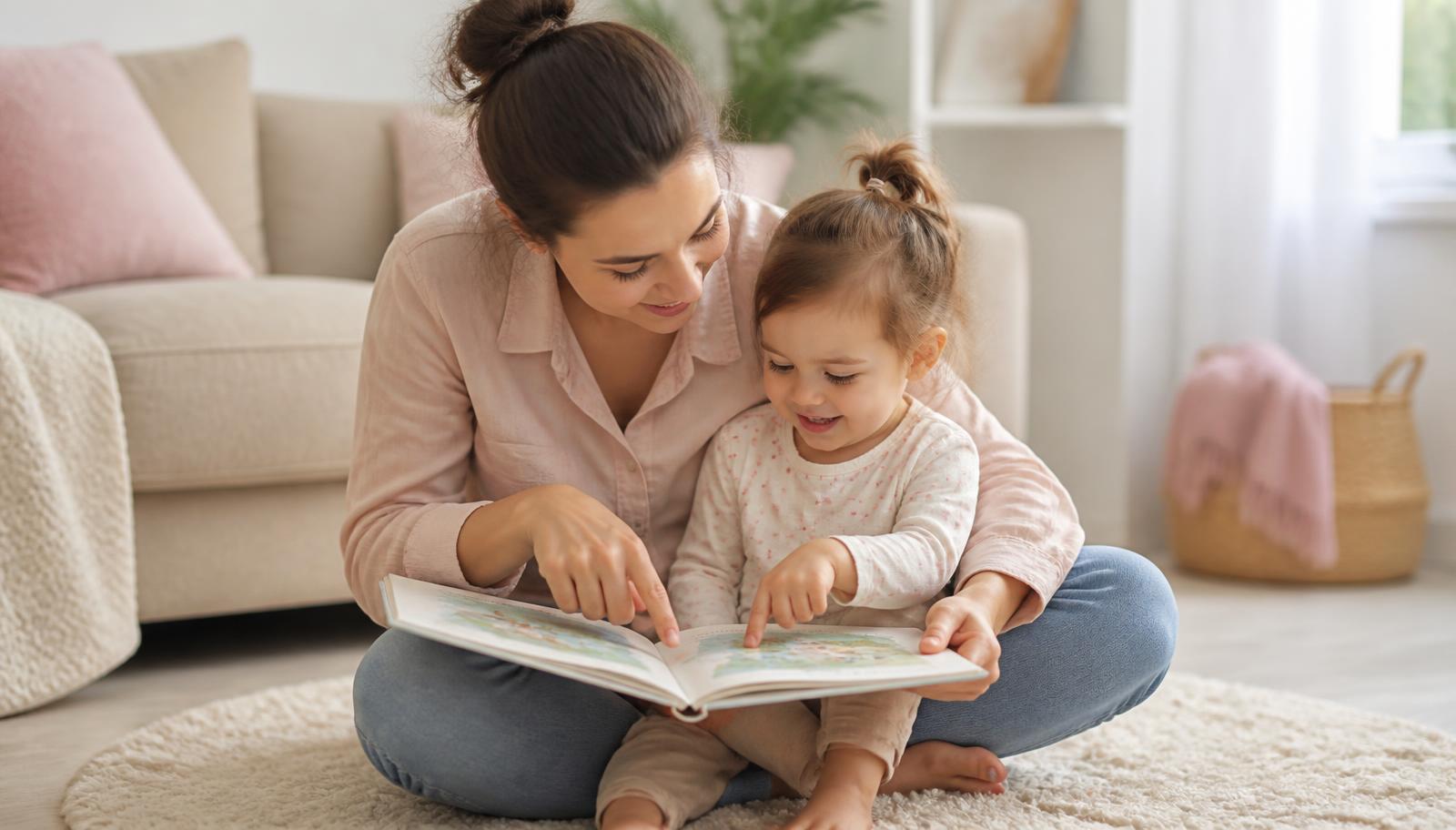
Build your toddler’s vocabulary through warm, everyday conversation, shared attention, repetition and responsive listening.
You can build your child’s vocabulary by talking with them during ordinary moments, following their interests and giving them time to respond. Use simple, natural sentences, name what they notice, and add one or two words to what they say. If your toddler says “dog,” you might reply, “Yes, a big brown dog is running.”
The goal is not to quiz, correct or pressure your child. Language grows through warm back-and-forth exchanges in which your toddler feels heard. Words, gestures, facial expressions, sounds and signs can all be part of the conversation. Responding to these early attempts encourages your child to keep communicating.
Start with what interests your child
Toddlers learn words more readily when those words connect to something holding their attention. Notice where your child is looking, what they are touching or what they are trying to do, then talk about it.
If your child is pushing a toy bus, you could say, “The bus is going fast,” or “The bus stopped at the door.” This is often more helpful than redirecting them to name an unrelated picture or object.
- Observe: Notice what captures your child’s attention.
- Wait: Pause so they can look, gesture, make a sound or speak.
- Respond: Put their interest or message into words.
This responsive pattern helps conversation feel shared rather than like a lesson.
Add language to everyday routines
Daily routines provide repeated opportunities to hear useful words in context. Describe a few important actions, objects and sensations without narrating every second of the day.
- Getting dressed: “Your soft sock goes on your foot. Now we pull it up.”
- Mealtimes: “The banana is soft. You are cutting it with your spoon.”
- Bath time: “Pour the warm water. The cup is empty now.”
- Outside: “The leaves are blowing. That one is yellow and crunchy.”
- Tidying: “The small blocks go inside the box.”
Repeating words in meaningful situations helps your toddler understand them before they are ready to use them. For more support with day-to-day development and routines, visit our toddler care hub.
Use the serve-and-return approach
A good toddler conversation may be brief, playful and partly nonverbal. Think of it as taking turns. Your child “serves” with a look, point, word or sound; you “return” by responding to what they appear to mean.
For example, your child points to a bird and says, “There!” You could answer, “There’s a bird on the fence.” Pause and see what comes next. They may point again, flap their arms or say “bird.” Treat each response as a valid conversational turn.
Try to leave a few seconds of quiet after you speak. Toddlers need time to process language and plan a response. Asking another question too quickly can unintentionally take away their turn.
Expand what your child says
Expansion means repeating your child’s message in a slightly fuller form. It models vocabulary and grammar without demanding that they copy you.
- Child: “More.” Adult: “More apple, please.”
- Child: “Car go.” Adult: “The red car is going.”
- Child: “Baby sleep.” Adult: “The baby is sleeping in bed.”
- Child points to a wet shoe. Adult: “Your shoe is wet from the puddle.”
Keep the expansion close to what your child meant and add only a little information. Long explanations can be difficult to follow. There is no need to ask your toddler to repeat the longer sentence; simply model it and continue the interaction.
Comment more and quiz less
Questions have a place in conversation, but frequent testing such as “What is this?” or “What colour is that?” can make talking feel like a performance. Balance questions with comments that offer new vocabulary.
Instead of asking, “What is the cow doing?” you might say, “The cow is munching the grass.” Then pause. If you ask a question, choose one that invites ideas rather than testing a known answer, such as “Where do you think the cow is going?” Accept words, sounds, pointing and imaginative answers.
Offer choices when your toddler needs support: “Would you like the blue cup or the green cup?” Show both items and wait. Their response might be a word, reach or look, and you can name the choice: “You chose the green cup.”
Read books as a conversation
Shared reading introduces words that may not arise often in daily life. You do not have to read every line or finish the book. Let your toddler turn pages, revisit a favourite picture or talk about something they notice.
- Name and describe pictures: “That enormous truck has muddy wheels.”
- Connect the story to your child’s life: “You wore boots in the rain too.”
- Pause at familiar parts so your child can contribute a word, sound or action.
- Repeat favourite books; familiarity helps children notice and practise language.
- Use expression, gestures and sound effects to keep the exchange enjoyable.
Books in the languages your family uses are valuable. Talk about pictures in the language that feels most natural to you, even if the printed words are in another language.
Use songs, pretend play and movement
Songs and rhymes make words memorable through repetition and rhythm. Add gestures, pause before a familiar word, or change the song to include your child’s name. During pretend play, provide words for actions, feelings and ideas: “The bear is hungry,” “Let’s carefully stir the soup,” or “The doll feels worried. Shall we comfort her?”
Movement also gives words immediate meaning. Try “stomp slowly,” “crawl under,” “reach high” or “hide behind the curtain.” Contrasting words such as fast and slow, full and empty, or under and over are easier to understand when children experience them.
Support communication without pressure
Children develop language at different rates, and understanding often comes before spoken words. Avoid comparing your toddler with siblings or other children. Rather than repeatedly correcting pronunciation, respond to the intended meaning and model the word clearly. If your child says “tat” for “cat,” you might say, “Yes, the cat is sleeping.”
Keep conversation comfortable by getting close to your child’s level, reducing background noise when possible and letting them see your face. Do not force eye contact. Some children listen best while moving or looking at the object being discussed.
If your family is multilingual, continue using the languages in which you can speak warmly and naturally. A child’s words may be distributed across their languages, and mixing languages can be a normal part of multilingual development. Rich interaction in home languages supports family connection and communication.
What about screens and educational apps?
Toddlers learn language most effectively through responsive interaction with people. An app cannot reliably follow your child’s focus, interpret a gesture or adjust its words to their meaning in the same way a caring adult can.
If your family uses age-appropriate media, watching together and discussing what happens can make it more interactive. Connect it to real life: “They are washing the puppy. We washed our dog yesterday.” Do not worry about creating constant entertainment; quiet play and face-to-face connection are valuable. Explore more practical guidance in our toddler care resources and play and learning hub.
A simple conversation plan
You do not need special materials or lengthy teaching sessions. Choose one familiar routine each day and try these steps:
- Follow what your toddler is noticing or doing.
- Use one clear comment about it.
- Wait several seconds for any response.
- Respond to their word, sound, look, sign or gesture.
- Add one small piece of information.
- Stop or change direction when your child loses interest.
Frequent, enjoyable exchanges matter more than perfect wording. Your attention, warmth and genuine interest show your child that their communication has meaning.
When to seek help
Contact your maternal health nurse, midwife, GP or another qualified child health professional if you are concerned about your toddler’s communication, understanding, hearing or development. Seek advice if your child does not respond consistently to sounds or their name, has difficulty understanding familiar language, rarely uses gestures or sounds to communicate, or is not gaining communication skills over time. Ask for review if speech is very difficult for familiar adults to understand or if frustration around communication is affecting daily life.
Loss of previously acquired words, social interaction or other developmental skills is a red flag and should be assessed promptly. Also seek prompt medical care for a sudden change in hearing or responsiveness. Call emergency services if your child is unusually unresponsive, has trouble breathing, has a seizure, or you believe they are seriously unwell.
Your health professional can check hearing and overall development and, when appropriate, arrange assessment by a speech and language therapist or other specialist. You do not need to wait until a concern becomes severe, and asking for support is not overreacting.