Light Summer Evenings and Baby Sleep: Helping Your Baby Settle When It Is Still Bright
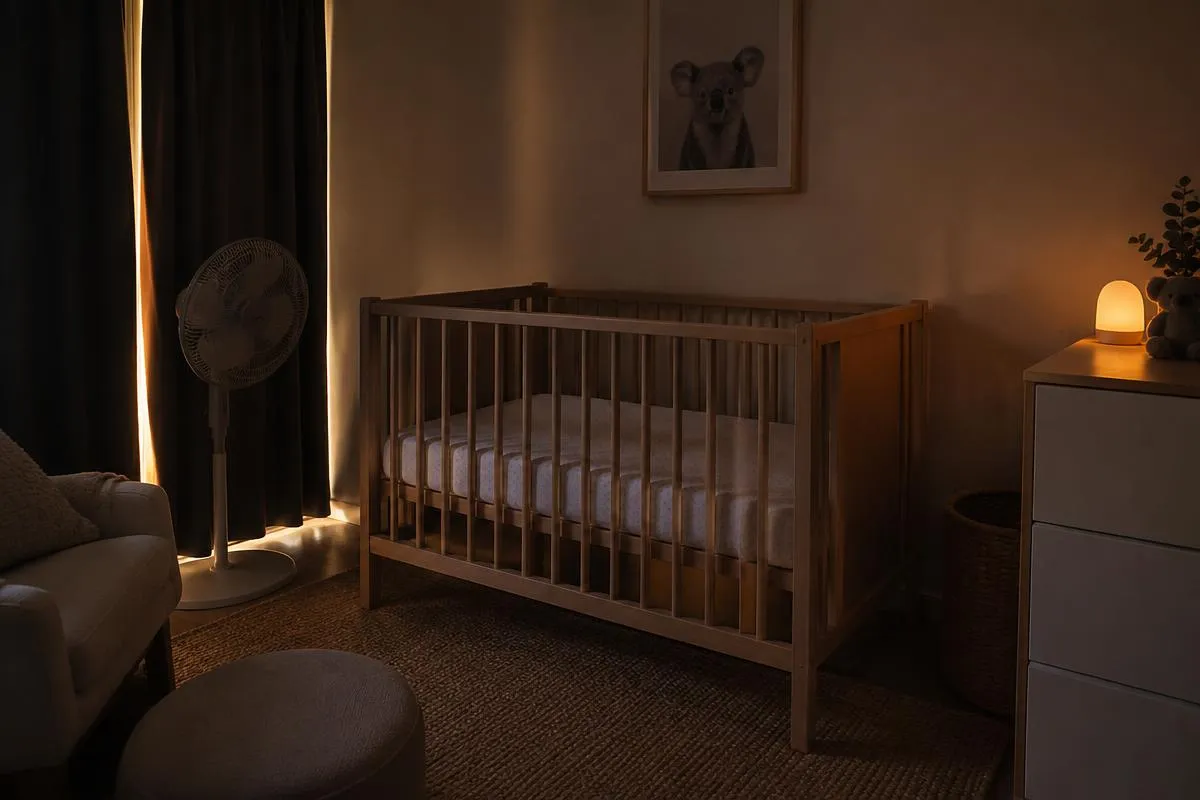
When the sun is still up at bedtime, babies can find it harder to wind down. Here are gentle, safe ways to help your baby settle through long summer evenings.
In much of Australia, summer brings sunlight well past a baby’s usual bedtime. In states with daylight saving it can still be bright at eight o’clock, and even in Queensland the early sunrises can stretch the day at both ends. If your baby who once settled easily now protests at bedtime or wakes with the birds, the light may be part of the reason.
There is nothing wrong with your baby, and you have not undone your routine. Light is simply one of the strongest signals our bodies use to know when to be awake. With a few gentle adjustments, most babies adapt within a week or two.
How light affects sleep
Darkness helps the body release melatonin, the hormone that supports sleep. Bright light, particularly in the evening, delays it. Very young babies are still developing their body clock, and from around three to four months it becomes more responsive to the light and dark of their environment.
That is why a room that is bright at bedtime, or flooded with light at 5am, can make it harder for some babies to settle or stay asleep.
Darken the sleep space
A darker room is often the single most helpful change. Options include:
- Blackout curtains or blinds
- Temporary removable blackout film on windows
- Positioning the cot away from gaps where light leaks in
Make sure any cords from blinds or curtains are well out of reach and secured, as cords are a strangulation risk. Never place a cot near a window cord.
Keep the room cool and safe
Blackout curtains can make a room warmer, so pay attention to temperature. Red Nose advises dressing your baby as you would dress yourself to be comfortable, and avoiding overheating. A fan that circulates air, kept out of reach and not blowing directly on your baby, or air conditioning set to a comfortable temperature, can help.
Follow safe sleep guidelines every time: baby on their back, in their own cot, with a firm flat mattress, face and head uncovered, and no pillows, bumpers or soft toys. A lightweight, correctly sized sleeping bag without a hood is a safe choice on warmer nights, or a single cotton layer may be all that is needed.
Create a calm wind-down routine
A predictable routine helps your baby recognise that sleep is coming, even when the sun has not set. It does not need to be long. A simple pattern might be:
- A bath or a warm wash
- Fresh nappy and sleepwear
- A feed in a dim room
- A quiet song, cuddle or story
Move the routine into the darkened room so the cues stay consistent. Responding warmly to your baby’s needs during this time builds trust and helps them feel safe enough to settle.
Early morning waking
Summer sunrises can bring wake-ups well before 5am. Keeping the room dark in the morning helps, and keeping early feeds calm, quiet and low-lit can encourage some babies to drift back to sleep. Others are simply early risers for a season, and that is normal too.
Rather than aiming for a specific clock time, watch your baby’s tired signs, such as yawning, rubbing eyes, staring or becoming unsettled, and follow their lead.
Be gentle with your expectations
Babies’ sleep naturally varies with growth spurts, developmental leaps, teething and illness. Summer adjustments are just one more change. Avoid strict schedules or leaving young babies to cry for long periods; responsive settling remains the recommended approach, particularly in the first months.
If you are finding nights hard, share the load where you can and rest when possible. Tired parents deserve support too.
When to seek advice
Talk to your Maternal Health Nurse or GP if your baby is persistently very unsettled, seems unwell, is feeding poorly, or if their sleep changes suddenly along with fever or other symptoms. If you are feeling overwhelmed, the Tresillian, Karitane or your state’s parent helpline can offer free advice and support.
A sample summer evening rhythm
Every baby is different, so treat this as a loose guide rather than a timetable. What matters is the order, not the clock:
- Late afternoon: time outside in the shade or a walk with the pram, as daylight during the day helps set the body clock
- Early evening: dim the lights in the house and draw the blackout curtains in your baby’s room
- Wind-down: bath or wash, fresh nappy and sleepwear suited to the temperature
- Feed in a quiet, dim room
- A short song or cuddle, then into the cot on their back when your baby shows tired signs
Questions parents often ask
Should I move bedtime later in summer? Some families find a slightly later bedtime suits long evenings, and that is fine if your baby is happy and well rested. Follow your baby’s tired signs rather than a fixed time.
Does white noise help? Some babies settle more easily with gentle, continuous white noise that masks household and outdoor sounds. Keep the machine at a low volume, well away from the cot.
Is it okay to use a night light? A dim, warm-coloured night light can help you check on and feed your baby without fully waking them. Avoid bright or blue-toned lights in the sleep space.
Looking after yourself
Long summer days can be draining for parents too. Grab rest where you can, share bedtime with a partner when possible, and remember that this season’s sleep challenges are temporary. ## The season will pass
Long, bright evenings are a short chapter. With a darker room, a cool and safe sleep space, and a calm, familiar routine, most babies find their rhythm again. Be kind to yourself while they do.