Overtired Baby Signs
Learn to spot the difference between tired and overtired baby signs and get your little one to sleep more easily with our simple guide and free interactive tool.
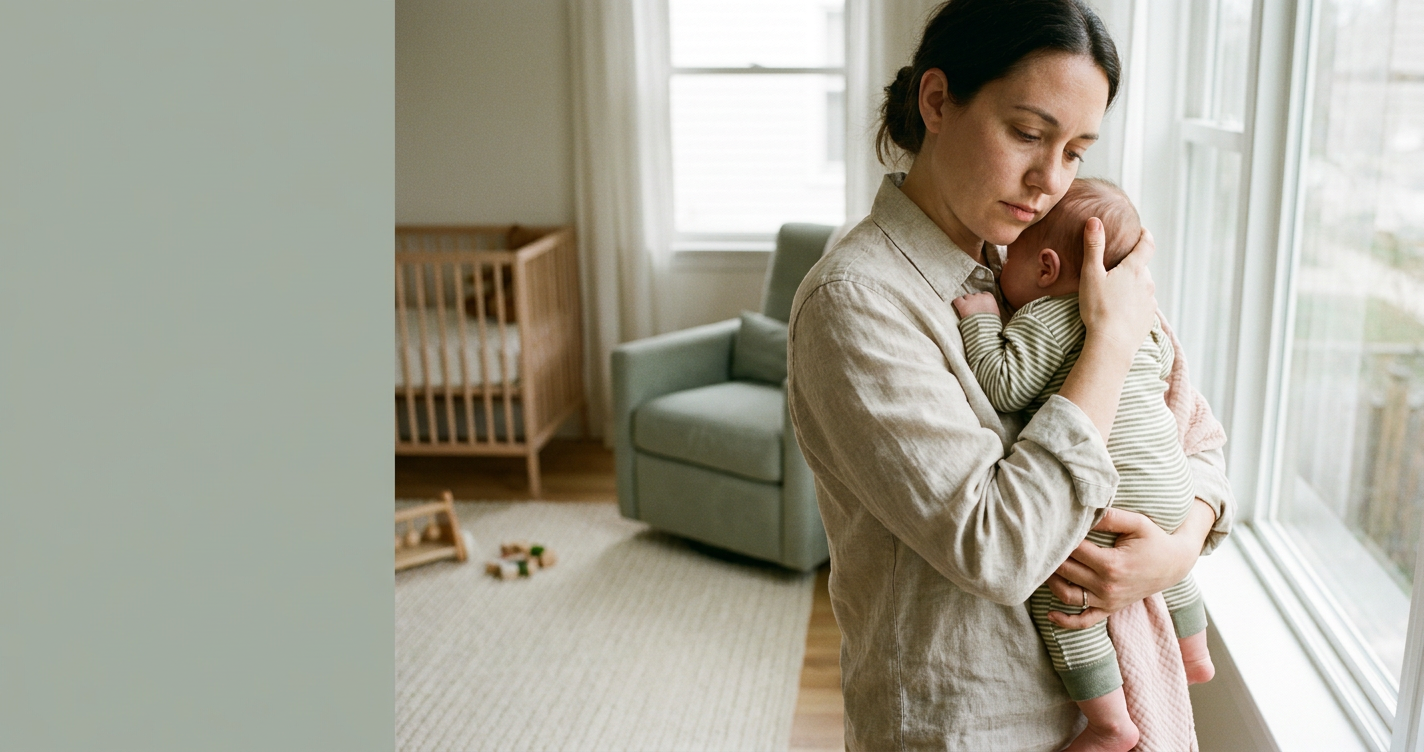
You’re rocking, shushing, and pacing the hallway with a baby who is clearly exhausted but simply will not sleep. They’re crying, arching their back, and seem beyond comforting. If this scene feels familiar, you’ve likely met an overtired baby. It’s a confusing and stressful state for everyone, where your baby seems to be fighting the very thing they need most: sleep.
It’s easy to think that the more tired a baby gets, the easier they will fall asleep. But their developing nervous systems don’t work that way. There is a sweet spot for sleep, a window of time when they are tired enough to settle easily. If they miss that window, their bodies can flip into a state of high alert, making it incredibly difficult for them to wind down.
As a Maternal Health Nurse, one of the most common challenges I help parents navigate is the cycle of overtiredness. The key is learning to distinguish the subtle, early signs of tiredness from the loud, late signs of being overtired. This guide, along with our free Overtired Baby Checker, is designed to help you tune into your baby’s unique cues, break the cycle, and make settling for sleep a calmer experience for you both.
Why this matters
Understanding overtiredness isn’t just about getting a moment of peace; it’s about understanding your baby’s biology. When a baby is ready for sleep, their brain is primed for rest. But if they stay awake past that optimal point, their body can perceive it as a stressful situation and trigger a 'fight or flight' response.
This response floods their system with hormones like cortisol and adrenaline. These are stress hormones designed to keep them awake and alert. You might notice this as a sudden 'second wind' where your fussy baby becomes wide-eyed and almost hyperactive, before crashing into frantic crying. They are, in effect, 'wired' and tired at the same time.
This hormonal state makes it physically difficult for a baby to relax and fall asleep. And when they finally do sleep, it’s often for shorter periods. Overtiredness is a common culprit behind:
- Difficulty settling for naps or bedtime.
- Short naps (sometimes called 'catnapping').
- Increased fussiness and crying throughout the day.
- More frequent night waking.
This can create a frustrating cycle: an overtired baby doesn’t sleep well, and because they don’t sleep well, they become even more overtired. By learning to spot the earliest sleepy cues, you can respond before this stress response kicks in, helping your baby get the restorative sleep they need for healthy growth and development. Our entire Baby Sleep Hub is built around this responsive approach.
How the Overtired Baby Checker works
The Overtired Baby Checker is a simple, interactive tool designed to be your pocket translator for baby sleep signals. We know it can be hard to tell a tired yawn from a stressed-out cry, especially when you’re exhausted yourself. This tool helps you cut through the confusion.
It works by combining three key pieces of information:
- Your baby’s age: Sleep needs and tired signs change rapidly in the first year. The tool adjusts its logic based on your baby’s developmental stage.
- Their current wake window: By knowing when they last slept, the tool can compare their current awake time to what’s typical for their age.
- The specific signs you’re seeing: You simply select the behaviours you’re observing, from subtle eye rubs to frantic leg-kicking.
Based on your input, the tracker sorts the behaviours into 'early tired signs' and 'overtired signs'. It then provides a clear, actionable suggestion. It’s not about imposing a strict schedule, but about empowering you to see what your baby is communicating and respond effectively in that moment.
Step-by-step guide
Using the tracker is designed to be quick and easy, even with a fussy baby in your arms. Here’s how to get the most out of it.
- Open the Overtired Baby Checker: Navigate to the tool on your phone or computer. You can find it right here: Overtired Baby Checker.
- Enter your baby’s age: The first step is to select your baby’s age in weeks or months. This is crucial because a 6-week-old’s tired signs and wake windows are very different from a 6-month-old’s.
- Note their last wake-up time: The tool will ask when your baby woke from their last sleep. This allows it to calculate how long they’ve currently been awake. If you’re not sure, an estimate is perfectly fine.
- Observe your baby and select their cues: Look at your baby right now. What are their hands doing? What do their eyes look like? What sounds are they making? The tool presents a list of common behaviours. Tick all the ones you’re seeing, such as 'yawning', 'looking away', 'grizzling', 'arching back', or 'frantic crying'.
- Review the results: The checker will instantly process your answers. It will show you which of the signs you selected are typically 'early' signs (meaning it's a good time for bed) and which are 'late' or 'overtired' signs (meaning they’ve missed their sleep window).
- Read your personalised next step: This is the most important part. Based on its analysis, the tool provides a concrete suggestion. For example, if you’ve selected mainly early signs, it might say, “Your baby is showing they are ready for sleep. It’s a good time to begin your wind-down routine.” If you’ve selected mostly overtired signs, the advice will be different, such as, “Your baby is likely overtired. Focus on calming them in a dark, quiet room with rhythmic motion.”
- Look for patterns over time: Use the tracker for a few days. You’ll start to see your baby’s unique patterns. You might realise they always rub their left eye just before they’re ready for a nap, or that grizzling quickly turns to intense crying. This knowledge is your superpower for preventing overtiredness in the future.
Common mistakes (and how to fix them)
Every parent has been caught out by overtiredness. It happens! Learning to avoid it is a process of trial and error. Here are some of the most common traps parents fall into, and how you can steer clear of them.
Mistake: Waiting for obvious, late signs of tiredness
Many of us wait for a baby to get fussy or start crying before deciding it’s bedtime. But by then, the overtiredness train has often already left the station. Frantic crying, arching the back, and impossible-to-soothe fussiness are late-stage signals.
The fix: Your goal is to get your baby to their cot when they are calm and pleasantly tired, not distressed. You need to become a detective of their early, more subtle tired signs. These are the whispers before the screams. Our interactive Sleepy Cues Checker can help you learn to spot them. Common early cues include a glazed-over '1000-yard stare', becoming quiet and still, losing interest in toys, yawning, or turning their head away from you.
Mistake: Stretching wake windows to match a schedule
You may have read online that a baby of a certain age 'should' be awake for a specific amount of time. While these averages can be a helpful starting point, they are not rules. Trying to force your baby to stay awake longer than they can handle is a fast track to an overtired state.
The fix: Use a tool like our Wake Window Calculator as a guide, not a gospel. Pay more attention to your baby’s behaviour than the clock. If the calculator suggests a 90-minute wake window, but your baby is showing clear tired signs at 75 minutes, trust your baby. Responding to their cues will always be more effective than sticking rigidly to a number.
Mistake: Mistaking a 'second wind' for playfulness
Just as your baby starts to get a bit grizzly, they suddenly seem to perk up. Their eyes go wide, they might babble or even laugh. It's easy to think, “Oh, they weren't tired after all!” and start a new game. This is the classic 'second wind', and it’s a trick. It’s the adrenaline kicking in, masking their exhaustion.
The fix: Recognise the second wind for what it is: a sign that you’ve just missed the ideal sleep window. Don’t engage in more play. Instead, switch gears immediately into calming mode. This is your cue to take your baby to a quiet, dim space and begin your wind-down routine to help them settle before they crash.
Mistake: Overstimulating a tired baby
When a baby gets fussy, our instinct can be to try and distract them with a fun toy, a silly face, or by turning on the TV. If the root cause of the fussiness is tiredness, adding more stimulation is like pouring fuel on a fire. Their developing brains can’t process the extra input and it pushes them further into being overwhelmed and overtired.
The fix: When you see tired signs, think 'reduce', not 'distract'. Reduce noise, reduce light, and reduce activity. Create a calm and predictable transition to sleep. This is where a simple bedtime routine becomes invaluable. It signals to your baby’s brain that it’s time to switch off and prepare for sleep.
Mistake: Assuming all fussiness is hunger or pain
Of course, hunger and discomfort are very common reasons for a baby to be upset. But they aren't the only reasons. Sometimes, after a feed and a nappy change, parents are left wondering why their baby is still crying. Often, the answer is simply that they are exhausted.
The fix: Run through a quick mental checklist. Is their nappy clean? Have they been fed recently? Are they a comfortable temperature? If you can confidently say yes to these, then tiredness should be at the top of your list of possibilities. For a more comprehensive look at your little one's sleep, our Complete Baby Sleep Guide covers all the fundamentals.
Try the free tracker
Reading about overtired baby signs is one thing, but identifying them in the moment is another. Let our free, simple tool do the hard work for you. It takes less than a minute and gives you a clear next step to help your baby (and you) get some rest.
Related Parenting Hub resources
Explore our other guides and tools in the Baby Sleep Hub to build your confidence and support your little one’s sleep journey:
- Complete Baby Sleep Guide: Our pillar guide covering everything from sleep science to settling techniques.
- The Baby Sleep Hub: Your central resource for all our evidence-based sleep articles and tools.
- Sleepy Cues Checker: Learn to spot the difference between early, on-time, and late tired signs with our interactive flashcards.
- Wake Window Calculator: Get an age-appropriate awake time estimate to help predict your baby’s next nap.
- Bedtime Routine Planner: Build a simple, calming wind-down routine that signals sleep is coming.
- Night Waking Log: If overtiredness is affecting nights, use this tool to track wake-ups and find patterns.