Safe Sleep 7 & Co-Sleeping Guidelines: A Red Nose-Aligned Guide for Australian Parents
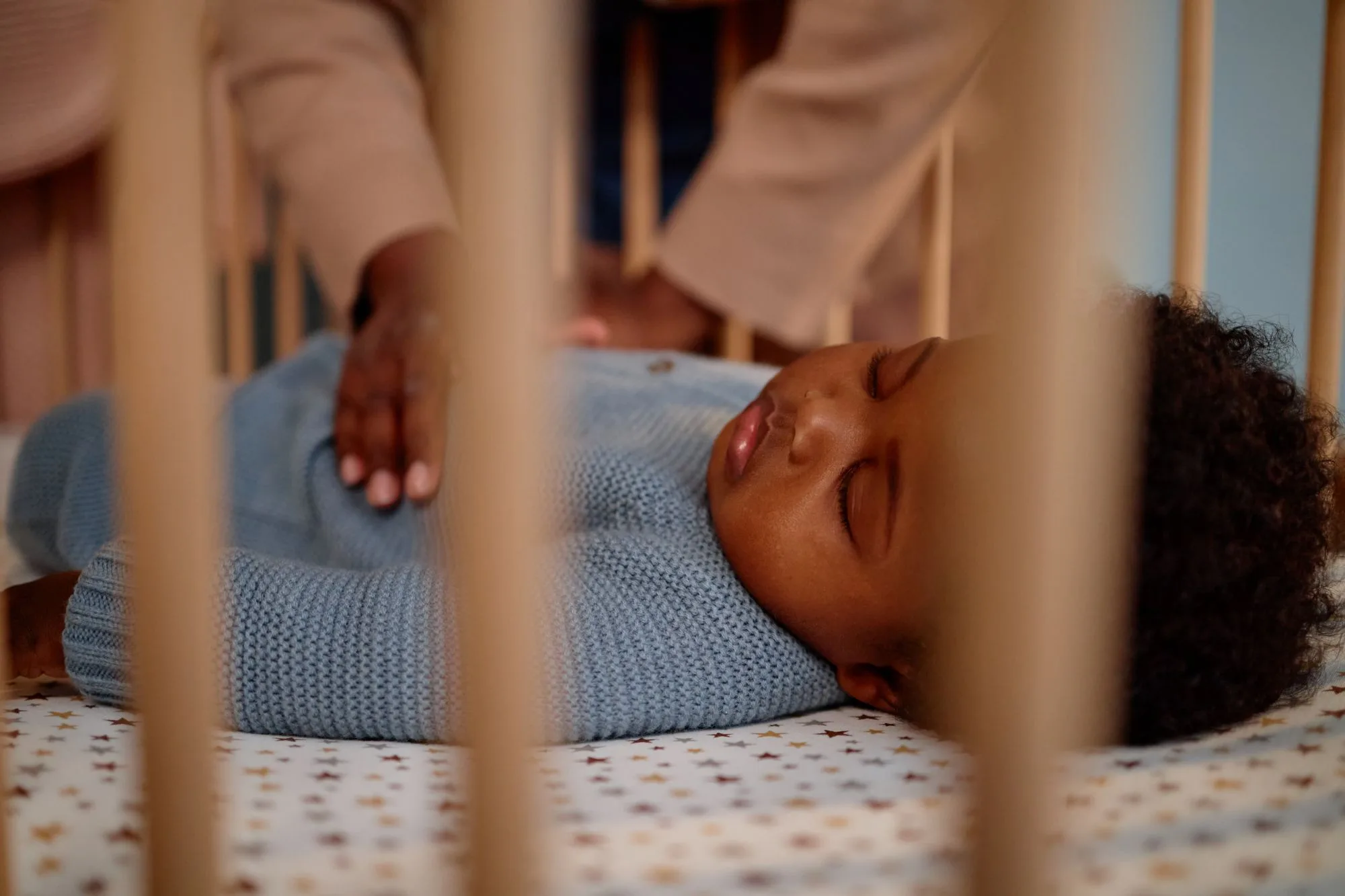
A Maternal Health Nurse-written guide to the Safe Sleep 7, Red Nose safer sleep advice and how to reduce the risks of bed-sharing if you choose to co-sleep.
Whether to share a bed with your baby is one of the most loaded questions in early parenting. In Australia, Red Nose (our peak safer-sleep authority) sets the gold-standard advice, while the Safe Sleep 7 from La Leche League is widely used internationally to help breastfeeding parents who do choose to bed-share reduce the risks.
This guide brings both together — what the evidence says, what Red Nose actually recommends, the Safe Sleep 7 checklist, and how a Maternal Health Nurse would talk you through it without judgment.
The safest sleep place for a baby under 12 months
Red Nose is clear: the safest place for a baby to sleep, day and night, is on their back, in their own safe sleep space (cot, bassinet or portable cot meeting Australian Standards), in the same room as a parent or carer, for the first 6–12 months.
Room-sharing (not bed-sharing) for at least the first 6 months is associated with a significantly lower risk of sudden unexpected death in infancy (SUDI), which includes SIDS and fatal sleep accidents.
The 6 Red Nose Safe Sleep Recommendations
- Sleep baby on the back from birth, never on the tummy or side.
- Keep baby''s face and head uncovered — no hats indoors, no loose blankets, no pillows, no soft toys, no bumpers, no sleep positioners.
- Keep baby smoke-free before and after birth.
- Provide a safe sleeping environment — firm, flat, waterproof mattress that fits the cot snugly, no gaps.
- Sleep baby in a safe cot in the parent''s/carer''s room for the first 6–12 months.
- Breastfeed if you can — breastfeeding reduces the risk of SUDI.
What about co-sleeping and bed-sharing?
Red Nose does not recommend bed-sharing, because it increases the risk of SUDI — particularly when other risk factors are present. But Red Nose also acknowledges the reality: many parents bed-share, sometimes planned, sometimes accidentally during a 3am feed. Refusing to talk about it doesn''t make babies safer — informed conversations do.
If you''re going to bed-share at any point, you need to know the absolute contraindications and the harm-reduction principles below.
Never bed-share if any of the following apply
- Baby is under 3 months old (highest-risk window).
- Baby was premature (born before 37 weeks) or low birth weight (under 2.5 kg).
- Either parent smokes, or the mother smoked during pregnancy.
- Either parent has consumed alcohol, taken sedating medication, or used drugs (including some prescription painkillers).
- Either parent is extremely tired in a way that goes beyond normal parental tiredness.
- The sleep surface is a sofa, couch, armchair, beanbag or waterbed — these are never safe, with or without a parent.
The Safe Sleep 7 explained
The Safe Sleep 7 is a harm-reduction framework from La Leche League International for breastfeeding parents who choose to bed-share. It is not a Red Nose endorsement of bed-sharing — it''s a checklist that, if every item is met, has been associated with a lower risk than bed-sharing without these conditions.
- Non-smoker — no one in the bed smokes, and baby was not exposed to smoke in pregnancy.
- Sober and unimpaired — no alcohol, no sedating medications, no drugs.
- Breastfeeding — exclusively or near-exclusively (breastfeeding mothers position instinctively to protect baby).
- Healthy, full-term baby — at least 37 weeks gestation and a healthy weight.
- Baby on their back — never tummy or side, even when bed-sharing.
- Lightly dressed and unswaddled — no swaddling in a shared bed (overheating + restricted movement risk).
- Safe surface — firm mattress, no gaps to walls/headboard, no pillows or duvets near baby, no other children or pets in the bed.
If you cannot tick every single box, the Safe Sleep 7 does not apply and bed-sharing is not safer.
Safer alternatives if you want baby close
Most parents who want to bed-share are looking for closeness, easier feeding, and more sleep. There are safer ways to get all three:
- Sidecar bassinet or bedside cot — clips onto your bed, baby has their own flat firm surface, you can reach in to feed without lifting.
- Bassinet in your room for the first 6 months (Red Nose''s first-choice recommendation).
- Feed in bed, then transfer — feed lying down with a safe-bed setup, but move baby back to their own safe sleep space before you fall asleep.
Sleep environment essentials
- Room temperature 16–20°C. Use a safe baby sleeping bag (TOG-rated) instead of loose blankets.
- No hats indoors — babies lose heat through their heads and overheating raises SUDI risk.
- No cot bumpers, pillows, soft toys, sheepskins, weighted blankets or sleep positioners — ever.
- Dummies are protective once breastfeeding is established (~4 weeks). If baby spits it out, don''t force it back in.
- Wake windows matter — overtired bedtimes are harder and parents are more likely to bring baby into bed out of desperation. Get age-appropriate timing with our Wake Window Calculator and Baby Bedtime Calculator.
The Maternal Health Nurse approach
Sleep is the area where parents are most likely to feel judged. A good Maternal Health Nurse will:
- Lead with the Red Nose recommendations, every time.
- Acknowledge that bed-sharing happens — and would rather you do it informed than half-asleep on a couch.
- Walk you through the Safe Sleep 7 honestly if you choose to bed-share.
- Address the real driver (often cluster feeding, the witching hour, a sleep regression or a developmental leap).
Red flags — call your GP or Maternal Health Nurse
- Baby ever stops breathing, turns blue or goes floppy.
- Baby has a fever under 3 months (any temperature ≥38°C).
- Persistent inconsolable crying lasting more than 3 hours.
- You are so exhausted you are falling asleep while feeding on a couch — this is a safety issue and deserves immediate support.
Bottom line
Red Nose''s advice is the safest baseline: back, own safe sleep space, same room, smoke-free, breastfed where possible. If you choose to bed-share, the Safe Sleep 7 is the honest harm-reduction checklist — and every single item has to be met. Never on a couch. Never under the influence. Never under 3 months.
For more responsive parenting support, explore our free parenting tools or chat with our Maternal Health Nurse-trained assistant.
This article is general information based on Red Nose Australia''s Safe Sleep Recommendations and La Leche League''s Safe Sleep 7. It is not medical advice. Always speak to your GP, Maternal Health Nurse or call Red Nose on 1300 998 698 for personal guidance.
Related reading: Red Nose safe sleep guidelines
Related reading: how to swaddle a baby safely