Sleep Environment Checklist
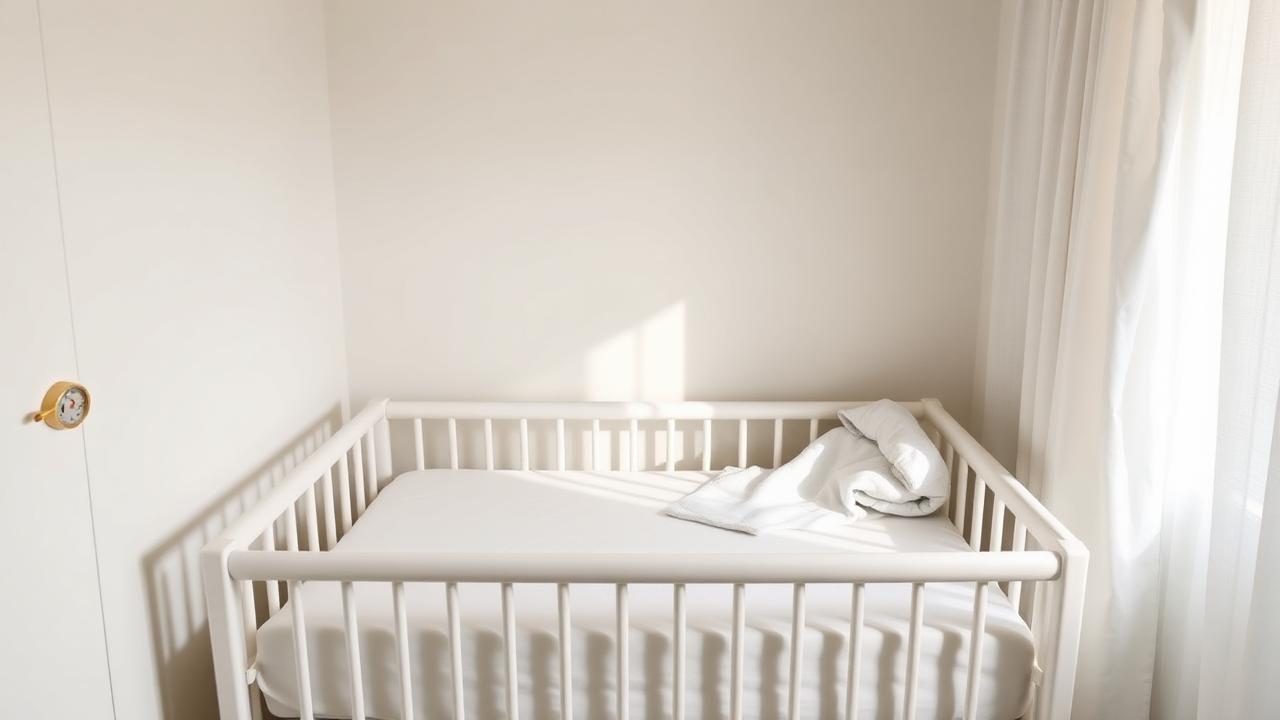
Use our expert-designed checklist to create a safe sleep environment for your baby and reduce the risk of SUDI, with step-by-step guidance from a nurse.
As a Maternal Health Nurse, one of the most common topics I discuss with new parents is sleep. And alongside the questions about how much sleep a baby needs, there is often a quiet, deep-seated anxiety: “Am I doing it right? Is my baby safe?” This worry is completely understandable. You’re entrusted with this precious little person, and you want to do everything you can to protect them, especially when they’re at their most vulnerable.
Creating a safe sleep environment is one of the most powerful things you can do for your baby’s wellbeing. The national guidelines we have are based on decades of research into reducing the risk of Sudden Unexpected Death in Infancy (SUDI), including SIDS. But when you’re tired and overwhelmed, remembering every single recommendation can feel like a lot. This is where a simple checklist can be a game-changer.
Instead of a source of stress, think of a safe sleep check as a ritual that brings peace of mind. By methodically running through the key safety points before every single sleep, you turn best practice into a simple, automatic habit. It empowers you to put your baby down in their cot knowing you’ve created the safest possible space for them to rest, so you can rest a little easier, too.
Why this matters
Setting up a safe sleep space is about much more than just following rules; it’s about actively reducing known risks. The recommendations from organisations like Red Nose Australia are designed to counter the factors that can contribute to SUDI. While the exact causes of SUDI are not always known, research points to a ‘triple risk model’ where an underlying vulnerability in a baby, a critical development period, and an external stressor (like an unsafe sleep environment) can intersect.
You can’t control the first two factors, but you have complete control over the sleep environment. A safe space is one that:
- Protects your baby’s airway: A firm, flat surface with no loose or soft items ensures their head can’t get trapped in a position that obstructs their breathing.
- Prevents overheating: Overheating is a significant risk factor for SUDI. A cool room and appropriate clothing help your baby maintain a stable body temperature.
- Minimises accidents: A well-constructed cot that meets current safety standards prevents entrapment, falls, and other injuries.
A consistent and safe environment doesn't just reduce risk; it can also promote better sleep. Babies and toddlers thrive on predictability. When their sleep space is always the same — dark, quiet, a comfortable temperature, and free of distractions — it becomes a powerful cue for sleep. If you find your little one is waking frequently, using a Night Waking Log can help you see patterns, but the first step is always to ensure the sleep environment itself isn’t the cause of the disruption. Combining a safe space with a gentle Bedtime Routine Planner helps signal to your baby that it’s time to wind down and prepare for rest.
How the Sleep Environment Checklist works
Our free Sleep Environment Checklist is designed to be your trusted partner in creating a safe space for every sleep, whether it’s a midday nap or overnight. It’s a simple digital tool that walks you through the essential checks recommended by health authorities, all in one place. You can use it on your phone just before you put your baby down.
The goal is to make these checks second nature. The tracker breaks down the process into four key areas:
- The Room: Assessing temperature, light, and sound.
- The Cot: Inspecting the structure and what’s inside it.
- The Bedding: Checking what your baby is wearing.
- The Baby: Ensuring correct positioning.
By ticking off each item before every sleep, you create a powerful habit. You’re not just hoping you’ve remembered everything; you’re confirming it. This repetition builds confidence and provides a record, giving you peace of mind that you’re consistently following the safest practices for your little one.
Step-by-step guide
Using the Sleep Environment Checklist is simple. We recommend adding it to your wind-down routine, right before you place your baby in their cot. Here’s how to use it effectively.
Start the check and assess the room
Open the tracker. The first section prompts you to check the room itself. Is the temperature comfortable? Ideally, a baby’s room should be between 18-20°C. Don’t guess; use a room thermometer. Check that the room is dark, which helps promote the production of melatonin, the sleep hormone. Lastly, consider the sound. A quiet environment is key, though some parents find continuous white noise helpful. If you use it, our White Noise Guide explains how to do so safely regarding volume and placement.
Inspect the cot
Next, the tracker moves to the cot itself. It must meet current Australian safety standards (AS/NZS 2172:2003). Check that the bars are spaced correctly (between 50mm and 95mm apart) and that there are no horizontal bars a toddler could use to climb out. The most important check here is the interior: the cot should be completely empty, apart from the mattress and your baby.
Check the mattress and surface
This is a critical step. The tracker will ask you to confirm the mattress is firm, flat, and the right size for the cot. There should be no more than a 20mm (about two fingers) gap between the mattress and the cot sides. A soft or ill-fitting mattress creates a suffocation risk. Press on the mattress – it should be firm and not sag. Never, ever add any soft underlays like lamb’s wool or mattress toppers.
Clear all clutter
This is the non-negotiable rule of safe sleep: keep the cot clear. The checklist will prompt you to remove everything that doesn’t belong. This includes pillows, duvets, blankets, bumpers, positioners, and soft toys. These items, while they may look cosy, pose a serious suffocation and overheating risk. A clear cot is a safe cot.
Assess your baby’s clothing
Now, look at what your baby is wearing. The checklist helps you think about dressing them for the room temperature, not the season outside. A safe baby sleeping bag (with a fitted neck and armholes, but no hood) is the safest option as it can’t cover their face. Avoid hats, bonnets, and bibs for sleep indoors, as they are an overheating and strangulation risk. Feel the back of your baby’s neck or their tummy to gauge their temperature; their hands and feet will often feel cool, and that’s normal.
Position your baby safely
The final and most important step. As you place your baby into the now-cleared cot, the tracker reminds you to always place them on their back. The ‘back to sleep’ position is the cornerstone of SUDI prevention. Also, place their feet at the bottom of the cot. This prevents them from wriggling down under any bedding, if used in the future when they are older.
Log the check and rest easy
Once you’ve completed the checks, mark it as done in the tracker. You can now leave the room knowing you’ve systematically created the safest possible environment. This ritual helps connect a safe space with a well-timed nap, which you can fine-tune with tools like our Wake Window Calculator.
Common mistakes (and how to fix them)
Even with the best intentions, it’s easy to slip up, especially when you’re sleep-deprived. Here are some common mistakes I see in my practice, and the simple fixes to get back on track.
Mistake: Over-dressing the baby or overheating the room
The Fix: We often worry our babies will be cold, but overheating is a much bigger risk. Don’t rely on how you feel; use a room thermometer. Dress your baby in light layers and use a sleeping bag with a TOG (Thermal Overall Grade) rating appropriate for the room’s temperature. A simple guide is to dress them in one more light layer than you would wear in that room. Never put a hat on your baby to sleep indoors.
Mistake: Adding ‘comfort’ items to the cot
The Fix: It’s tempting to add a soft toy for comfort or a bumper to prevent bumps, but these items are serious hazards. The only thing your baby needs for comfort is you, during their wind-down routine. A safe cot might look bare, but that bareness is what keeps it safe. Remove all toys, pillows, blankets, and bumpers. Safety is always more important than aesthetics.
Mistake: Using a second-hand or modified cot
The Fix: While a second-hand cot can be cost-effective, it must still meet the mandatory Australian safety standard (AS/NZS 2172:2003). Check that it’s sturdy, has all its original parts, and hasn't been repainted with lead-based paint. If you’re unsure, it's safer to buy new. Never use a cot with a drop-side, as these are now banned due to safety concerns.
Mistake: Letting baby sleep on an inclined surface
The Fix: Products like bouncers, rockers, swings, and car seats are not safe for routine sleep. Their inclined position can cause a baby's head to slump forward, compressing their airway (this is called positional asphyxia). If your baby falls asleep in one of these devices, gently move them to their cot on a firm, flat surface as soon as possible. Likewise, avoid using wedges or positioners in the cot to elevate your baby’s head; they are not safe and not proven to help with reflux.
Mistake: Inconsistency between naps and night sleep
The Fix: The safe sleep guidelines apply to every single sleep, not just at night. It can be tempting to have a quick nap on the couch with your baby, but this is a high-risk situation. Commit to using the safe cot for all sleeps. Using the Sleep Environment Checklist before naps helps reinforce this habit and ensures your baby is just as safe during the day as they are at night. This consistency is key to their safety and helps build a strong sleep routine.
When to seek professional advice
While a safe sleep environment drastically reduces risks, it’s also important to know when to seek help for your baby’s health. As a Maternal Health Nurse, I advise parents to trust their instincts. You know your baby best.
Contact your GP, midwife or Maternal and Child Health Nurse if you have concerns about:
- Your baby’s general wellbeing, feeding, or settling patterns.
- Persistent difficulties with sleep that don’t seem to be improving.
- Questions about setting up your sleep space that aren't covered by general advice.
Seek immediate medical attention or call Triple Zero (000) for an ambulance if your baby:
- Is having difficulty breathing, is breathing very rapidly, or is making grunting noises.
- Has a blueish tinge around their lips or on their skin.
- Is unusually pale, floppy, or difficult to wake.
- Is having a seizure (a fit).
- Has a high fever and seems very unwell.
These are emergency situations. Do not hesitate to call for help. It is always better to be safe and have your baby checked by a doctor.
Try the free tracker
Ready to build your confidence and create the safest possible sleep space for your little one? Our free, easy-to-use Sleep Environment Checklist turns best-practice advice into a simple, repeatable habit. Start today and bring peace of mind to every nap and night-time sleep.
Start the Sleep Environment Checklist
Related Parenting Hub resources
For more support on your sleep journey, explore our other guides and tools. These resources are designed to work together, helping you build a holistic, responsive approach to your child's sleep from the Baby Sleep Hub to our comprehensive pillar guide.
- Complete Baby Sleep Guide
- Bedtime Routine Planner
- White Noise Guide
- Night Waking Log
- Wake Window Calculator
Related reading: setting up a safe sleep space