When Do Babies Start Talking? Language Milestones 3–12 Months
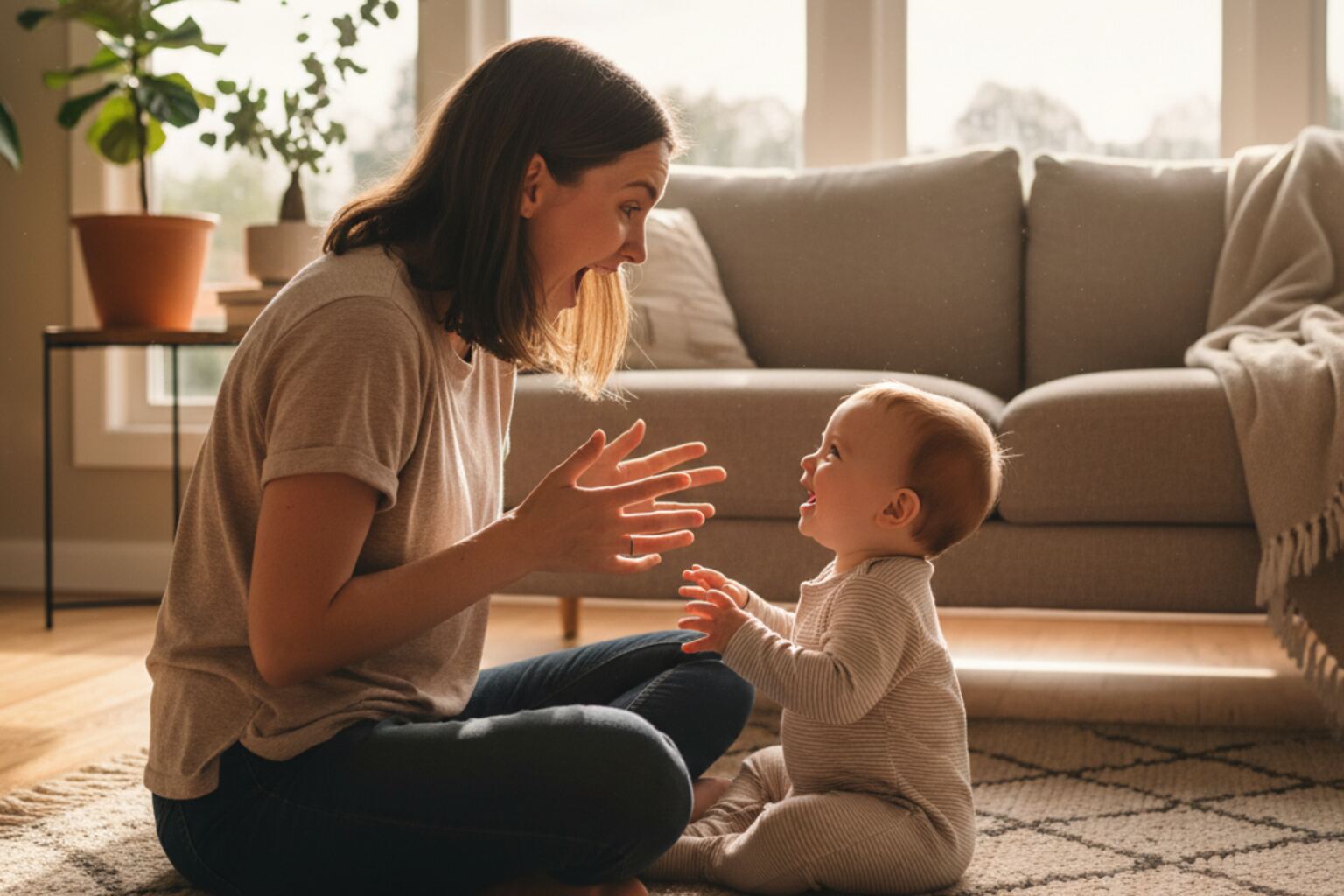
From cooing to first words, here's when Australian babies typically start talking and how to gently support speech development from 3 to 12 months.
It's such a magical time watching your little one grow and develop, and hearing their first babbles and words is often one of the most anticipated milestones! If you're wondering when your little one will start "talking" or how you can encourage their language development, you're in the right place. Every little person is unique, and while there are general timelines, it's completely normal for development to vary. We'll explore the exciting journey of language from 3 to 12 months, offering reassuring advice and practical tips to support your child's blossoming communication skills.
The Foundations of Communication: 3-6 Months
Even before those first words, your little one is hard at work building the foundations for language. From around 3 months, you'll notice they're becoming much more responsive to sounds and voices. They might turn their head towards you when you speak, smile when you talk to them, and even try to imitate some of your facial expressions. This early interaction is crucial for their developing social and communication skills.
Around this age, the adorable "cooing" sounds begin. These are often vowel-like sounds like "oooooh" and "aaaaah." They're experimenting with their vocal cords, discovering the sounds they can make, and learning about cause and effect – "If I make this sound, Mum smiles!" Encourage this by making eye contact, smiling back, and imitating their sounds. This back-and-forth interaction, often called "serve and return," is vital for brain development and lays the groundwork for future conversations.
By 6 months, you might hear them beginning to babble with single syllables, such as "ba," "ma," or "da." They're not attaching meaning to these sounds yet, but they're practising the mechanics of speech. Reading aloud, even simple board books, exposing them to music, and simply narrating your day are wonderful ways to immerse them in language. You can find more tips on engaging with your little one in our Free Parenting Tools section.
Babbling and Sound Play: 6-9 Months
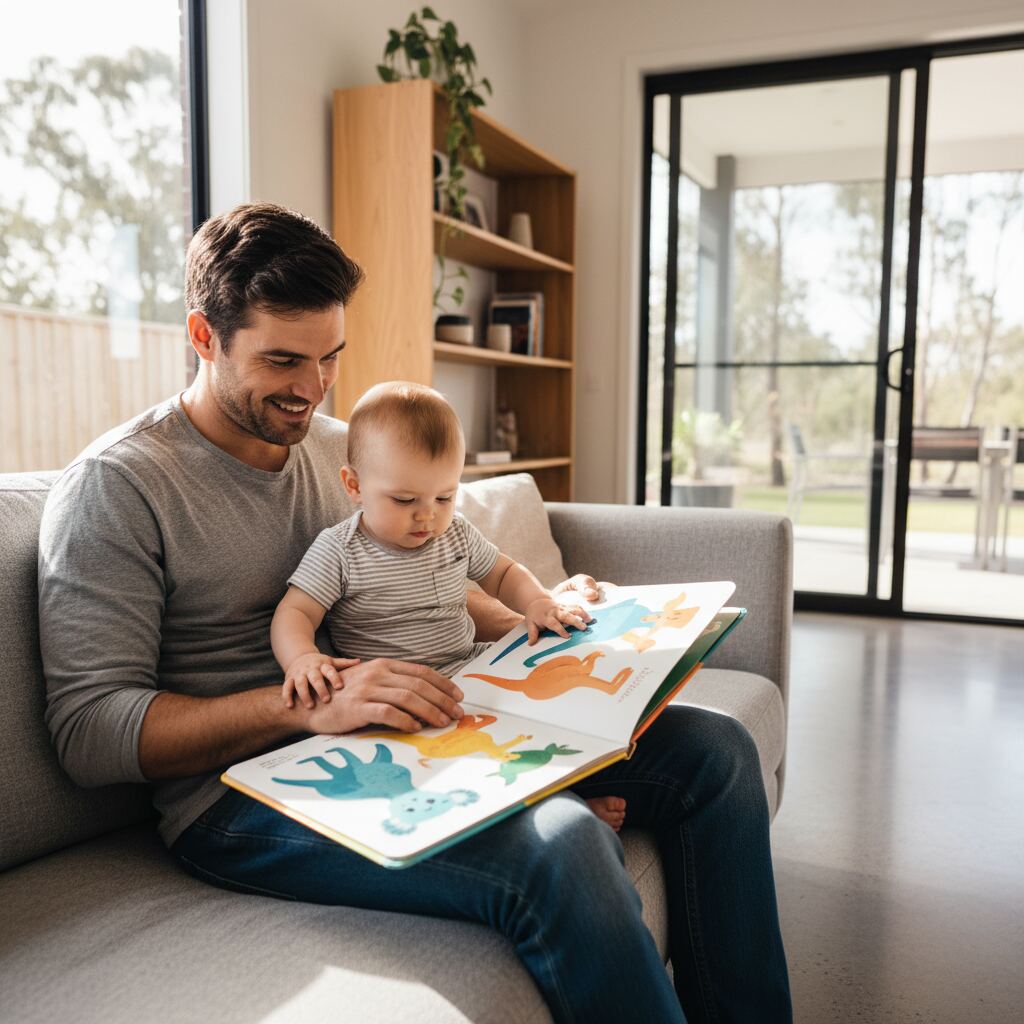
This period is an exciting time for vocal development! From 6 to 9 months, your little one's babbling will become more complex. You'll start to hear "reduplicated babbling," which means repeating the same syllable, like "bababa," "mamama," or "dadada." While these aren't yet "words" in the traditional sense, they are critical pre-speech sounds. They're learning to control their tongue, lips, and breath – all essential for spoken language.
They're also becoming much better at understanding what you say. They might respond to their name, look for familiar objects when you name them, or even react to "no" (though not always by obeying!). Continue to talk to them constantly, describing what you're doing, what they're seeing, and what you're feeling. Use simple, clear language and lots of facial expressions. Maternal Health Nurses often recommend engaging in plenty of face-to-face interaction during this stage.
Encouraging Early Communication
- Narrate Your Day: Talk about what you're doing, "Mum's putting on your nappy," or "We're going for a walk now."
- Read Aloud: Point to pictures and name them. Even if they don't understand the story, they're absorbing sounds and rhythms.
- Sing Songs: Lullabies and nursery rhymes are fantastic for language development and bonding. You might even like to use our Genie Lullaby tool!
- Respond to Their Sounds: When they babble, babble back! This teaches them the back-and-forth nature of conversation.
- Play Peek-a-Boo: This simple game teaches turn-taking and object permanence, both important for communication.
Understanding and First Words: 9-12 Months
As your little one approaches their first birthday, their language skills are truly blossoming. Between 9 and 12 months, you'll likely hear "variegated babbling," where they combine different syllables, such as "badaga" or "mabada." This sounds even more like real speech and is a sign they're getting ready for those first meaningful words.
This is also the period when they start to understand many more words than they can say. They might point to objects when asked, wave "bye-bye," or respond to simple commands like "come here." Their receptive language (what they understand) is far ahead of their expressive language (what they can say). Some little ones might even say their first clear, meaningful word around 12 months, often "mama" or "dada" directed specifically at a parent, or perhaps "ball" or "no!"
Remember that "first words" can sometimes be approximations, like "baba" for bottle or "nana" for banana. Celebrate these efforts! The intention behind the sound is what matters most at this stage. If you have any concerns about their hearing or speech development, your GP or Maternal Health Nurse is a great first point of contact.
When to Seek Advice
While every child develops at their own pace, there are some general guidelines for when it might be helpful to chat with a professional. Don't hesitate to reach out to your GP or Maternal Health Nurse if your little one:
- Isn't responding to loud sounds by 6 months.
- Isn't babbling by 9 months.
- Isn't making eye contact or showing interest in social interaction by 9-12 months.
- Doesn't respond to their name by 12 months.
- Isn't using gestures like waving or pointing by 12 months.
- Loses any previously acquired speech or language skills.
Early intervention can make a big difference, so trust your instincts if you have any worries. For more information on developmental milestones, you can check out resources often provided by Centrelink or state health departments.
Supporting Your Child's Language Journey
Your role as a parent is incredibly powerful in fostering your child's language development. Here are some key strategies you can use every day:
- Talk, Talk, Talk: Engage in "parentese" – that slightly higher-pitched, sing-song voice with exaggerated intonation that naturally captures a baby's attention. Describe everything you see and do.
- Respond and Reciprocate: When your child makes a sound, respond to them. Treat their babbling like a conversation. This teaches them about turn-taking and that their voice matters.
- Read Daily: Make reading a regular, enjoyable part of your routine. Point to pictures, name objects, and let your child turn the pages. This is invaluable for vocabulary and literacy. Our Precious Five guide has more on this!
- Sing and Rhyme: Songs and nursery rhymes expose children to different sounds, rhythms, and vocabulary. They're also a fun way to bond.
- Use Gestures: Pair words with gestures, like waving "bye-bye" or pointing to something you're naming. This helps them connect meaning to words.
- Expand on Their Communications: If your child points to a dog and says "woof," you can say, "Yes, that's a big dog! The dog says woof woof!"
- Limit Screen Time: While some educational apps exist, face-to-face interaction is paramount for language development. The Australian Department of Health recommends no screen time for children under 2 years old.
- Be Patient and Positive: Learning to talk is a complex process. Celebrate every sound and every effort your child makes. Avoid correcting them harshly; instead, model the correct pronunciation.
Remember, every child is on their own unique timeline. Focus on creating a rich, language-filled environment, and enjoy every step of their communication journey. You're doing an amazing job nurturing their growth and development!
Practical tips for Australian families
Every baby develops at their own pace. The guidance below reflects current advice from the Australian Breastfeeding Association, Raising Children Network and our team's Maternal Health Nurses. Use it as a gentle framework — not a checklist to stress over.
What to watch for week to week
- Consistency over speed: tiny daily cues matter more than dramatic leaps.
- Connection over correction: warm, responsive interactions build the brain pathways behind every milestone.
- Rest over rush: tired babies (and parents) struggle to show their best. Protect sleep windows.
When to check in with your GP or Maternal Health Nurse
Trust your instincts. If something feels off — feeding, breathing, settling, or development — book a free Maternal & Child Health appointment. Early conversations almost always lead to easier solutions, and reassurance is a perfectly valid reason to call.
How Parenting Hub can help
Our free parenting tools include a baby tracker, sleep coach, and AI midwife so you can log patterns, spot trends, and get evidence-based answers in seconds — without leaving the lounge room. Members also unlock printable routines tailored to your child's age and temperament.
If you'd like personalised support, our care plans are written by a registered Maternal Health Nurse and delivered straight to your inbox within 24 hours.
Related reading: when babies start teething
Related reading: when babies start crawling
Related reading: when babies start talking