Baby car seat rules in Australia: NSW, VIC and QLD explained
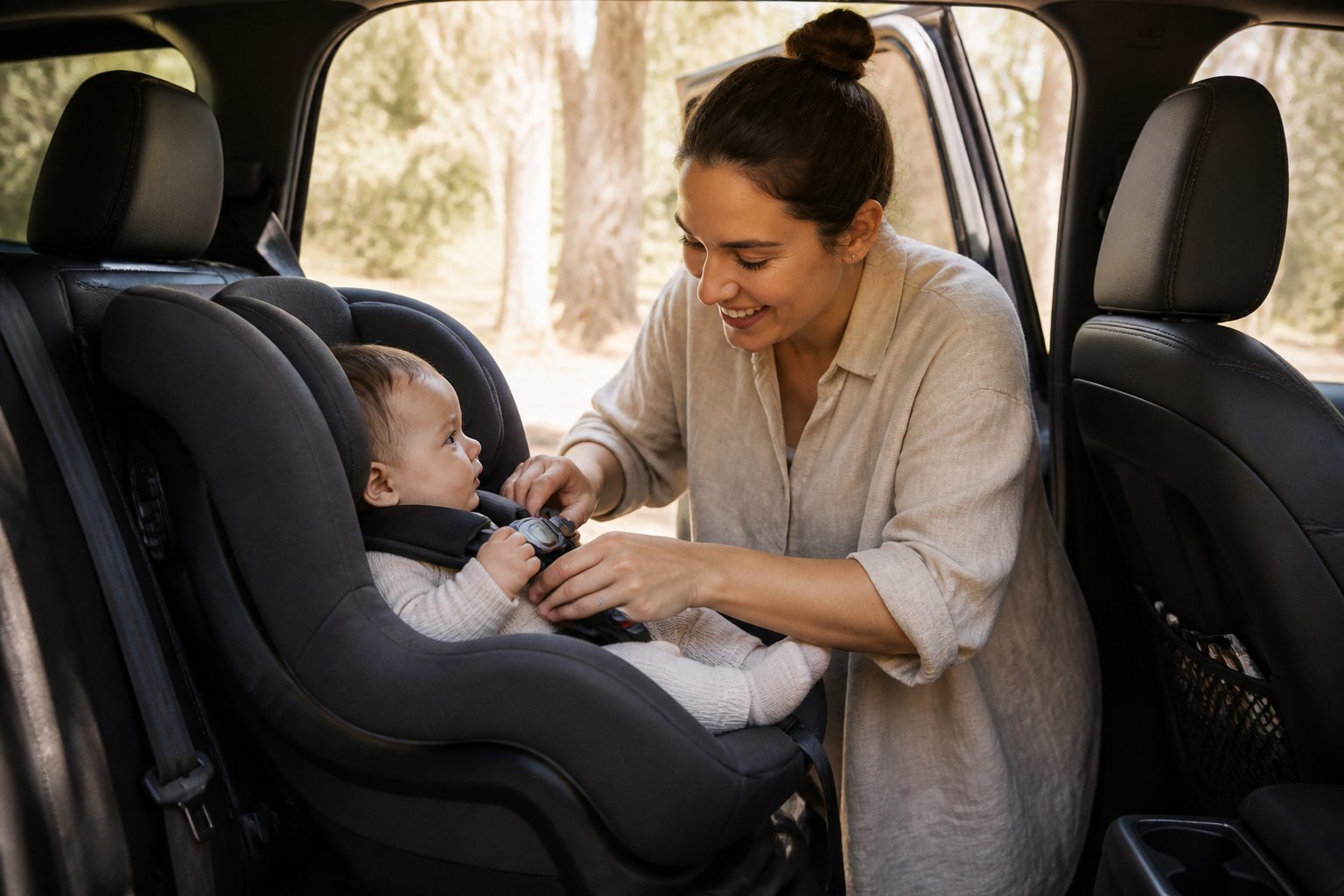
Navigating Australian car seat laws can be confusing. Our expert nurse explains the requirements for NSW, VIC, and QLD to keep your baby and toddler safe on every journey.
Getting ready for your first drive home with your newborn is such a monumental moment, but it often comes with a side of nerves about safety and regulations. Making sure you have the right baby car seat Australia wide ensures your little one stays safe and comfortable as you begin your family adventures together.
Understanding the Australian Standards
In Australia, all car seats must comply with the Australian/New Zealand Standard AS/NZS 1754. This is one of the most rigorous safety standards in the world, requiring seats to undergo stringent crash testing, including side-impact tests which aren't always mandatory in other countries. When you are browsing our free parenting tools, you will notice that safety is always at the forefront of our recommendations.
It is important to look for the five-tick red ‘SAI Global’ sticker or the relevant Australian Standards certification mark on the physical seat. Buying a seat from overseas might seem tempting, but it is actually illegal to use a seat that doesn’t meet Australian standards, and it could void your insurance. This applies whether you are in a quiet suburb in Victoria or the busy streets of Sydney.
The Law by Age: Rear-Facing vs Forward-Facing
While laws are set by each state—including NSW, VIC, and QLD—the National Road Rules provide a consistent framework that most states follow closely. The underlying principle, supported by experts at the Raising Children Network and Red Nose, is that children are safest when rear-facing for as long as possible.
Babies under 6 months
By law, infants under 6 months must be in a dedicated rear-facing restraint with an inbuilt harness. It is against the law for them to sit in the front seat if the car has two or more rows of seats. As you monitor your little one’s growth using a baby tracker, you might notice they are getting quite long, but it is essential to keep them rear-facing until they reach the height markers on the seat.
6 months to 4 years
Once your baby reaches 6 months, they can legally move to a forward-facing seat, but healthcare professionals and the NHMRC recommend staying rear-facing until they outgrow the seat's markers. For toddlers over 12 months, staying rear-facing provides significantly better protection for their developing neck and spine.
State-Specific Nuances: NSW, VIC and QLD
While the age rules are largely the same across the country, each state has its own specific transport authority that manages enforcement and providing local advice.
- New South Wales (Transport for NSW): NSW strictly enforces that children under 4 cannot travel in the front seat. They also provide a network of authorised restraint fitters to ensure your seat is installed correctly.
- Victoria (VicRoads): In Victoria, the focus is heavily on 'best practice' rather than just the minimum law. They strongly advocate for keeping toddlers rear-facing until they are at least 2 or 3 years old if the seat allows.
- Queensland (Department of Transport and Main Roads): Queensland law matches the national standard, but given the heat, they often provide additional advice regarding keeping children hydrated and ensuring metal buckles don't burn the skin during summer.
If you have recently celebrated your new arrival with personalised baby arrival cards, your next priority should be ensuring your vehicle is ready. Many local councils in these states offer free or subsidised safety checks with a professional fitter—a service highly recommended for first-time parents.
Common Mistakes and How to Avoid Them
Even with the best baby car seat Australia offers, incorrect installation can compromise safety. According to some Australian studies, up to 70% of car seats are not installed or used correctly.
- The 'Pinch Test': If you can pinch the webbing of the harness between your fingers, it is too loose. It should be firm but comfortable.
- Twisted Straps: Always ensure the straps are flat. Twisted straps can cause bruising or injury in an accident as the force is not distributed evenly.
- Top Tether: Every Australian car seat requires a top tether strap to be connected to an approved anchor point. This prevents the seat from tipping forward in a crash.
If you are ever concerned about your child’s breathing while in a car seat, or if they have been involved in even a minor collision, please contact your GP, midwife, or in an emergency, call 000 immediately.
When to Move to the Next Stage
It can be tempting to rush into the next stage, especially when you are following baby milestones month by month and seeing your little one grow. However, transition should always be based on the height markers on the seat, not just age or weight. For toddlers, staying in a 5-point harness is recommended until they physically no longer fit, usually around age 4 or 7 depending on the seat model.
The Raising Children Network suggests that children should only move to a booster seat once their shoulders are above the lower shoulder height marker. Similarly, a toddler should only move to a standard car seat and seatbelt once they can sit with their back against the seat and their knees bending comfortably over the edge, which usually happens around 145cm tall.
Financial Support and Services Australia
Setting up for a baby or toddler is expensive. While Medicare covers your healthcare costs, the expense of car seats is a significant out-of-pocket cost for families. If you are receiving payments from Services Australia, such as the Family Tax Benefit, you may want to check if you are eligible for any local community programs that help with the provision or installation of safety restraints for low-income families.
Remember that second-hand seats are generally discouraged unless you know the full history of the seat. A seat that has been in a crash, even a minor one, must be replaced. Check the 'expiry date' on the plastic shell—most Australian seats have a lifespan of 10 years from the date of manufacture.
Conclusion
Choosing and installing the right baby car seat Australia wide is one of the most important steps in your parenting journey. By following the NHMRC guidelines, state laws, and checking in with your local maternal health nurse, you can ensure your travels are safe and stress-free. Whether you are navigating the suburbs of Melbourne or the coastal roads of Queensland, a correctly fitted seat provides the peace of mind every parent deserves.
For more evidence-based tips on preparing for your new arrival and navigating the toddler years, explore our full range of Australian parenting guides.
Beyond the Rules: Common Car Seat Questions and Tips
Navigating car seat safety can feel overwhelming, especially with so many different recommendations out there. Here, we address some common questions and offer practical tips to help you feel confident your little one is safe on every journey.
When Can My Baby Face Forward?
This is a question we hear a lot! In Australia, children must remain in a rear-facing car seat until they are at least 6 months old. However, it's strongly recommended to keep your child rear-facing for as long as possible, ideally until they reach the maximum height or weight limit of their rear-facing car seat. Rear-facing provides superior protection for a baby's developing head, neck, and spine in the event of a collision. Some car seats allow rear-facing up to 2-3 years of age, and if your child fits comfortably within the seat's limits, this is the safest option.
Red Flags: When to Get Your Car Seat Checked
While most car seat installations are straightforward, there are times when it's wise to seek expert advice. If you've been in a car accident, even a minor one, it's crucial to have your car seat inspected by a professional or replaced, as internal damage may not be visible. Similarly, if you're struggling to achieve a secure fit, the seatbelt is twisted, or the harness straps aren't sitting correctly on your child's shoulders, it's time to get it checked. Your local council or a certified car seat fitter can provide peace of mind. For more safety tips, check out our Free Parenting Tools.
Choosing the Right Seat: Beyond Age and Weight
While age and weight are key factors, don't forget about your child's height and shoulder markers when selecting a car seat. Always refer to the manufacturer's instructions for specific guidelines. A child's shoulders should not be above the top shoulder marker when rear-facing, or above the highest shoulder strap slot when forward-facing in a convertible seat. If you're unsure about which car seat is right for your growing family, our tools can help you compare options.
Remember, a properly installed car seat is one of the most important things you can do to keep your child safe on the road.