Baby-Led Weaning: A Maternal Health Nurse's Starter Guide
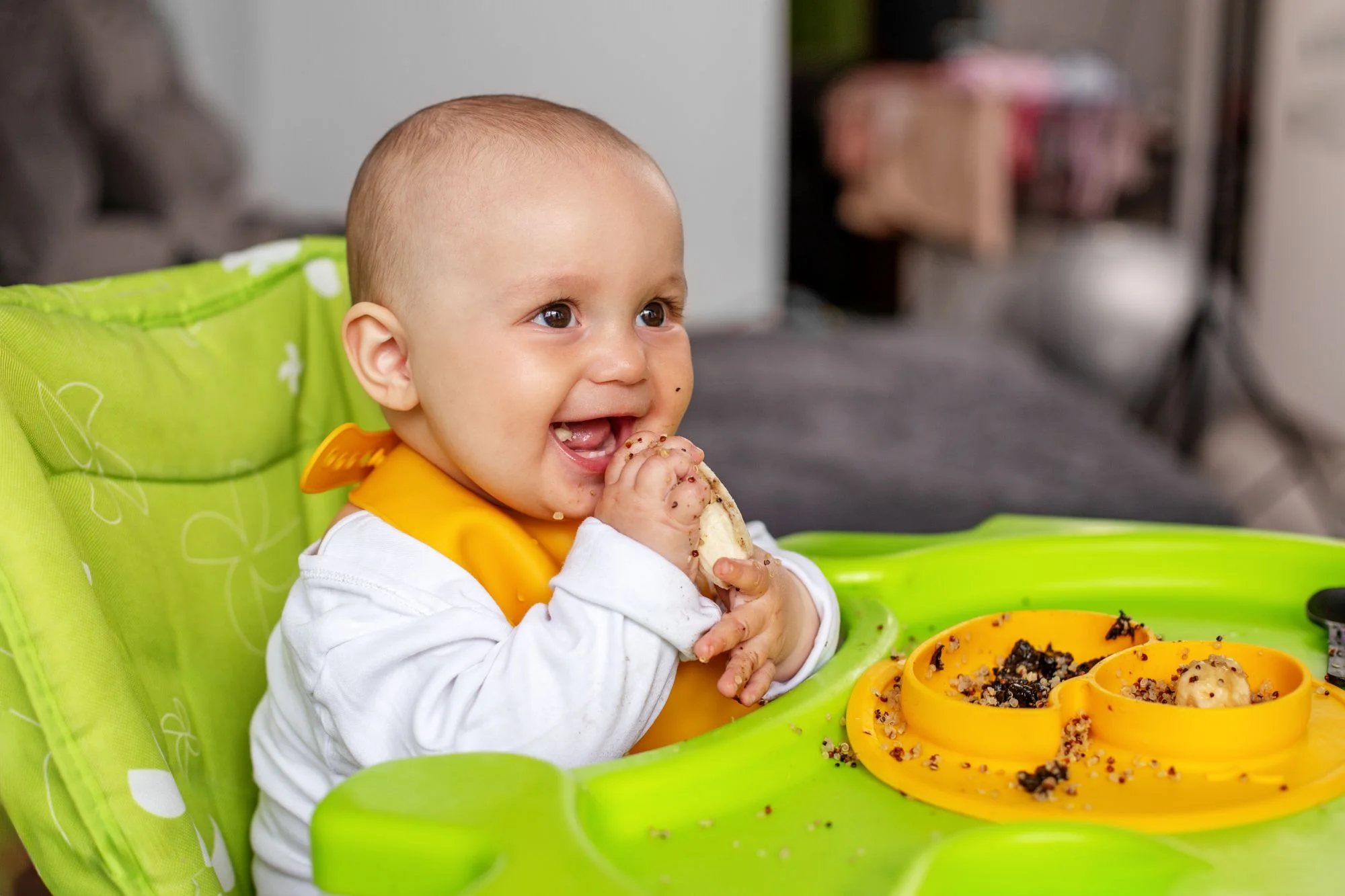
A calm, evidence-informed guide to starting baby-led weaning at 6 months — readiness signs, safe first foods, the gagging vs choking difference, and a gentle first-week plan.
Starting solids is one of those milestones that feels equal parts exciting and nerve-wracking. If you've been hearing the term baby-led weaning (often shortened to BLW) and wondering whether it's right for your family, this guide will walk you through what it actually is, when to start, which foods are safest, and how to tell the difference between gagging and choking — without the pressure or perfectionism.
What is baby-led weaning?
Baby-led weaning is an approach to introducing solids where your baby feeds themselves soft, appropriately-sized pieces of family food from the very first meal — instead of being spoon-fed purées. The idea is that your baby controls what goes in, how much, and how fast.
BLW isn't a strict method. It's not "no purées ever", it's not a rule that you must skip stages, and it's not a competition. Most families who do BLW end up doing a combination approach — some self-feeding, some spoon-feeding — and that's completely fine.
When to start: the 6-month readiness signs
Australian and international guidelines (NHMRC, WHO) recommend introducing solids at around 6 months, not before. Your baby is ready when they show all of these signs:
- They can sit upright with little or no support.
- They have good head and neck control.
- They reach for food and bring it to their mouth.
- They've lost the tongue-thrust reflex (food doesn't automatically push back out).
Age alone isn't enough — a baby who turns 6 months tomorrow but can't sit steadily isn't quite ready. Wait the extra week or two. If your baby is showing signs before 6 months, talk to your Maternal Health Nurse before starting.
BLW vs purées vs combo feeding
There's no medal for choosing one over the other. Research shows babies introduced via BLW, purées, or a combination end up with similar growth, similar iron status, and similar likelihood of being adventurous eaters by age 2 — provided the food offered is varied and iron-rich.
Choose whichever feels manageable for your family. Many parents start with soft finger foods at home meals and offer iron-fortified cereals or mashed foods on the go. That's still baby-led in spirit.
Safe first foods
The golden rule: soft enough to squish between your thumb and finger, and shaped so your baby can grip it. Good first options include:
- Steamed vegetables in finger-sized strips — broccoli florets (with the stem as a handle), carrot sticks, sweet potato wedges, zucchini.
- Soft fruit — ripe banana, ripe pear, ripe avocado, soft mango.
- Iron-rich foods from day one — slow-cooked beef strips, well-cooked egg yolk, lentils, iron-fortified baby cereal mixed thicker so it sticks to a pre-loaded spoon.
- Toast fingers with a thin smear of nut butter or avocado.
- Soft-cooked pasta shapes like penne or fusilli.
Iron is the priority nutrient from 6 months onwards — babies' iron stores from birth start to deplete, so include an iron-rich food at most meals.
Foods to avoid before 12 months
- Honey — risk of infant botulism.
- Whole cow's milk as a drink (small amounts in cooking or yoghurt/cheese are fine).
- Added salt and sugar — babies' kidneys can't process much salt.
- Choking-hazard shapes: whole nuts, whole grapes (always quarter lengthwise), popcorn, hard raw apple or carrot, hot dogs/sausages in coin shapes, marshmallows, hard lollies.
- Low-pasteurised or raw dairy, eggs, or seafood.
Gagging vs choking — the difference matters
This is the part that scares most parents away from BLW, so let's be clear:
Gagging is normal, loud, and protective. Your baby's gag reflex sits much further forward on the tongue than ours. You'll see them cough, sputter, make a face, sometimes go red, and push the food back forward. They're solving the problem themselves. Stay calm, stay close, don't reach into their mouth.
Choking is silent. A choking baby can't cry, cough, or breathe. They may go limp or turn blue around the lips. This is when you act — back blows and chest thrusts as taught in infant first aid.
Every parent introducing solids should do an infant first-aid course. It is the single best thing you can do to feel confident at the high chair and build your overall feeding confidence. Most hospitals, councils, and St John Ambulance run them.
A gentle first-week plan
- Day 1–2: One meal a day, ideally lunchtime when baby is alert but not over-tired. Offer 2–3 soft finger foods on the tray. Don't worry if nothing is swallowed.
- Day 3–4: Same one meal. Add an iron-rich option (lentils, soft meat strip, fortified cereal).
- Day 5–7: Move to two meals a day if baby is enjoying it. Keep milk feeds (breastmilk or formula) on demand — they're still the main nutrition source until 12 months.
- Always: Baby sits upright, strapped in, supervised, never propped or reclined while eating.
Common worries
"They're not eating anything!" Totally normal in the first 4–6 weeks. Solids before 12 months are about exposure and skill-building, not calories. Milk still does the heavy lifting.
"The mess is overwhelming." A long-sleeve bib, a splat mat under the high chair, and an absolutely zero-judgement attitude help. This phase passes.
"They keep spitting it out." That's the tongue-thrust reflex fading. Keep offering. It often takes 10+ exposures for a baby to accept a new food.
"Should I worry about allergies?" Introduce common allergens (egg, peanut, dairy, wheat, sesame, fish) before 12 months, one at a time, in small amounts, earlier in the day. Early introduction is now actively recommended to reduce allergy risk.
When to call a Maternal Health Nurse
Speak to your Maternal Health Nurse if your baby:
- Is showing no interest in food by 7 months.
- Consistently refuses to swallow anything by 8–9 months.
- Has a noticeable reaction (rash, swelling, vomiting) after a new food.
- Is losing weight or dropping weight percentiles after starting solids.
- Coughs or wheezes during or after eating, repeatedly.
BLW should feel like a slow, joyful unfolding — not a daily stress. If it's stressful, change the approach, not the baby.
Related reading: handling toddler mealtime battles
Related reading: baby sunburn first aid
Related reading: signs of oral thrush
Related reading: signs your baby may be overfed