Helpful Tools for Supporting Baby Sleep Safely
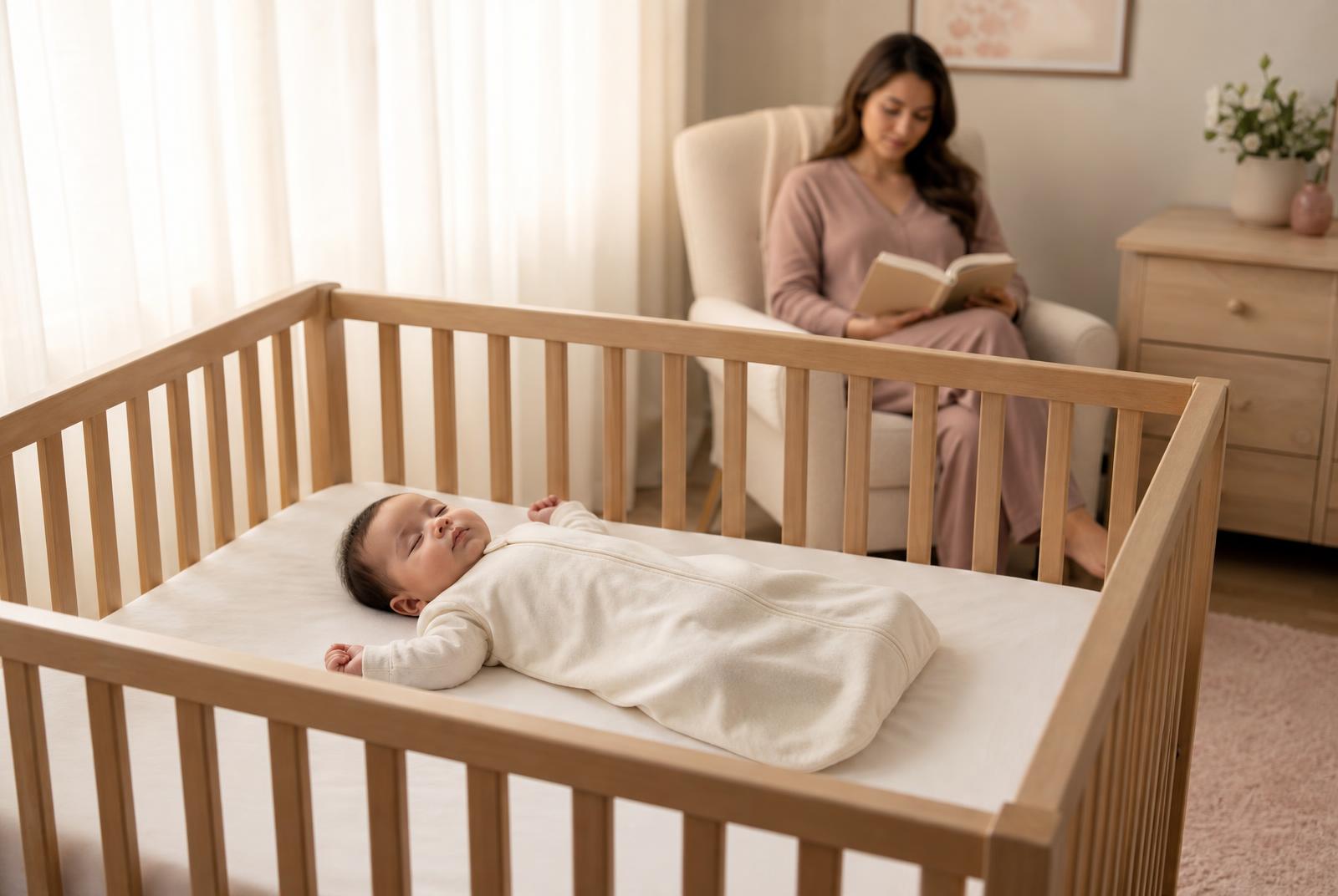
Explore practical tools that can support baby sleep, from sleep sacks and white noise to routines, tracking and responsive settling.
Yes, some tools can be helpful for supporting baby sleep, especially a safe sleep space, a well-fitted sleep sack, dim lighting, a simple bedtime routine and, for some families, quiet white noise. These tools cannot make a baby sleep or prevent normal waking, but they can provide consistent cues and make responsive settling easier.
The most useful tool is one that supports safe sleep, suits your baby's age and temperament, and reduces rather than adds to family stress. You do not need expensive equipment or a complicated schedule. Begin with the basics, make one change at a time and keep expectations realistic: waking for feeding, comfort and closeness is normal in infancy.
Start with a safe sleep space
Before considering gadgets, establish a safe place for every sleep, including naps. Follow the current safe sleep guidance where you live. In general, place your baby on their back on a firm, flat and level mattress in a safety-approved cot, bassinet or other approved infant sleep space. Keep the space clear of pillows, quilts, loose blankets, bumpers, positioners, pods, nests, toys and weighted products.
Use a fitted sheet and dress your baby appropriately for the room temperature. A clear cot may look plain, but it is the safest setup. Keep the sleep space smoke-free and avoid overheating. Room-sharing, with your baby in their own separate sleep space, is commonly recommended during early infancy. Visit our baby sleep hub for more age-appropriate sleep guidance.
Tools that may help
Sleep sacks
A correctly sized, non-weighted sleep sack can replace loose bedding and become a consistent sleep cue. Check that the neck and arm openings fit securely so your baby cannot slip inside. Choose a fabric and warmth rating suitable for the room, and check your baby's chest or back rather than hands and feet when assessing warmth.
If you swaddle, use a lightweight, purpose-designed wrap and always place your baby on their back. Stop swaddling as soon as your baby shows signs of trying to roll. Never use weighted swaddles, weighted sleep sacks or products that restrict a rolling baby's movement.
White noise
Soft, continuous white noise can mask unpredictable household sounds and provide a familiar cue. Position the machine away from your baby's head and cot, use the lowest effective volume and avoid placing it inside the sleep space. The sound should be quiet enough for normal conversation nearby.
White noise is optional. If it appears stimulating or becomes another task you dislike, do not use it. Avoid leaving phones, charging cables or other electrical hazards within reach.
Dim lighting and blackout blinds
Lower light in the evening can signal that sleep is approaching, while daylight and ordinary activity after waking can support the difference between day and night. Blackout blinds may be useful for daytime naps or bright summer evenings, but they are not essential.
Make sure blinds are safely installed and all cords are completely inaccessible. A dim, warm night-light can help you see during feeds and nappy changes without fully brightening the room. Keep it away from the cot and use cables safely.
A short, repeatable routine
A routine is one of the simplest sleep tools. It does not need to follow the clock precisely or involve sleep training. Try two or three calm steps in roughly the same order, such as changing the nappy, putting on a sleep sack, feeding, singing and cuddling.
Follow your baby's cues as well as the routine. Turning away, becoming quieter, rubbing their eyes, losing interest or fussing can suggest tiredness, although cues differ between babies. If your baby is hungry, uncomfortable or seeking connection, respond to that need rather than trying to make the routine work perfectly.
Baby monitors
A monitor may offer practical reassurance when you are in another room, but it does not replace safe sleep practices or checking your baby in person. Keep the camera, cords and power source well outside the cot and your baby's reach.
Consumer movement, breathing and oxygen monitors are not proven substitutes for recommended safe sleep measures. Unless a healthcare professional has advised medical monitoring for your baby, these devices can create false reassurance, false alarms or extra anxiety. Ask your clinician how to use any medically recommended equipment.
Sleep logs and tracking apps
A simple sleep and feeding log can help identify broad patterns, prepare for a healthcare appointment or share information between caregivers. It may also reveal that sleep varies more than expected, which is normal.
Tracking is not necessary, and minute-by-minute data can make some parents more anxious. Record only what is useful, such as approximate sleep times, feeds and anything unusual. Stop if tracking makes you feel pressured to control your baby's sleep. For a gentle starting point, try our baby sleep quiz.
Comfort and responsive settling
Your voice, touch and presence are valuable sleep supports. Depending on your baby's age and needs, settling might include feeding, holding, rocking, patting, singing or staying close. It is normal for babies to need help moving into sleep, and offering comfort does not spoil them.
If you feel sleepy while holding or feeding your baby, move them to their safe sleep space or ask another alert adult to help. Sofas and armchairs are especially hazardous places to fall asleep with a baby. Plan night feeds so you can reduce avoidable risks, and never sleep with a baby if you have used alcohol, recreational drugs or sedating medicines, or if other risk factors make sharing a sleep surface unsafe.
Tools to avoid
Be cautious when a product claims to make sleep completely predictable, prevent sudden infant death, keep a baby in one position or eliminate normal waking. Marketing terms do not guarantee that an item is safe for sleep.
- Do not use inclined sleepers, sleep positioners, wedges, anti-roll devices, pods or nests as a routine sleep space.
- Keep pillows, cot bumpers, toys, sheepskins, quilts and loose bedding out of the cot.
- Avoid weighted sleep products and anything that compresses the baby's chest or restricts breathing or movement.
- Do not allow routine sleep in sitting devices such as car seats, swings or bouncers. If your baby falls asleep there, move them to a firm, flat, approved sleep surface as soon as practical.
- Do not use products that conflict with local safe sleep advice, even if they are advertised for babies.
How to choose what is helpful
First ask whether the tool supports or undermines a clear, firm, flat sleep space. Check the manufacturer's age, size and developmental limits, and look for recalls or current safety notices in your country. Second-hand items should include all parts and instructions and meet current standards.
Next, consider whether the tool solves a real problem. A sleep sack may keep bedding simple; a dim light may make feeds easier; a log may help you describe a pattern. No tool should require you to ignore hunger, illness, distress or a need for comfort.
Introduce one change at a time and observe your baby over several days when possible. Development, feeding and illness can temporarily alter sleep, so a difficult night does not necessarily mean a tool failed. If equipment increases your worry, costs more than you can comfortably afford or complicates your routine, it is reasonable to stop.
When to seek help
Contact your maternal health nurse, midwife, GP or child health clinician if your baby regularly struggles to feed, has poor weight gain, seems unusually sleepy or difficult to wake, snores persistently, has noisy or laboured breathing, appears to pause breathing, or if sleep difficulties are affecting your ability to function safely. Seek support promptly if you feel overwhelmed, persistently low or anxious, or worried you may fall asleep with your baby in an unsafe place.
Call emergency services now if your baby is not breathing, is gasping, has blue, grey or unusually pale lips or skin, is floppy or unresponsive, has a seizure, or has severe breathing difficulty such as chest pulling in with each breath. A fever in a baby under three months also needs urgent medical assessment. Do not rely on a monitor reading when your baby looks unwell; check them directly and seek urgent help.
Useful sleep tools are simple supports, not tests of your parenting. Prioritise a safe sleep space, respond to your baby's needs and choose only the tools that genuinely make care calmer and more manageable.