Why Does My Baby Keep Waking During the Night?
Night waking is usually a normal part of baby sleep. Learn common causes, practical ways to respond and signs that your baby may need medical help.
Your baby may keep waking during the night because infant sleep cycles are short and babies naturally stir between them. Hunger, a need for comfort, developmental changes, discomfort, illness and the sleep environment can all make it harder to settle back to sleep. Night waking is especially common in the first year and does not automatically mean you are doing anything wrong.
The most helpful response depends on your baby's age, feeding needs, development and health. Pause briefly to see whether your baby resettles, then respond calmly if they need you. Check for hunger, discomfort or illness, keep nighttime care quiet and predictable, and use safe sleep practices every time. Responsive reassurance does not spoil a baby.
Why babies wake throughout the night
Normal sleep cycles
Babies move through lighter and deeper stages of sleep, briefly stirring or waking between cycles. Adults do this too, but babies may need more support to return to sleep. Grunting, wriggling, brief cries and opening the eyes do not always mean a baby is fully awake. If your baby is safe and not distressed, a short pause may allow them to settle.
Sleep patterns vary widely and change as the nervous system matures. Some babies begin having longer stretches early, while others continue waking regularly. Sleeping through the night is not a developmental milestone that every baby reaches at the same age. Find more age-appropriate guidance in our baby sleep hub.
Hunger and feeding
Young babies have small stomachs and commonly need milk overnight. Night feeds can remain important during growth spurts, when daytime feeding has been distracted or when a baby is not yet ready to go for a long period without milk. Breastfed babies may also feed for comfort and connection as well as nutrition.
Offer a feed when your baby shows hunger cues such as rooting, bringing hands to the mouth or becoming increasingly restless. Follow guidance from your maternal health nurse, midwife, GP or paediatric clinician about whether your individual baby still needs overnight feeds. Do not routinely restrict feeds or add cereal to a bottle in an attempt to extend sleep.
Development and changing routines
Rolling, crawling, standing, language development and increased awareness can temporarily disrupt sleep. Separation anxiety may also lead an older baby to seek reassurance when they wake. Travel, starting childcare, a changed nap pattern or an unusually stimulating day can have a similar effect.
During these phases, keep bedtime and overnight responses familiar. Offer warmth and reassurance without expecting immediate independent settling. A consistent rhythm can help, but flexibility is appropriate when your baby is learning, unwell or going through a major change.
Discomfort or illness
A wet or soiled nappy, being too hot or cold, nasal congestion, reflux symptoms, eczema, constipation, teething discomfort or an infection may disturb sleep. Teething can cause tender gums and extra drooling, but significant fever, marked lethargy or persistent distress should not automatically be blamed on teething.
Check your baby's temperature, breathing, colour, feeding and nappies if their waking pattern changes suddenly. Seek professional advice before giving medicine, and follow local dosing guidance based on your baby's age and weight.
Sleep pressure and timing
Both too little and too much daytime sleep can affect the night, although needs differ considerably between babies. A baby who is overtired may become harder to settle and wake more often. Conversely, a late or unusually long nap may mean they are not ready for sleep at their usual bedtime.
Watch your baby rather than relying only on the clock. Early tired signs can include becoming quieter, losing interest in play, staring into the distance or rubbing the eyes. Try a calm wind-down before your baby becomes very upset.
How your baby falls asleep
If your baby usually falls asleep while feeding, rocking or being held, they may look for the same support after naturally waking between sleep cycles. This is not a bad habit or a parenting failure. These are normal, nurturing ways to help a baby sleep.
If the current pattern is manageable, you do not need to change it. If it is no longer sustainable, gradually add other comforting cues, such as dim light, a song, gentle patting or a consistent phrase. Start with one sleep period and make small changes while continuing to respond to distress.
What to do when your baby wakes
- Pause and observe: If your baby is only stirring, allow a brief moment to see whether they settle. Respond promptly if crying escalates or they need you.
- Check basic needs: Consider hunger, temperature, a dirty nappy, pain, congestion or illness.
- Keep nights calm: Use low lighting, quiet voices and minimal stimulation during feeds and nappy changes.
- Offer reassurance: Feed, cuddle, rock, pat or speak softly according to what your baby needs and what works for your family.
- Share care where possible: A partner or trusted support person may help with settling, nappy changes or daytime rest.
- Look for patterns: Note wake times, feeds, naps and symptoms for several days. Our night-wake tracker guide can help you gather useful information without monitoring every minute.
Supporting better sleep gently
A predictable bedtime routine can signal that sleep is approaching. It might include a feed, nappy change, sleep clothing, a short book or song, and a cuddle. Keep it simple enough to repeat most nights. Daytime exposure to natural light, active play appropriate to your baby's age and regular feeding opportunities may also support the developing body clock.
Aim for gradual improvement rather than a perfectly uninterrupted night. One change at a time makes it easier to see what helps. If you want to reduce a particular settling method, begin by using it until your baby is calm, then try another form of support. If your baby becomes distressed, provide more help and try again another time.
Safe sleep during night waking
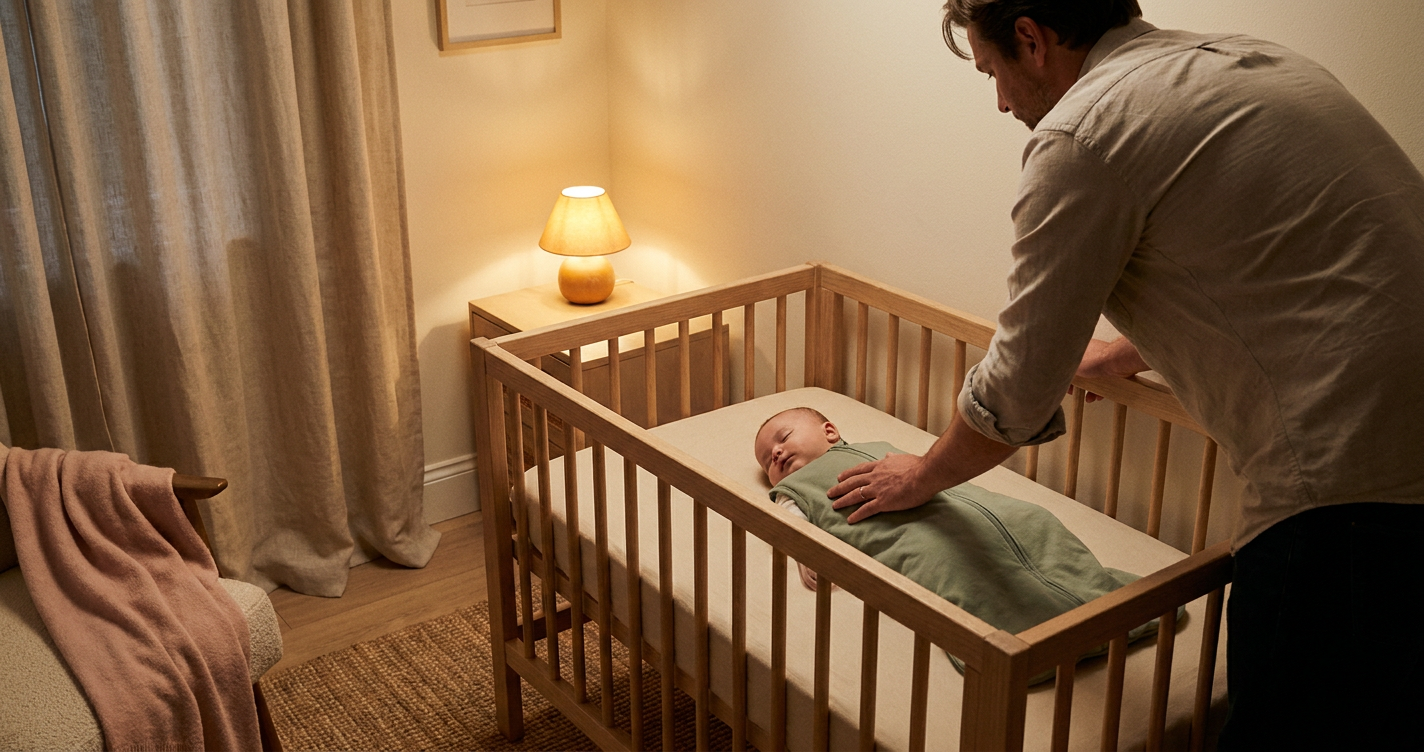
Place your baby on their back for every sleep on a firm, flat sleep surface in their own clear cot or bassinet. Keep pillows, loose bedding, cot bumpers, toys and other soft objects out of the sleep space. Follow your local safe sleep recommendations for room-sharing, clothing and room temperature.
Fatigue can make accidental sleep more likely. Avoid feeding or settling your baby on a sofa or armchair if you might fall asleep, as these settings are particularly hazardous. If you bring your baby into bed to feed or comfort them, return them to their own safe sleep space before you go back to sleep. Never sleep beside a baby after smoking, drinking alcohol, taking sedating medicines or using recreational drugs.
When to seek help
Contact your maternal health nurse, midwife or GP if night waking has changed suddenly, your baby seems persistently uncomfortable, feeding has become difficult, weight gain is a concern, wet nappies have decreased, or exhaustion is affecting your ability to cope safely. They can assess feeding, growth, reflux, eczema, allergies, infection and other possible contributors.
Seek urgent medical advice if your baby is under three months and has a temperature of 38°C or higher, or if you are concerned about a fever at any age. Contact emergency services immediately if your baby has difficulty breathing, pauses in breathing, blue or grey lips or skin, is unusually floppy or hard to wake, has a seizure, has a non-blanching rash, shows signs of severe dehydration, or is seriously unwell. Trust your instincts and seek help whenever something does not seem right.
If sleep deprivation is causing thoughts of harming yourself or your baby, place your baby safely in their cot, step away briefly, and contact emergency services or an urgent mental health service. Ask a trusted adult to stay with you and the baby while help is arranged.
A realistic view of night waking
Frequent waking can be exhausting, but it is often a temporary and developmentally normal part of infancy. Your baby's sleep is not a measure of your parenting. Focus on safety, responsive care and rest for the whole family wherever possible. If the pattern feels unmanageable, personalised support can help you identify realistic changes without ignoring your baby's needs.