Newborn Poo: What's Normal (and What's Not)
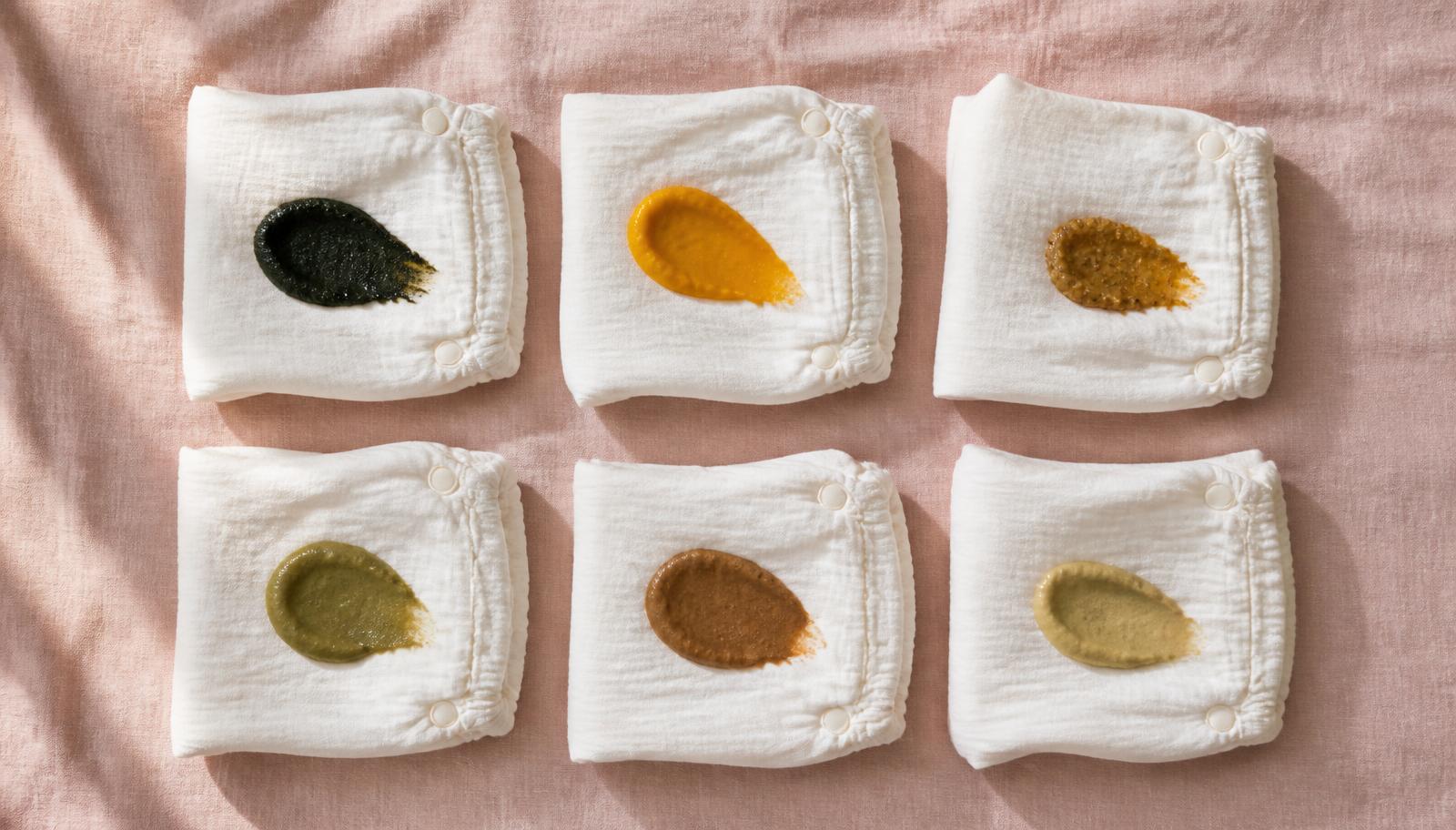
Every colour, frequency and texture decoded — and the three colours that always mean call your GP.
Nothing prepares you for how much you'll discuss poo in the first month. Here's a Maternal Health Nurse–approved guide to what's normal at every stage, what's not, and the three colours that always warrant a GP call.

Days 1–4: meconium
Sticky, black-green and tar-like. This is meconium — the gut lining baby has been carrying since pregnancy. Expect 1–4 per day until it clears around day 4.
Days 4–14: transitional
Greenish-brown loosening to yellow as milk feeding gets established. Frequency increases. Breastfed babies often do one with every feed; formula-fed babies tend to be less frequent but firmer.

Two weeks to 6 months
- Breastfed: mustard yellow, seedy, sometimes runny — anything from 5 a day to one every 7–10 days is normal as long as baby is comfortable and gaining weight.
- Formula-fed: firmer, tan to pale brown, less frequent — 1–3 per day typical.
After solids
Colour and smell change overnight once you start solids. Pieces of food (corn, blueberries, leafy greens) often appear undigested — completely normal.
Three colours to phone your GP
- White, pale or chalky — possible liver issue.
- Red or bloody — could be a small tear, but always worth checking.
- Black (after the first week) — possible upper-gut bleeding.
Diarrhoea (frequent, watery, foul-smelling) plus fever or feeding less is a same-day GP call, especially for babies under 3 months.
Keep reading
- How much milk does a baby need?
- Constipation in babies: gentle relief
- Formula stages explained
- All free parenting tools
- Personalised care plans by a Maternal Health Nurse
Frequently asked questions
Is bright green poo normal?
Often yes — usually a foremilk/hindmilk imbalance or a recent feed change. Persistent green plus unsettled feeding warrants a chat with your MCH nurse.
How long can a breastfed baby go without pooing?
Up to 7–10 days after 6 weeks of age can be normal if baby is comfortable, feeding well, and gaining weight.
Why does my baby strain so much?
Newborns push with their whole body. Straining without a hard, dry stool is not constipation.
What if my baby's poo smells terrible?
Once solids start, smell ramps up. Sudden, severe foul smell with diarrhoea needs a GP review.
Are mucus stools normal?
Small amounts occasionally — yes. Persistent, large amounts or blood-streaked — see your GP.
This article is general information and not medical advice. For personalised support, speak to your GP or call Pregnancy, Birth and Baby on 1800 882 436.
The first 6 weeks in detail
Day 1
1–2 sticky black meconium nappies. Some babies pass meconium during birth so you may not see one on day 1 at all.
Days 2–3
2–3 dark green to brown transitional stools as milk replaces meconium. Wet nappies start to increase — aim for at least 2–3 by day 3.
Days 4–7
Yellow seedy poos appear (breastfed) or tan formed poos (formula). Wet nappies should be 6+ per day by day 5.
Weeks 2–6
Breastfed babies often poo with every feed. Formula-fed babies usually settle to 1–3 a day. Both are normal.
After 6 weeks (breastfed)
Frequency can dramatically reduce — sometimes only one bowel motion every 7–10 days. As long as it's soft when it arrives and baby is comfortable, this is not constipation. Breast milk is highly digestible and produces less waste.
Reading nappy colour
- Mustard yellow, seedy: classic breastfed baby — perfect.
- Tan, brown, formed: classic formula-fed baby — perfect.
- Green: common; usually foremilk imbalance, a feed change, or a virus. Persistent + unsettled = MCH nurse chat.
- Orange or dark yellow: usually fine — sometimes happens with certain solids.
- Black (after day 5): GP today.
- Red or bloody: GP today.
- White, chalky, pale: GP today — possible liver issue.
The nappy log that saves a GP visit
If something feels off, a 3-day nappy log gives your GP exactly what they need: time of day, wet vs dirty, colour, texture, and how baby was just before/after. Our free Baby Tracker generates this automatically.
Dehydration signs (always worth a same-day call)
- Fewer than 6 wet nappies in 24 hours after week 1.
- Very dark urine or strong-smelling.
- Sunken fontanelle (soft spot).
- Dry lips and mouth.
- Floppy or unusually sleepy.
Dehydration in babies under 6 months progresses fast. Call your GP, 13HEALTH, or go to your nearest emergency department.
A picture-perfect nappy week
If you're a first-time parent and want a sanity check, here's what a typical newborn nappy week often looks like in the first month.
- Wet nappies: 6–8 a day, pale and not strong-smelling.
- Dirty nappies (breastfed): 3–5 a day, often with most feeds.
- Dirty nappies (formula): 1–3 a day, more formed.
- Colour: mustard yellow with seedy bits (breastfed) or tan-brown (formula).
- Texture: soft, creamy, sometimes runny — not watery, not pebble-hard.
What changes after 6 weeks
Breastfed nappy patterns can change overnight after 6 weeks. Babies sometimes go from 4 a day to one every 7–10 days. Parents panic; nurses smile. As long as baby is gaining weight, comfortable, and the eventual stool is soft, it's normal.
The first solids surprise
Starting solids changes everything. Nappies smell different, look different, and contain visible food (corn, blueberry skins, sultanas). Iron-fortified foods can turn poo dark green or almost black — not a worry. Beetroot and dragon fruit turn poo and wee pink to red — also not a worry, just a heart-attack moment until you remember dinner.
Quick-reference colour chart
- Black tar (first days): meconium. Normal.
- Greenish-brown (days 2–4): transitional. Normal.
- Mustard yellow / tan brown: normal milk poo.
- Green: usually fine; persistent + unsettled = nurse chat.
- Dark almost-black (after solids): usually iron-fortified food.
- White / pale / chalky: see your GP today.
- Red / bloody: see your GP today.
- Black (after the first week): see your GP today.
When in doubt, photograph it (sounds gross, deeply useful) and call 13HEALTH or your Maternal & Child Health Nurse. They've seen it all and they'd much rather reassure you than have you worry.
Trusted Australian sources for further reading
- Raising Children Network — Australia's government-funded parenting site, packed with evidence-based articles and short videos.
- Royal Children's Hospital Melbourne — Kids Health Info — clinician-written fact sheets covering common newborn and toddler concerns.
- Australian Breastfeeding Association (ABA) — free helpline on 1800 686 268, seven days a week, staffed by trained breastfeeding counsellors.
- Pregnancy, Birth and Baby — free telehealth advice on 1800 882 436.
- healthdirect 13HEALTH — registered nurse advice 24/7 (1800 022 222 in most states).
- Tresillian & Karitane — free or low-cost sleep, settling and parenting support across NSW, ACT and increasingly nationwide.
- Red Nose Australia — current safe-sleep guidance for every age and stage.
A note from our Maternal Health Nurse team
This article was reviewed by a registered Australian Maternal & Child Health Nurse on our editorial team. Our goal is to give you calm, accurate, evidence-based information that respects your instincts and your family's individual circumstances. We do not replace your own GP, MCH nurse, paediatrician or other treating clinician — but we hope we make the in-between moments easier.
If you'd like personalised guidance, our care plans are written by a registered Maternal Health Nurse and delivered to your inbox within 24 hours. They cover sleep, feeding, settling, behaviour and developmental concerns. Free tools — including our Baby Tracker, Sleep Coach and Ask Genie AI Midwife — are always available with a free account.
Above all, trust yourself. You know your baby better than anyone in the world.
Related reading: whether to call your midwife