Pregnancy Exercise Tracker: Safe Movement Week by Week
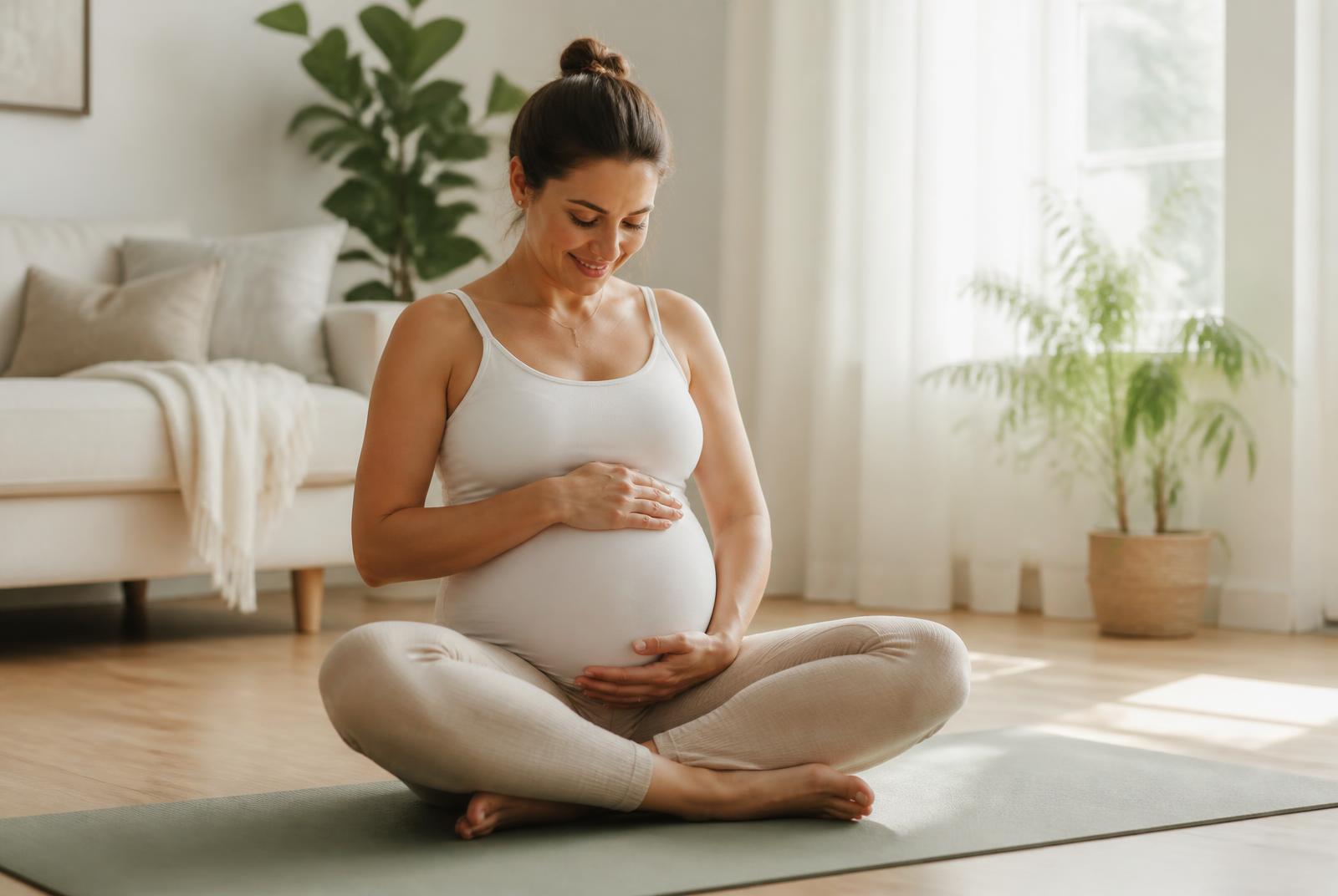
Our safe exercise in pregnancy tracker helps you log movement, listen to your body, and stay active and healthy week by week through your pregnancy.
Knowing how to move your body safely during pregnancy can feel confusing. You might hear stories about athletes who train right up to their due date, while others might tell you to put your feet up for nine months. The truth, for most people, is somewhere in the middle. Staying active is one of the best things you can do for your physical and mental wellbeing during pregnancy, but your approach will likely need to change as your body does.
Instead of thinking about what you can’t do, it’s more helpful to focus on what you can do. For most uncomplicated pregnancies, gentle, consistent movement is not only safe but strongly recommended. It’s about listening to your body, adapting your favourite activities, and building a routine that makes you feel strong and capable, not exhausted. The goal isn't to hit a personal best, but to maintain your health in a way that feels good for you and your growing baby.
As a Maternal Health Nurse, I often remind new parents that pregnancy is a time of incredible change, and your exercise habits should adapt along with you. This is where tracking your activity can be a powerful tool. It helps you see your efforts, stay motivated, and make smart choices week by week. Our Pregnancy Exercise Tracker is designed to help you do just that, turning confusing guidelines into a simple, confidence-boosting daily habit.
Why this matters
Regular physical activity during pregnancy is one of the pillars of a healthy nine months, alongside good nutrition and rest. The evidence is clear: staying active offers huge benefits for both you and your baby. It’s not about maintaining a certain look or even managing your Pregnancy Weight Gain Tracker; it's about holistic health.
From a physical standpoint, research shows that exercise can:
- Reduce the risk of pregnancy complications like gestational diabetes and pre-eclampsia.
- Help manage healthy weight gain within the recommended range for your body.
- Build stamina and strength for labour and birth. Think of it as training for a marathon—birth is a physical event, and preparation helps.
- Ease common pregnancy discomforts like back pain, constipation, and swelling.
- Promote a smoother postnatal recovery.
The mental health benefits are just as significant. A brisk walk or a gentle swim can do wonders for your mood by releasing endorphins. It can help reduce stress and anxiety, which are common feelings during the emotional journey of pregnancy. Many women also find that regular activity improves their sleep quality—something you can see for yourself when you use our Pregnancy Sleep Tracker. When you log your activity, you might notice a clear link between the days you move and the nights you sleep more soundly.
By tracking your movement, you’re creating a record of your commitment to yourself. It helps you stay accountable to your goals in a gentle, non-judgemental way. It also provides valuable data that can help you see patterns. For instance, you might notice that a 20-minute walk in the afternoon consistently lifts your spirits, a pattern that would be clear in your Pregnancy Mood Tracker. This insight is central to responsive parenting, which starts with being responsive to your own needs during pregnancy. For a complete overview of wellbeing in pregnancy, our Guide to a Healthy Pregnancy is a great place to start.
How the Pregnancy Exercise Tracker works
The Pregnancy Exercise Tracker is designed to be simple, supportive, and aligned with official health guidelines. The Australian Physical Activity and Sedentary Behaviour Guidelines for pregnancy recommend that, if you are healthy and have an uncomplicated pregnancy, you should aim for at least 150 minutes of moderate-intensity physical activity each week.
But what does “moderate intensity” actually mean? A simple way to measure it is the “talk test.” During moderate-intensity activity, you should be able to hold a conversation, but you wouldn't have enough breath to comfortably sing a song. The tracker helps you monitor this, so you can be confident you’re working in the right zone.
Our tracker works by helping you:
- Log your daily activity: Quickly record the type of exercise you did (like walking, swimming, or prenatal yoga) and for how long.
- Visualise your weekly progress: A simple chart shows you how your active minutes are accumulating towards the 150-minute weekly goal. This isn’t about pressure; it’s about motivation and celebrating your consistency.
- Monitor how you feel: Beyond just minutes, the tracker prompts you to rate the intensity and add a note about how the activity felt. This is key to listening to your body—was it energising? Did you feel any discomfort? This information helps you adapt and prevent overexertion.
- Integrate your health picture: The tracker is part of the connected Pregnancy Hub, where your activity log can provide context for your sleep, mood, and nutrition patterns.
Ultimately, the tracker gives you a clear, simple way to build a safe and beneficial exercise habit that supports you through every trimester.
Step-by-step guide
Getting started with the Pregnancy Exercise Tracker is easy. It’s designed to fit into your day seamlessly, taking only a minute or two to update. Here’s how to make the most of it:
- Set up your profile. The first time you use the tracker, you’ll enter your estimated due date. This helps the tool provide trimester-specific tips and reminders as your pregnancy progresses.
- Log your activity after each session. Once you’ve finished your walk, swim, or yoga class, open the tracker. Choose the activity from a pre-filled list or add your own.
- Enter the duration and intensity. Add the number of minutes you were active. Then, use the simple scale to rate the intensity: Light, Moderate, or Vigorous. For most of your pregnancy, you’ll be aiming for that “Moderate” zone where you can still talk but not sing.
- Add a personal note. This is one of the most powerful features. Use the notes field to jot down how you felt. For example: “Felt really energised after my walk,” “Lower back felt a bit stiff, need to remember to stretch,” or “Felt breathless quickly, took it slower.” These notes create a personal diary of your body’s signals.
- Review your weekly dashboard. At any time, you can view your weekly summary. You’ll see a visual representation of your active minutes adding up towards the 150-minute goal. Don't worry if you don’t hit it every week—some weeks, rest will be more important. The goal is consistency over perfection.
- Look for patterns. After a week or two of logging, start looking for connections. Check your Exercise Tracker alongside your Pregnancy Sleep Tracker. Are you sleeping better on the days you exercise? Or look at your Pregnancy Mood Tracker. Does a morning walk seem to prevent that afternoon slump? This is how you truly personalise your approach to a healthy pregnancy.
Common mistakes (and how to fix them)
It's common to have questions or make a few missteps when navigating exercise in pregnancy. As a Maternal Health Nurse, these are the most frequent issues I see, along with simple fixes.
Mistake: Trying to achieve a new fitness goal or personal best.
The fix: Shift your mindset from “performance” to “maintenance.” Pregnancy is the time to maintain your health, not to set new records for speed or strength. The talk test is your best friend here. If you find yourself too breathless to chat, ease back. Use the intensity rating in the tracker to keep yourself honest and aim for “moderate” effort.
Mistake: Sticking to your exact pre-pregnancy routine without any changes.
The fix: Adapt, adapt, adapt. As your belly grows, your centre of gravity shifts, and the hormone relaxin loosens your ligaments, making you more prone to injury. Swap high-impact exercises (like running or jumping) for lower-impact alternatives (like swimming, walking, or stationary cycling). After the first trimester, avoid exercises that require you to lie flat on your back, as the weight of your uterus can compress a major blood vessel. A women’s health physiotherapist can be an invaluable resource for modifying your favourite workouts.
Mistake: Focusing only on cardio and forgetting about strength.
The fix: Incorporate 2-3 strength training sessions into your week. This doesn’t mean lifting heavy weights. Using light dumbbells, resistance bands, or your own body weight is perfect. Strengthening your back, core, and glutes will help support your posture and prevent back pain. And most importantly, don’t forget your pelvic floor exercises! Do them daily and make a note in your tracker to build the habit.
Mistake: Giving up on activity completely when you feel tired or nauseous.
The fix: Differentiate between exhaustion that requires deep rest and lethargy that can be lifted with gentle movement. While you should absolutely rest when you need to (especially in the first trimester), sometimes a short, 10-minute walk in the fresh air can actually boost your energy levels and ease nausea. Try scaling back your expectations before stopping altogether. A little bit of movement is always better than none. Also, ensure you are fuelling your body properly by checking your intake with the Pregnancy Nutrition Checker.
Mistake: Getting fixated on hitting the 150-minute target.
The fix: Use the tracker as a guide, not a rulebook. The quality of your movement and how you feel are more important than the exact number of minutes. A 25-minute walk where you felt strong, connected with your body, and finished feeling refreshed is far more beneficial than a punishing 45-minute session that leaves you depleted. Use the notes feature to focus on the feeling, not just the number.
When to seek professional advice
Before starting or continuing any exercise program in pregnancy, it’s always best practice to have a chat with your GP, obstetrician or midwife. They can give you the all-clear based on your personal health history and your current pregnancy.
While exercise is safe for most, there are certain medical conditions or pregnancy complications that may require you to modify or avoid activity. Your care provider is the only person who can give you this personalised advice.
You should stop exercising immediately and contact your midwife, doctor, or hospital’s maternity assessment unit if you experience any of the following “red flag” symptoms:
- Vaginal bleeding
- A sudden gush or a slow, constant trickle of fluid from your vagina (your waters may have broken)
- Regular, painful uterine contractions that feel like labour before 37 weeks
- Dizziness, feeling faint, or blurred vision
- A severe or persistent headache
- Chest pain or heart palpitations
- Unusual shortness of breath that doesn't resolve with rest
- Severe swelling or pain in one of your calves
These symptoms require prompt medical attention. Please don’t hesitate to get checked out—it’s always better to be safe. If you are worried and feel it is an emergency, call Triple Zero (000) for an ambulance.
Try the free tracker
Ready to build your confidence and create a safe, consistent movement routine? The Pregnancy Exercise Tracker helps you listen to your body, celebrate your progress, and feel your best through every week of your pregnancy. It’s simple to use and completely free to get started as part of the Pregnancy Hub.