Does Wetting a Baby’s Feet Before Bed Help Them Sleep?
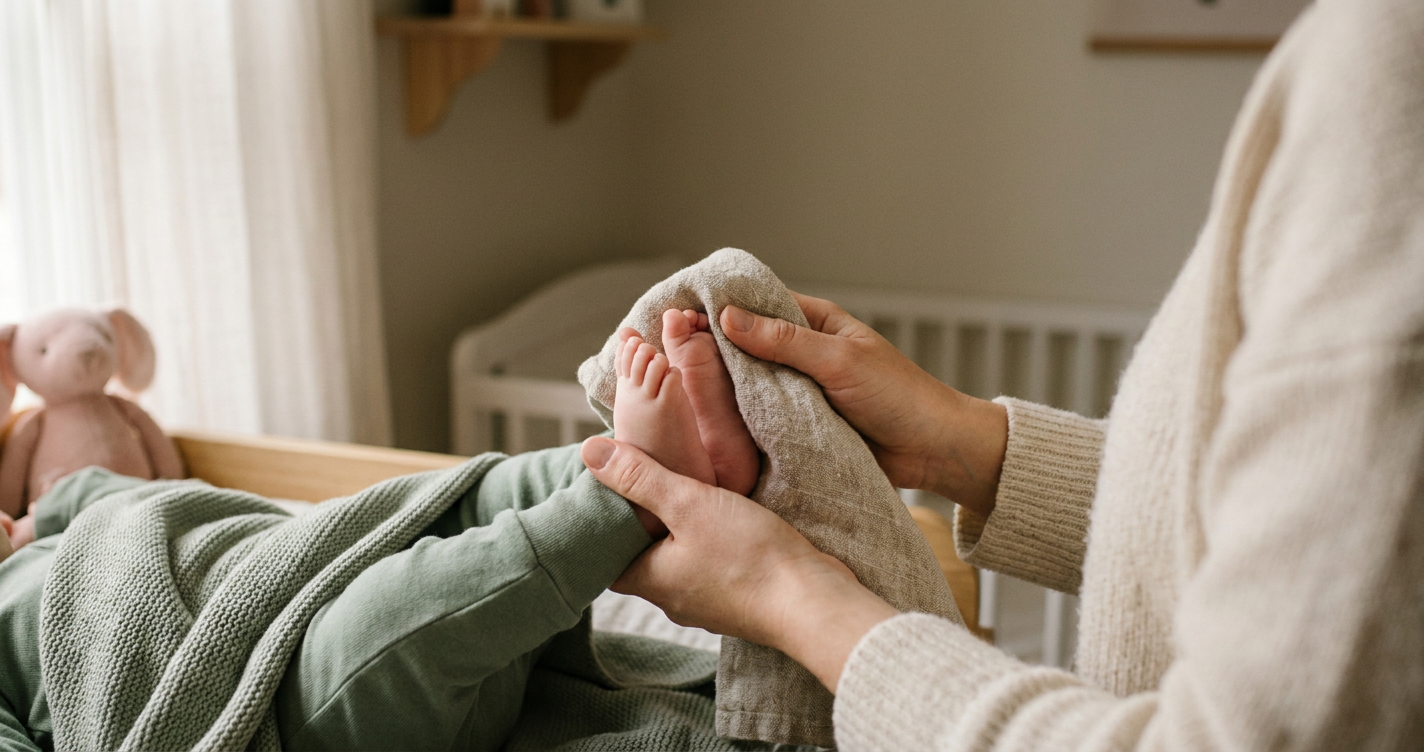
Wetting a baby’s feet is not a proven sleep aid. A calm routine, comfortable temperature and responsive settling are safer, more reliable approaches.
No, wetting a baby’s feet before bed is not known to help them sleep. There is no established evidence that putting cold or warm water on a baby’s feet improves sleep, prevents waking or helps a baby sleep for longer. Some babies may find a warm wash soothing as part of their bedtime care, while others may become more alert or uncomfortable.
If your baby enjoys having their feet gently washed, you can include it in a calm bedtime routine, but dry their skin thoroughly and keep them comfortably warm. You do not need to wet their feet to support sleep. Predictable cues, responsive settling, age-appropriate expectations and a safe sleep environment are more useful places to focus.
Why might people recommend wetting a baby’s feet?
Advice about wetting the feet may come from family traditions, cultural practices or personal experience. Water can provide a strong sensory cue: warm water may feel relaxing, while cool water may feel refreshing. A repeated activity can also become associated with bedtime.
If a baby appears sleepy after having their feet washed, the wider routine may be doing most of the work. Dim lights, a quiet voice, close contact and doing the same steps in the same order can all signal that sleep is approaching. This does not mean that wet feet themselves have a special sleep-inducing effect.
Babies also vary. One may enjoy gentle touch and warm water; another may cry when uncovered or startled by a temperature change. Responsive parenting means noticing your baby’s cues rather than persisting with a technique because it is said to work.
Could wetting the feet be uncomfortable?
Leaving a baby’s feet wet can make them feel chilly and may irritate delicate skin, especially between the toes. Very hot water can burn a baby quickly, and cold water may startle them rather than settle them. Avoid essential oils, menthol rubs, fragrances or other substances in the water unless a qualified healthcare professional has specifically advised their use for your baby.
If you choose to wash your baby’s feet before bed:
- Use comfortably warm, not hot, water.
- Test the water with the inside of your wrist or elbow.
- Keep the wash brief and gentle.
- Dry carefully, including between the toes.
- Stop if your baby becomes distressed, cold or more alert.
- Never leave a baby unattended near water, even briefly.
Check the skin before adding socks. Socks are not needed solely because the feet were washed, and tight socks can restrict movement or leave pressure marks. If socks are used for warmth, they should fit well and remain below the baby’s face.
What actually supports baby sleep?
Baby sleep is developmental. Young babies wake frequently for feeding, comfort and protection, and many do not follow a predictable schedule. Waking does not necessarily mean you have created a bad habit or that your routine has failed. You can find age-aware guidance in our baby sleep hub.
Use a short, predictable routine
A bedtime routine does not need to be elaborate. Depending on your baby’s age and preferences, it might include a feed, nappy change, sleep clothing, dimmed lights, a cuddle and a quiet song. Repeating a manageable sequence can provide consistent sleep cues.
Try to begin before your baby becomes very upset or overtired. Early tired cues can include looking away, becoming quieter, rubbing the face or losing interest in play. Cues differ between babies, so watch the baby rather than relying only on the clock.
Respond to hunger and the need for closeness
Offer feeds according to your baby’s feeding cues and the plan recommended for their age, growth and health. Feeding or cuddling a baby to sleep can be normal and comforting. You do not need to withhold reassurance to teach independence, particularly with a young infant.
If feeding is difficult, painful or stressful, support is available through your maternal health nurse, midwife, GP or an International Board Certified Lactation Consultant. Feeding concerns can sometimes appear first as unsettled sleep.
Keep the environment comfortable
Use sleep clothing suitable for the room and check your baby’s chest or the back of their neck to assess warmth. Hands and feet often feel cooler than the body and are not reliable guides on their own. Sweating, damp hair, flushed skin or a hot chest can indicate overheating.
A darkened, calm space may help at bedtime, while normal daylight and activity during waking hours can support developing day-and-night rhythms. Avoid trying to exhaust a baby or keep them awake longer in the hope of producing better sleep; overtiredness can make settling harder.
Safe sleep matters more than sleep tricks
For every sleep, place your baby on their back on a firm, flat, level sleep surface in a safety-approved cot or bassinet. Keep the sleep space clear of pillows, loose bedding, bumpers, toys, positioners and weighted sleep products. Make sure the baby’s face and head remain uncovered.
Follow the safe-sleep guidance issued by your local health authority, as recommendations and product standards can vary by country. Avoid sleeping with a baby on a sofa or armchair. If you think you may fall asleep while feeding or comforting your baby, plan ahead and ask your maternal health nurse or midwife for individual risk-reduction advice. More practical information is available through our sleep guidance for babies.
Should I add foot washing to the bedtime routine?
You may do so if it is culturally meaningful, safe and genuinely calming for your baby. Think of it as an optional hygiene or connection activity, not a treatment for sleep problems. There is no need to continue if your baby dislikes it, develops irritated skin or becomes more awake.
A full bath is not necessary every night, either. Frequent washing can dry some babies’ skin. A gentle wipe or wash of areas that need cleaning is often enough between baths. If your baby has eczema, broken skin, swelling or a rash on the feet, ask a healthcare professional which products and washing routine are appropriate.
When to seek help
Contact your maternal health nurse, midwife or GP if your baby’s sleep changes suddenly, they are persistently difficult to settle, they seem unusually sleepy, feeding has become difficult, wet nappies have decreased, or you are worried about their growth, breathing, skin or general wellbeing. Also seek advice if ongoing sleep disruption is affecting your ability to cope or stay awake safely while caring for your baby.
Seek urgent medical help if your baby is difficult to wake, floppy, has blue or grey lips or skin, is struggling to breathe, has pauses in breathing, has a seizure, has signs of severe dehydration, or has a rash that does not fade when pressed. A fever in a baby younger than three months requires prompt medical assessment. Contact emergency services for severe symptoms or if you believe your baby is seriously unwell.
If your instincts tell you something is wrong, seek help. A healthcare professional can consider your baby’s age, feeding, health and sleep pattern rather than relying on a bedtime remedy.
The bottom line
Wetting a baby’s feet before bed has no established sleep benefit. A brief warm wash is generally reasonable if your baby enjoys it, provided you supervise closely, avoid extreme temperatures and dry the feet well. The most helpful approach is a simple routine, responsive comfort, attention to feeding and a safe, comfortable sleep environment.