Toilet Training Readiness: Signs Your Toddler Is Ready
Discover the physical and cognitive cues that indicate your toddler is ready to swap nappies for the toilet, with gentle guidance from Australian health experts.
When your little one begins to show an interest in the big-room-with-the-tiles, it marks a significant milestone in their developmental journey. In Australia, most families begin to consider toilet training somewhere between the ages of 18 months and three years, but as any Maternal and Child Health Nurse will tell you, there is no magic calendar date. Readiness is a unique blend of physical maturity, cognitive awareness, and emotional willingness. Taking a responsive approach means following your child’s lead, which often results in a smoother, more positive transition for everyone involved.
It is easy to feel a bit of pressure when you see other toddlers in your playgroup or at childcare making the switch, but try to remember that every child’s nervous system develops at its own pace. The aim isn’t to get it done as quickly as possible, but to help your child feel confident and capable in their body. By waiting for the genuine signs of readiness, you are setting the stage for success rather than a battle of wills. Research often cited by the Royal Children’s Hospital Melbourne suggests that starting too early can sometimes lead to a longer process, so patience really is your best tool here.
Understanding the difference between being 'trained' and being 'ready' is vital. A child who is 'trained' simply because a parent puts them on the potty every 20 minutes hasn’t necessarily mastered the internal communication between their bladder and their brain. True readiness involves the child recognising the urge before it happens and having the motor skills to do something about it. As we navigate this transition, using a baby development milestone guide can help you see where toilet training fits into their broader growth.
Physical Signs of Readiness
Before we worry about the fancy step-stools or the colourful undies, we need to look at the physical indicators. Your child’s body needs to be physiologically capable of holding urine and controlling the sphincter muscles. One of the most common signs noted by health professionals is the 'long dry spell'. If your toddler is waking up from a nap with a dry nappy, or staying dry for at least two hours during the day, it indicates their bladder capacity is increasing and they are starting to hold their urine.
Physical independence is also a factor. Can your child walk to the bathroom? Can they sit down and stand up again with ease? Most importantly, can they manage their clothing? While they don’t need to master buttons and zips just yet, being able to pull down elastic-waist trousers is a huge advantage. If you find your child frequently tugging at a wet nappy or hiding in a corner or behind the sofa to do a poo, they are demonstrating a burgeoning awareness of their bodily functions.
The Cognitive and Communication Aspect
Beyond the physical, there is a significant mental shift that needs to occur. Your toddler needs to understand simple instructions like “Let’s go to the potty” and have the vocabulary to tell you when they need to go. This doesn’t mean they need to be fluent; a simple word, a sign, or even a specific look can be enough. Many Australian parents find that using a consistent language—whether it’s 'wee-wees', 'poos', or 'bathroom time'—helps the child make the connection.
Cognitive readiness also includes a sense of imitation. Toddlers love to copy what their parents and older siblings are doing. If they start following you into the bathroom or asking what the 'big toilet' is for, they are showing a healthy curiosity. This is the perfect time to explain the process in an age-appropriate, non-clinical way. You might even find that reviewing a baby wake window calculator helps you identify the best times during the day when your child is most alert and cooperative for learning new skills.
Predictive Behaviours and Interests
Sometimes the signs are more about attitude than anatomy. You might notice your child becoming more independent in other areas, such as wanting to feed themselves or choose their own clothes. This 'I can do it myself' phase, while sometimes exhausting for parents, is a fantastic driver for toilet training. If they are showing a desire to please you and an interest in following routines, you are likely on the right track.
Another common sign is an intense dislike of being in a dirty nappy. If your toddler starts bringing you a clean nappy or pulling at a wet one because they feel uncomfortable, they are essentially telling you they are ready for a drier alternative. According to the Australian Breastfeeding Association (ABA) and other health bodies, maintaining skin integrity is important, and a child’s discomfort with wetness is an excellent natural motivator. For those still managing overnight feeds or complex routines, consulting a baby sleep tools resource can ensure that toilet training doesn’t disrupt much-needed rest.
Preparing the Environment
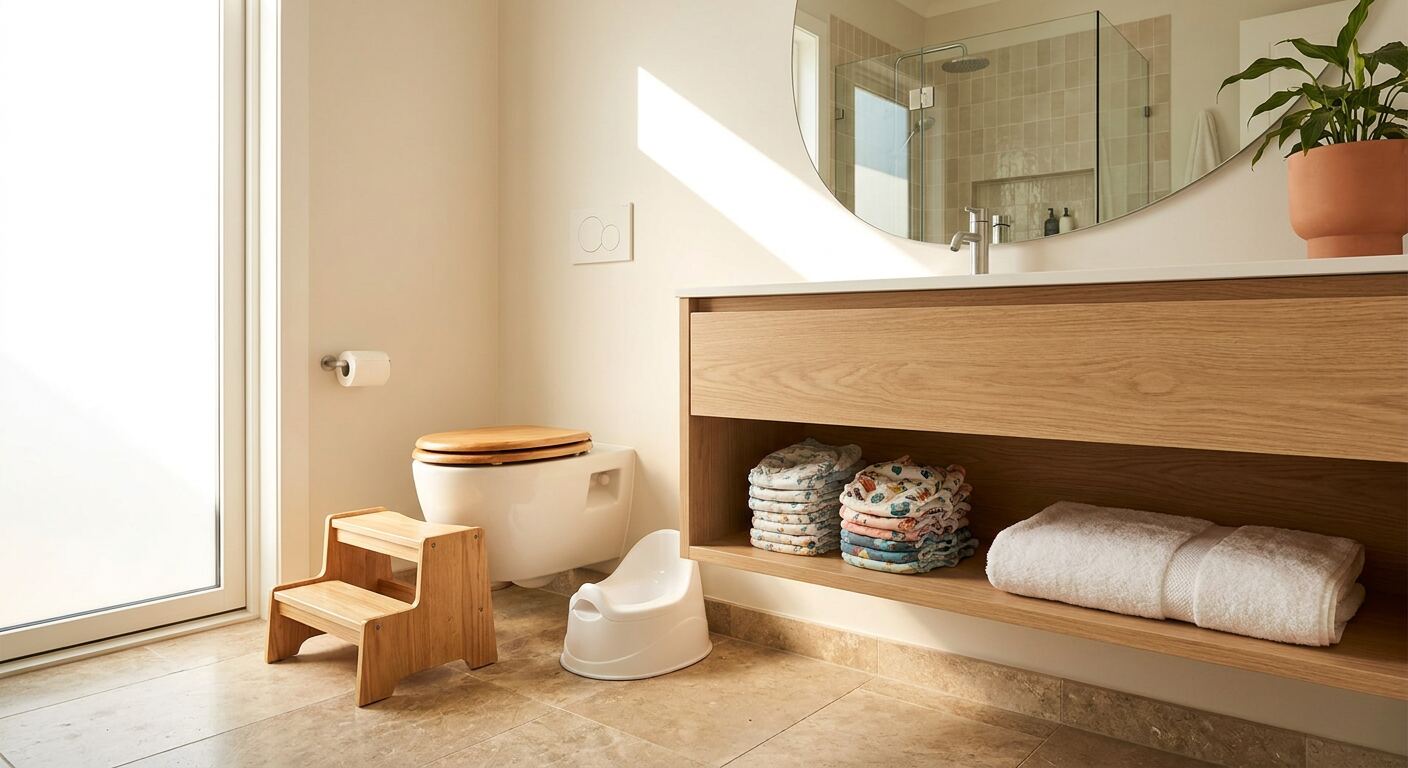
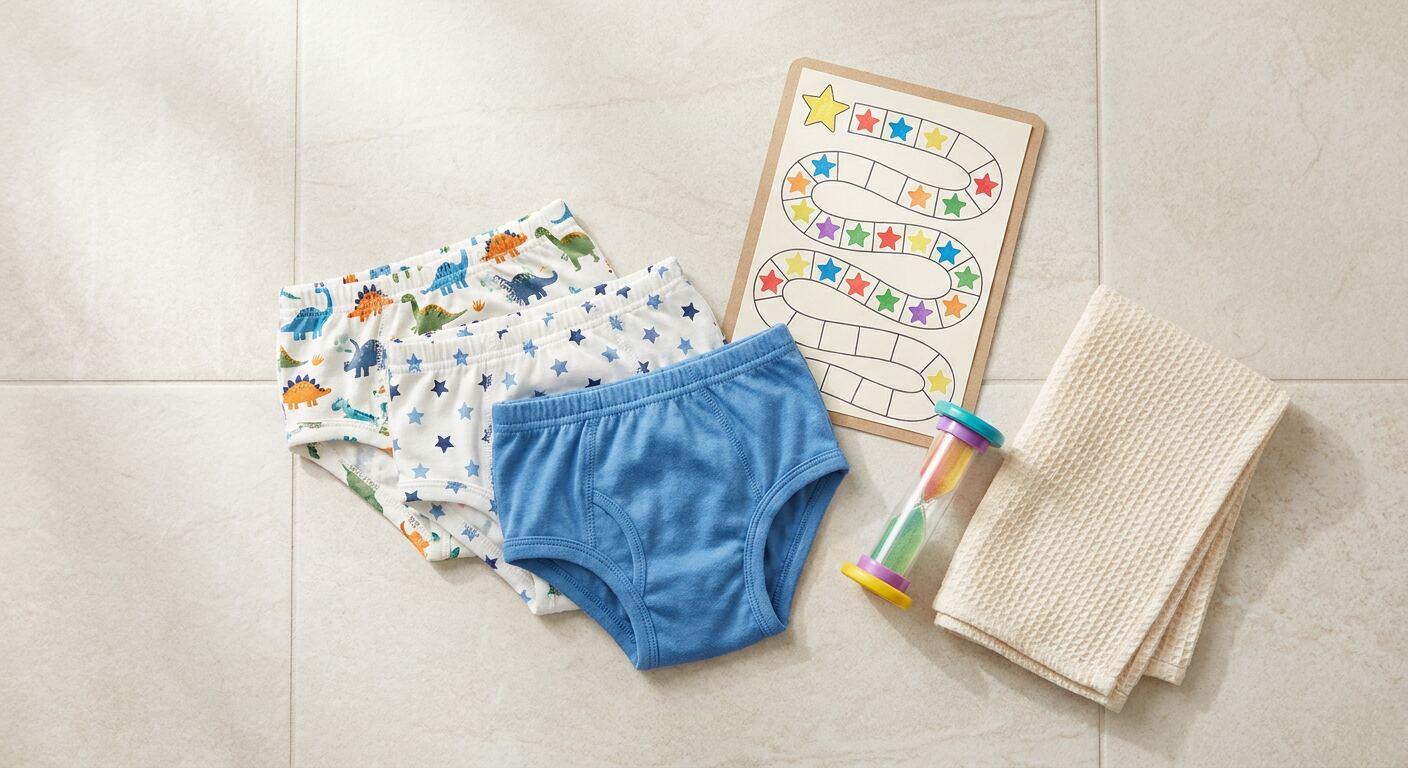
Once you’ve ticked off several readiness signs, it’s time to prepare your home. You don’t need to spend a fortune. A simple potty or a secure toddler seat for the big toilet is enough. Many families like to let their toddler pick out their own 'big kid' undies as a way to build excitement. Keep the bathroom accessible—a stable stool is essential so they feel secure and their feet are supported, which actually helps the muscles relax for easier bowel movements.
- Consistency is key: Ensure all caregivers (grandparents, daycare, partners) are using the same language and approach.
- Keep it low-pressure: If you sense resistance, it’s perfectly okay to pack the potty away for a few weeks and try again later.
- Celebrate the effort: Praise the attempt, not just the result. “Well done for sitting on the potty!” is often more effective than focusing only on a successful 'wee'.
It is also helpful to keep an eye on their digestion. Constipation can be a significant hurdle in toilet training, as it makes 'doing a poo' painful or frightening. Encouraging plenty of water and a fibre-rich diet (lots of Aussie fruits and veg) will keep things moving comfortably. If you have concerns about their health or growth during this time, you might want to ask a professional or consult your local MCH nurse for tailored advice.
“Toilet training is a marathon, not a sprint. Every dry nappy is a win, and every accident is just a part of the learning curve.” – Common wisdom from Australian Maternal Health Nurses.
The Role of 'Accidents'
In the world of responsive parenting, 'accidents' are not seen as failures but as data points. They are how your child learns the consequence of not listening to their body's signals. When an accident happens, keep your reaction neutral. A simple, “Oops, your undies are wet. Let’s go get some dry ones and try to get to the potty next time,” is far more effective than showing frustration. Shaming or scolding can lead to anxiety and may even cause a child to hold their movements, which leads to constipation.
Remember that night-time dryness is a different developmental milestone altogether. It is controlled by a hormone (vasopressin) that tells the kidneys to slow down urine production at night, and it can take several years longer than daytime training. Most Australian experts suggest focusing on daytime success first and not worrying about overnight nappies until the child is consistently waking up dry.
Every family journey is different. Some children will 'click' within a weekend, while others will take several months to feel fully confident. By staying attuned to your child’s unique signals and providing a supportive, pressure-free environment, you are helping them master an important life skill with dignity and pride. Trust your instincts as a parent, and remember that you know your child best.
This article is general information only and does not replace personalised advice from your GP, Maternal and Child Health Nurse, or paediatrician.
Related reading: toilet training readiness checker