Baby Fever: When to Worry and When to Call the GP
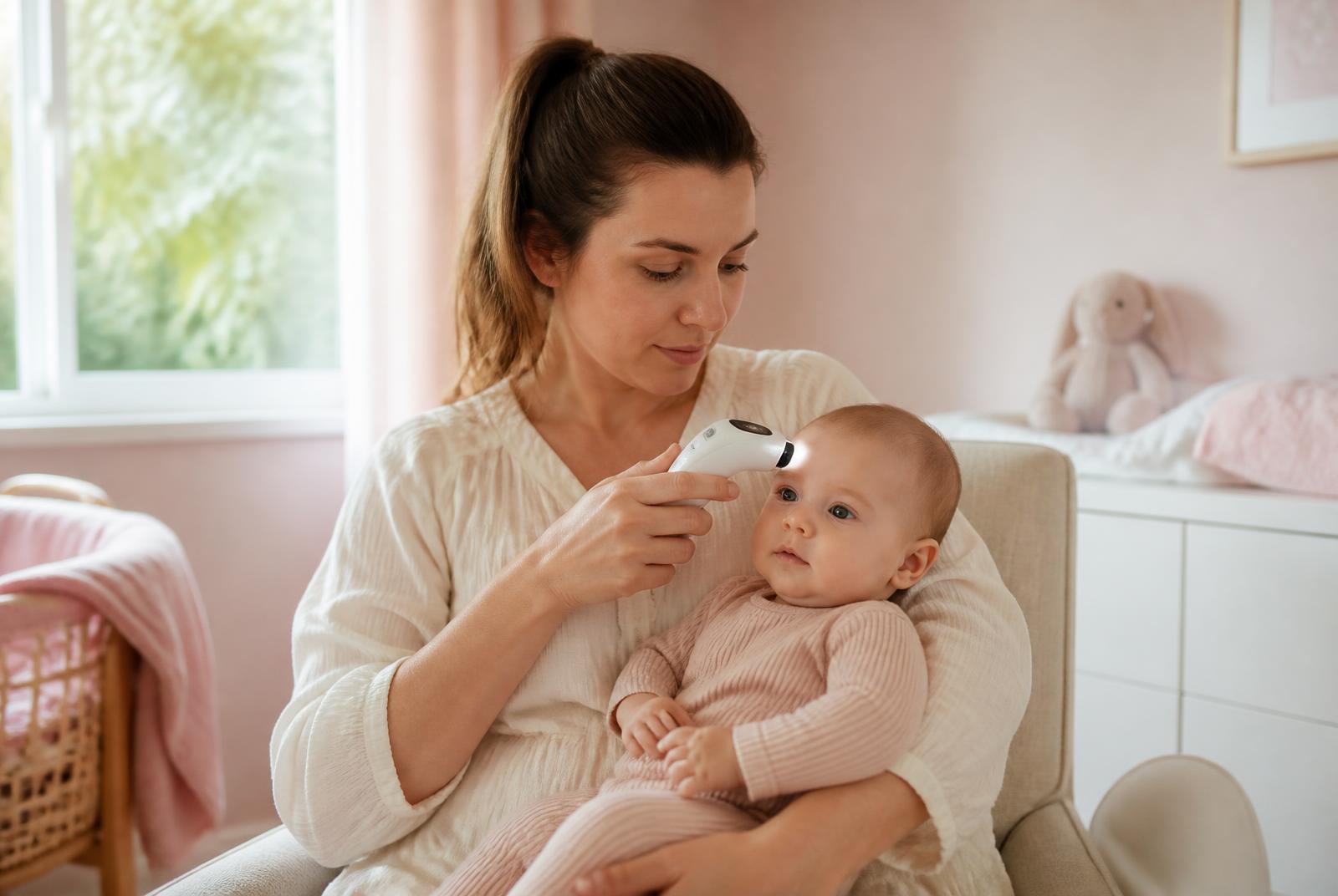
A baby's first fever is scary. Here's how to assess it calmly and know when to seek medical help.
It is the middle of the night, and you have reached into the cot to soothe your little one, only to find their skin feels uncharacteristically hot to the touch. That sudden surge of adrenaline is a feeling every Australian parent knows well, but it is important to remember that a fever itself is not an illness; rather, it is the body’s natural and healthy response to fighting off an infection. While a rising temperature can be unsettling, most fevers in babies and toddlers are caused by common viral infections that can be managed safely at home with plenty of cuddles and responsive parenting.
Understanding what constitutes a fever
In Australia, medical professionals, including those at the Royal Children’s Hospital (RCH) Melbourne, generally define a fever as a digital underarm (axillary) temperature of 38°C or higher. It is important to use a reliable digital thermometer rather than relying on the "back of the hand" method, as a baby’s extremities can often feel cool even when their core temperature is elevated. When your child develops a fever, their immune system is working exactly as it should, releasing chemicals that increase the body’s temperature to make it harder for viruses and bacteria to thrive.
The number on the thermometer is only one piece of the puzzle; how your child is acting is often a far more important indicator of their wellbeing. A baby with a temperature of 38.5°C who is still interested in playing and is taking their feeds may be less concerning than a baby with a lower temperature who is lethargic or inconsolable. To help keep track of these shifts, many parents find using a baby tracker helpful for noting down temperature readings, wet nappies, and feed times to share with their GP or Maternal Child Health Nurse.
- Normal temperature: Between 36.5°C and 37.5°C.
- Low-grade fever: 37.6°C to 38.4°C.
- High fever: 38.5°C and above.
The golden rule for newborns (under 3 months)
The advice for managing a fever changes significantly based on your baby’s age. For infants under three months of age, any fever of 38°C or higher is considered a medical priority. Because a newborn’s immune system is still developing, they can become quite unwell very quickly, and they may not show the typical signs of severe illness that older children do. If your newborn feels hot or records a high temperature, you should take them to the nearest hospital emergency department or contact 13 HEALTH immediately for over-the-phone triage.
During these early months, it is vital to monitor their hydration and general responsiveness. If you are unsure why your little one is acting out of character or if the heat is affecting their feeding, you might find yourself asking, "why is my baby crying?"—and in the context of a fever, it is always best to err on the side of caution. Doctors will often perform a thorough check to rule out any serious bacterial infections, providing you with peace of mind that your newest family member is safe.
Comfort measures and home care
If your baby is over three months old and appears otherwise happy, your primary goal is comfort rather than simply making the number on the thermometer go down. You do not always need to treat a fever with medication unless the fever is causing your child distress. If they are miserable, paracetamol or ibuprofen (if they are over three months and not dehydrated) can be used according to the dosage instructions on the bottle or as advised by your pharmacist or GP. Always check the dose based on your child's current weight rather than their age.
Maintaining hydration is the most critical element of home care. Fever causes the body to lose fluids more quickly, so offer frequent breastfeeds or bottles. If you are concerned about whether your baby is getting enough fluids during an illness, you can use a baby formula milk intake calculator or monitor for at least six heavy wet nappies in a 24-hour period. Other ways to help include:
- Dressing your baby in a single layer of light clothing (avoid over-wrapping or "sweating out" the fever).
- Ensuring the room is a comfortable temperature, ideally between 18°C and 20°C.
- Providing plenty of skin-to-skin contact, which can help regulate a baby's heart rate and provide significant emotional reassurance.
- Avoiding cold baths or sponges, as these can cause shivering, which actually raises the body's core temperature.
Fever and sleep: What to expect
When a baby is unwell, their sleep patterns will almost certainly be disrupted. You may find they are more wakeful, or conversely, more sleepy than usual. While it can be tempting to let an unwell baby sleep for long stretches, you should still wake them for "dream feeds" to ensure they stay hydrated. Following Red Nose Australia safe sleep guidelines remains essential, even when a baby is sick; ensure they are placed on their back in a clear cot space, and do not use extra blankets that could lead to overheating.
If the illness has thrown your usual routine into chaos, don't panic. Once the fever has passed, you can slowly work back towards your normal rhythms. If you find the disruption has led to lasting changes in how your baby settles, you can take a baby sleep and settling quiz to see how to gently get back on track. Remember, during a fever, the focus is on recovery and comfort, so don't be afraid to offer extra support and contact to help them through the night.
Febrile convulsions: A frightening but common event
For some children—roughly 1 in 30—a rapid rise in body temperature can trigger a febrile convulsion (a fit or seizure). While these are incredibly frightening for parents to witness, they generally do not cause brain damage or long-term complications. Most febrile convulsions last less than five minutes. If your child has a convulsion, stay calm, place them on their side on a soft surface, and do not put anything in their mouth. Once the seizure has stopped, you should seek medical review immediately. If it lasts longer than five minutes, call 000 for an ambulance.
When to see a doctor / health professional
While most fevers are harmless, there are specific "red flags" that require an immediate medical assessment by a GP or at an emergency department. Always trust your parental instinct; if you feel something is "not right," seek help. You should consult a health professional if your child:
- Is under 3 months of age and has a temperature of 38°C or higher.
- Appears very pale, lethargic, or is difficult to wake.
- Has a rash that does not disappear when you press a glass against it (non-blanching rash).
- Is showing signs of dehydration, such as fewer wet nappies, no tears when crying, or a sunken fontanelle (the soft spot on the head).
- Has trouble breathing, is wheezing, or is breathing very rapidly.
- Has a stiff neck or a severe headache.
- Is persistently vomiting or refuses to drink fluids.
- Has a fever that lasts for more than 48 hours.
Frequently asked questions
Should I wake my baby to give them medicine?
If your baby is sleeping soundly, there is usually no need to wake them specifically for paracetamol or ibuprofen. Sleep is a vital part of the recovery process. However, if they are due for a feed or if they seem very restless in their sleep, you can choose to administer the dose then to help them remain comfortable.
Is a fever higher than 40°C dangerous?
While a very high temperature is worrying, the height of the fever does not always correlate with the severity of the illness. In mostly healthy children, the brain has an internal thermostat that prevents the body from getting hot enough to cause damage from the fever itself. However, a temperature this high warrants a prompt medical review to identify the underlying cause.
Can teething cause a high fever?
According to the Raising Children Network, teething may cause a very slight rise in temperature (a "flushed" look), but it rarely causes a true fever over 38°C. If your baby has a significant fever, it is more likely due to a mild infection rather than a new tooth, and you should treat the symptoms accordingly.
Can I give both paracetamol and ibuprofen?
While it is possible to alternate these medications, it is usually recommended to start with one and see if it helps settle your child. Using both can lead to dosing errors. If your child remains very distressed after one type of medication, consult your pharmacist or GP for a specific schedule on how to safely alternate them.
How often should I check my baby’s temperature when they are sick?
You do not need to check their temperature every hour. It is more helpful to check it when they first wake up, before bed, or if they seem significantly more distressed or hotter to the touch. Focus more on their activity levels, their breathing, and their hydration levels than the constant flux of the digital reading.
The bottom line
Witnessing your baby’s first fever is often more traumatic for the parent than it is for the child. By staying calm, monitoring their hydration, and keeping a close eye on their general behaviour, you are already doing a wonderful job. Remember that the fever is a sign of a strong immune system doing its job. Most little ones will bounce back within a few days with nothing more than rest, fluids, and your comforting presence. If you are ever in doubt, the Australian healthcare system—from your local GP to 13 HEALTH—is there to support you around the clock.
Related reading: baby CPR guide
Related reading: whether to call your midwife
Related reading: complete baby fever guide