Teething Signs and Safe Remedies (Australian Guide)
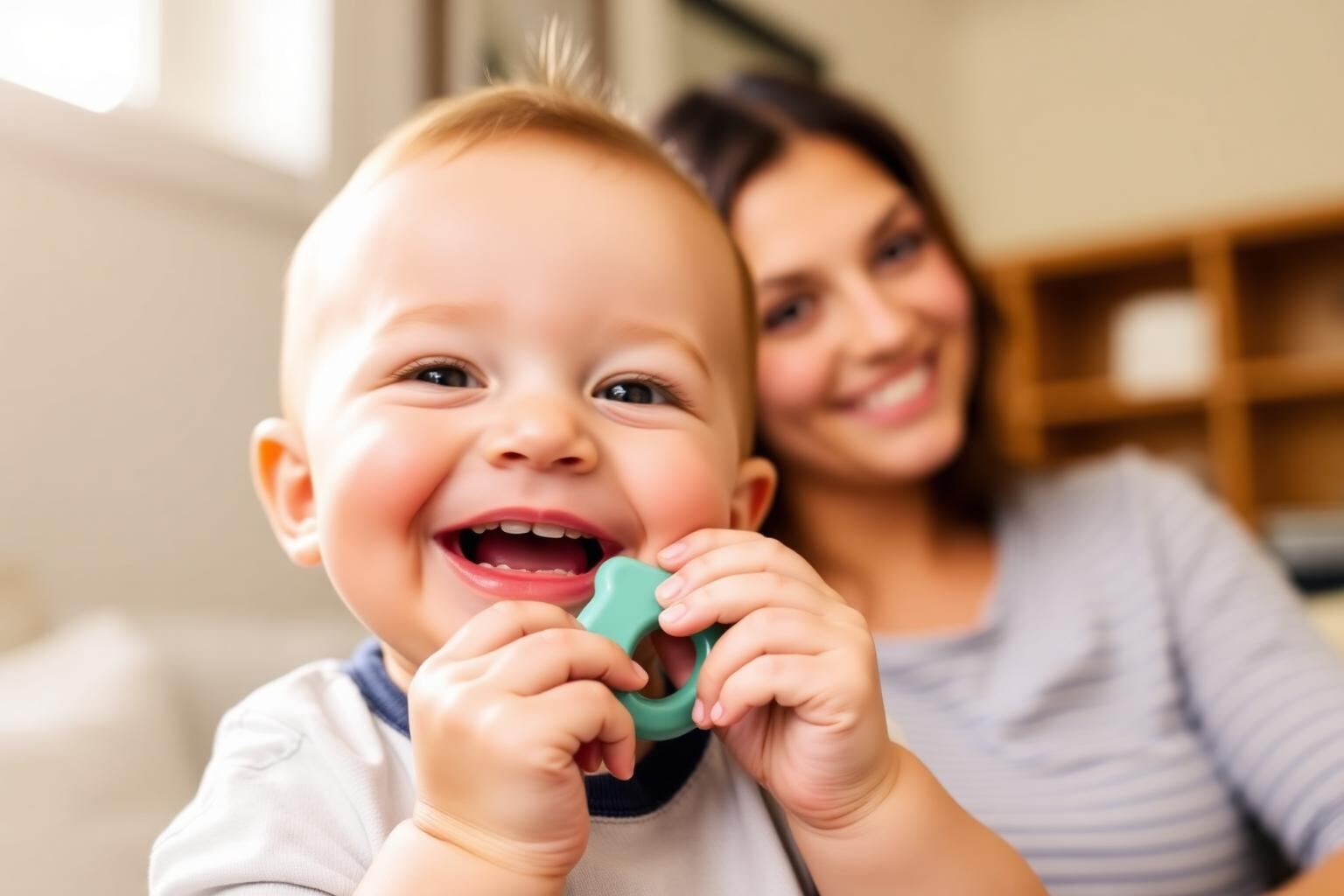
Real teething signs vs everything blamed on teeth — plus what actually helps without dodgy gels.
Teething gets blamed for a lot of things it doesn't actually cause. Here's what the Australian Dental Association and Maternal Health Nurses recommend you watch for, what genuinely helps, and which old-school remedies have quietly been pulled from Australian shelves.
When do baby teeth come through?
The first tooth usually appears between 4 and 10 months, though some babies wait until 12 months. Most have eight teeth by their first birthday and a full set of 20 by 2½. Early or late is rarely a concern.
Real teething signs
- Drooling more than usual.
- Wanting to gnaw on anything (toys, fingers, your shoulder).
- Mildly red or swollen gums.
- A bit grumpier than normal for 1–3 days around a tooth coming through.
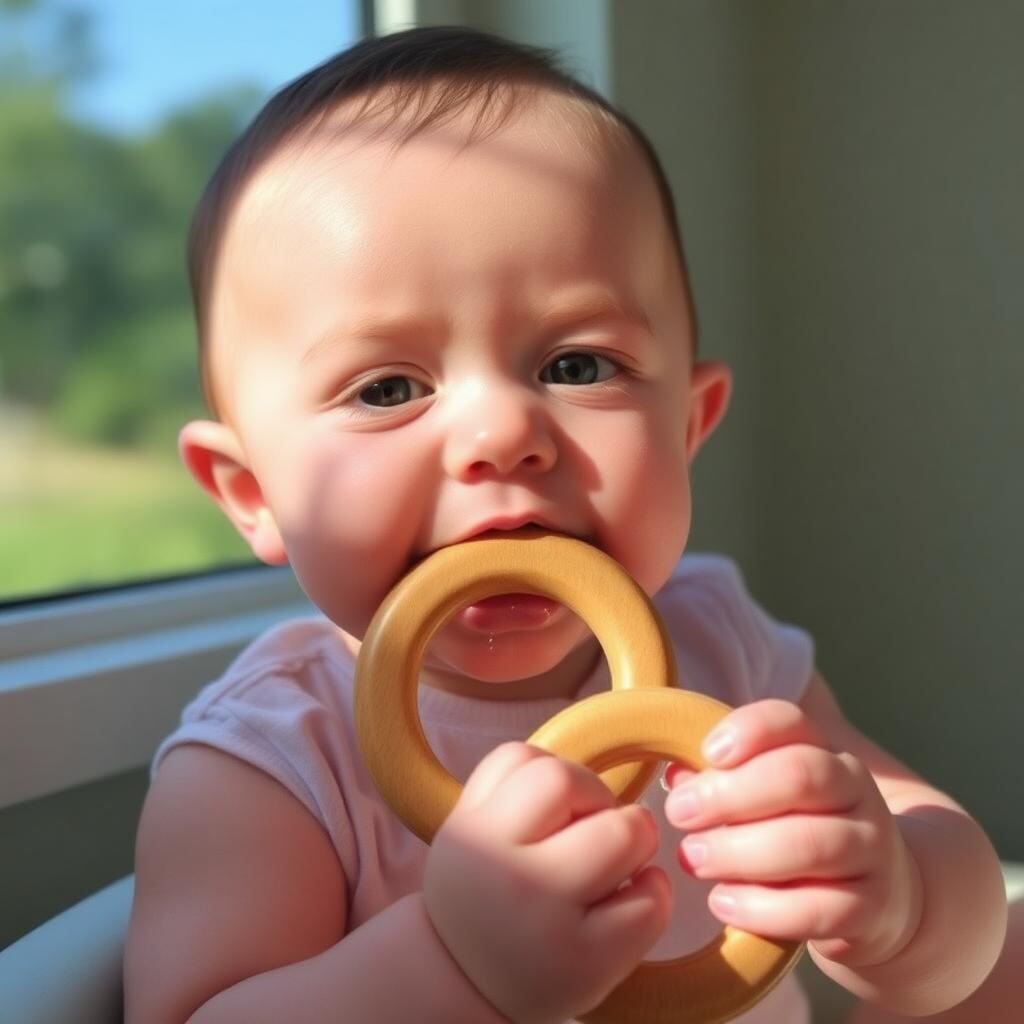
What's NOT teething
Teething does not cause high fevers, diarrhoea, vomiting, or a runny nose. If your baby has any of those, look for another cause — likely a virus — and check with your GP if symptoms persist.
Safe ways to help
- Cold (not frozen) teether. Chill in the fridge, never the freezer.
- Damp facecloth chilled for 10 minutes.
- Gentle gum massage with a clean finger.
- Infant paracetamol per packet dosing for genuine pain — confirm dose with your pharmacist.
- Extra cuddles. Connection is half the medicine.
What to avoid
The TGA warns against teething gels containing benzocaine, choline salicylate or lignocaine for infants, and amber teething necklaces are not recommended (choking and strangulation risk). Stick to a chilled silicone or wooden teether your baby can hold safely.
Keep reading
- Colic vs teething: telling them apart
- Dummies: pros, cons & weaning
- Calm parent script for tough moments
- All free parenting tools
- Personalised care plans by a Maternal Health Nurse
Frequently asked questions
Do all babies get teething pain?
No. Around a third of Australian babies cut teeth with no obvious discomfort.
Are amber necklaces safe?
No. Australian health authorities recommend against them due to choking and strangulation risk.
Can teething cause a fever?
No. A temperature over 38°C is not teething and warrants a GP review.
How long does teething last per tooth?
Usually 1–3 days of mild discomfort as the tooth breaks through.
When should I start brushing?
From the first tooth, with a soft baby brush and a smear of fluoride toothpaste — per Australian Dental Association guidance.
This article is general information and not medical advice. For personalised support, speak to your GP or call Pregnancy, Birth and Baby on 1800 882 436.
The tooth eruption order
Teeth usually appear in a predictable order, although individual variation is huge.
- 6–10 months: two bottom front teeth (lower central incisors).
- 8–12 months: two top front teeth (upper central incisors).
- 9–13 months: upper lateral incisors.
- 10–16 months: lower lateral incisors.
- 13–19 months: first molars (top and bottom).
- 16–22 months: canines.
- 23–33 months: second molars — usually the most uncomfortable.
Teething and sleep
Teething rarely causes the multi-week sleep regressions parents often blame it on. A 1–3 day blip around a tooth coming through is realistic. If sleep falls apart for two weeks, look at developmental leaps, illness, or routine drift — and use our free Sleep Coach to spot patterns.
Caring for those first teeth
The Australian Dental Association recommends:
- From the first tooth: brush twice daily with a soft baby toothbrush and water.
- From 18 months: use a smear of low-fluoride toothpaste (rice-grain sized).
- From 3 years: pea-sized standard fluoride toothpaste.
- First dental visit: by age 1 or within 6 months of the first tooth — covered free for many families under the Child Dental Benefits Schedule.
The biting-while-feeding question
Breastfeeding mothers often worry about biting once teeth come through. Babies physiologically can't bite while actively feeding — the tongue covers the lower teeth. Bites usually happen at the end of a feed when baby is winding down. A calm, neutral "no biting" and brief pause is enough to teach most babies within a few days.
Real signs to look out for
While teething itself is mild, the immune-system dip around eruption can leave babies catching more viruses. If your baby has:
- Fever over 38°C
- Diarrhoea or vomiting
- Cough or runny nose with a fever
- Pulling at one ear specifically
It's likely something other than teething. Book a GP review or call 13HEALTH for nurse advice.
Comforting a teething baby — a calm playbook
Teething days don't have to be dramatic. A predictable approach helps your baby feel safe, and helps you feel less helpless in the middle of the night.
During the day
- Offer a chilled (not frozen) silicone teether on rotation — three in the fridge means one is always cool.
- Wrap a damp facecloth, chill it for 10 minutes, and let baby gnaw.
- Cuddle, sing, distract with new visual stimulation — change rooms, go for a walk.
- Offer cool water in a sippy cup from 6 months. Hydration helps.
- Keep a clean muslin nearby — extra drool can irritate the chin. Pat (don't rub) and apply a thin layer of plain nappy cream if redness develops.
During the night
- If baby wakes and seems uncomfortable, try a feed first. Sucking is naturally soothing.
- For a clearly painful tooth, infant paracetamol per packet dosing is safe — confirm with your pharmacist.
- Cuddle in a darkened room. Avoid bright lights or stimulating play.
- Stick to your normal sleep approach as much as possible. Teething is short-term; sleep habits are long-term.
Quick reference: is this teething?
- Likely teething: drooling, gnawing, mild gum redness, 1–3 days of grumpiness, slightly disrupted sleep.
- Probably not teething: fever over 38°C, diarrhoea, vomiting, runny nose with cough, ear-pulling with discomfort.
- Definitely see your GP: any of the above plus poor feeding or unusual sleepiness.
The long game
You will spend roughly 2½ years of weeks-here-and-there in the teething phase. Build a small kit — two teethers, a tube of nappy-rash cream for the chin, infant paracetamol, and a stack of bibs — and you'll handle each tooth with a fraction of the stress. Most parents look back at teething as one of those phases that felt bigger in the moment than it really was.
Trusted Australian sources for further reading
- Raising Children Network — Australia's government-funded parenting site, packed with evidence-based articles and short videos.
- Royal Children's Hospital Melbourne — Kids Health Info — clinician-written fact sheets covering common newborn and toddler concerns.
- Australian Breastfeeding Association (ABA) — free helpline on 1800 686 268, seven days a week, staffed by trained breastfeeding counsellors.
- Pregnancy, Birth and Baby — free telehealth advice on 1800 882 436.
- healthdirect 13HEALTH — registered nurse advice 24/7 (1800 022 222 in most states).
- Tresillian & Karitane — free or low-cost sleep, settling and parenting support across NSW, ACT and increasingly nationwide.
- Red Nose Australia — current safe-sleep guidance for every age and stage.
A note from our Maternal Health Nurse team
This article was reviewed by a registered Australian Maternal & Child Health Nurse on our editorial team. Our goal is to give you calm, accurate, evidence-based information that respects your instincts and your family's individual circumstances. We do not replace your own GP, MCH nurse, paediatrician or other treating clinician — but we hope we make the in-between moments easier.
If you'd like personalised guidance, our care plans are written by a registered Maternal Health Nurse and delivered to your inbox within 24 hours. They cover sleep, feeding, settling, behaviour and developmental concerns. Free tools — including our Baby Tracker, Sleep Coach and Ask Genie AI Midwife — are always available with a free account.
Above all, trust yourself. You know your baby better than anyone in the world.