When Do Babies Start Teething? A Maternal Health Nurse's Guide
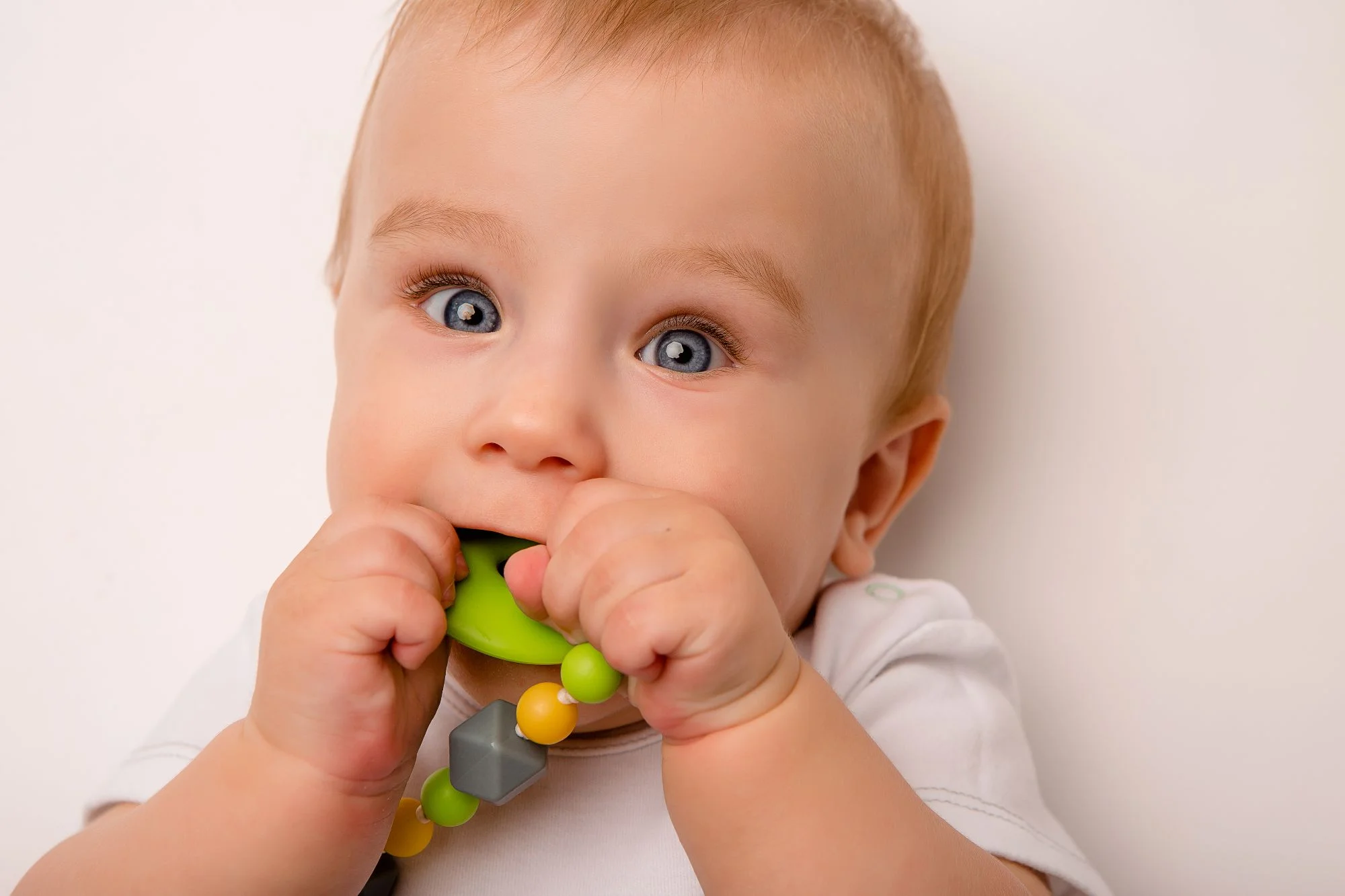
Most babies start teething between 4 and 7 months. A Maternal Health Nurse walks through the typical age, teething order, signs, fever myths, and safe soothing.
If your little one is suddenly drooling, chewing on everything in sight, and waking more at night, you're probably wondering when do babies start teething — and whether what you're seeing is the real thing. Most babies start teething between 4 and 7 months, though some get their first tooth as early as 3 months and others not until after their first birthday. All of that is normal.
This guide, written with input from a Maternal Health Nurse, walks you through the typical teething age, the teething order of baby teeth, the most reliable signs of teething, what to do about teething fever, and the safest ways to soothe a sore little mouth — plus what to avoid.
When do babies start teething?
The short answer: most babies start teething around 6 months, with a normal range of 4 to 7 months for the first tooth to break through. A small number of babies are born with a tooth already visible (called a natal tooth), and others won't cut their first tooth until 12–15 months. Late teething on its own is rarely a concern.
By their first birthday, most babies have 6–8 teeth. By age 3, the full set of 20 baby teeth is usually in place.
What age do babies start teething? Quick reference
- 3 months — Drooling and chewing begin (often not actual teething yet)
- 4–7 months — First tooth appears, usually a lower front tooth
- 8–12 months — Upper front teeth follow
- 12–18 months — First molars
- 16–22 months — Canines (the "pointy" teeth)
- 23–33 months — Second molars complete the set
Baby teeth chart: the teething order
Baby teeth almost always come through in the same predictable teething order:
- Lower central incisors (bottom front) — 6–10 months
- Upper central incisors (top front) — 8–12 months
- Upper lateral incisors — 9–13 months
- Lower lateral incisors — 10–16 months
- First molars (top and bottom) — 13–19 months
- Canines — 16–22 months
- Second molars — 23–33 months
The first molars and canines are often the hardest stretch for babies — those teeth are bigger and take longer to push through, so symptoms can feel more intense.
Signs your baby is teething
The most reliable baby teething symptoms are localised to the mouth:
- Excessive drooling (often soaking through bibs)
- Chewing and biting on hands, toys, cot rails — anything they can reach
- Red, swollen gums, sometimes with a visible white bump where the tooth is about to break through
- A small, hard lump you can feel by running a clean finger over the gum
- Increased fussiness or clinginess, especially before naps and bedtime
- Disrupted sleep for a few nights around an emerging tooth
- Slight drop in appetite because sucking can be uncomfortable
- Mild rash on the chin or chest from constant drool (not a true allergic rash)
- Wanting to feed more often for comfort
Real teething vs. mistaken-for-teething
Drooling and chewing start as early as 3 months — long before most babies are actually teething. Many parents assume every grizzly stretch in the second half of the first year is teething, but it's just as often a sleep regression, a developmental leap, or a minor illness. The clearest tell: when teething is the real cause, you can usually see or feel a swollen gum, and the fussiness settles within a few days of the tooth breaking through.
Does teething cause fever?
This is the most-asked question about teething, and the answer matters. According to the Royal Children's Hospital and major child-health authorities, teething does not cause a true fever. Teething can cause a very slight rise in temperature — up to about 38°C (100.4°F) — but anything higher should be treated as an illness, not teething.
Call your Maternal Health Nurse or GP if your baby has:
- A temperature of 38°C or higher (or 38.5°C in a baby over 3 months, depending on local guidance)
- Diarrhoea, vomiting, or a runny nose with significant mucus
- A rash that doesn't fade when you press a glass to it
- Pulling at the ears or unusual lethargy
- Refusing all feeds for more than a few hours
These are signs of infection, not teething pain, and need proper assessment.
How to soothe a teething baby
Most babies need only simple comfort measures. Here's how to soothe a teething baby safely:
Cold pressure on the gums
- A chilled (not frozen) silicone teething ring — 15 minutes in the fridge is plenty
- A clean, damp washcloth twisted at one end and chilled for 20 minutes
- Cold breast milk in a mesh feeder for babies already on solids
Gum massage
Wash your hands and gently rub the swollen gum with a clean finger for 1–2 minutes. The counter-pressure is genuinely soothing, and it's something you can do during a 3 a.m. wake-up without any equipment.
Safe teething toys
Look for one-piece silicone or natural rubber teethers with no small parts, no liquid filling, and no detachable beads.
Pain relief (when needed)
If your baby is clearly distressed and the comfort measures aren't enough, infant paracetamol is safe from 1 month, and infant ibuprofen is safe from 3 months — always at the dose recommended for their weight, and only if they're otherwise well. If you're unsure, your pharmacist or Maternal Health Nurse can confirm.
Extra responsive parenting
Teething is uncomfortable, and your baby is asking for comfort the only way they know how. Extra cuddles, contact naps, and shorter awake windows for a few days are a perfectly reasonable response — you're not creating bad habits, you're meeting a short-term need.
What NOT to use for teething
- Amber teething necklaces — pose strangulation and choking risks; the TGA, ACCC, and FDA all warn against them. There is no evidence amber transfers anything pain-relieving through the skin.
- Benzocaine gels — linked to methaemoglobinaemia, a rare but serious blood condition, in babies under 2.
- Frozen (rock-hard) toys or food — can bruise gums and crack emerging teeth. Chilled, not frozen, is the rule.
- Homeopathic teething tablets with belladonna — recalled in several countries for inconsistent dosing.
- Adult painkillers or aspirin — never appropriate for babies.
Teething and sleep: what to expect
Teething at night feels worse because there are fewer distractions, gravity pools blood in the gums when your baby is lying down, and overtiredness lowers their threshold for discomfort. Expect 2–4 disrupted nights around each new tooth, then a return to your usual baseline.
If night-waking lasts more than a week, has no visible gum changes to match, and is paired with overall fussiness during the day, it's worth considering whether you're actually in a sleep regression rather than a teething phase. Our Baby Sleep Coach tool can help you tell the difference based on your baby's age and pattern.
Oral care for new teeth
As soon as the first tooth appears:
- Brush twice a day with a soft infant toothbrush and a smear (rice-grain size) of low-fluoride toothpaste (under 18 months) or standard family toothpaste from 18 months, per Australian Dental Association guidance.
- No bottles in the cot — milk pooling around new teeth causes early decay.
- Book a first dental check by age 1, or within 6 months of the first tooth.
When to call your Maternal Health Nurse
Reach out to your Maternal Health Nurse, GP, or child health line if:
- No teeth have appeared by 15–18 months
- Teeth come through discoloured, chipped, or in an unusual position
- Your baby has a true fever (38°C+), diarrhoea, or vomiting
- Pain seems severe and isn't settling with normal comfort measures
- You see white spots on the new teeth (early decay)
Most teething just needs patience, cold pressure, and reassurance. You're doing the right thing simply by paying attention.
When do babies start blowing raspberries?
When do babies start blowing raspberries?
Many babies begin blowing raspberries at around 4–6 months, although there is a wide range of normal. Some discover this noisy skill earlier, while others take longer or barely do it at all.
To make a raspberry, your baby presses their lips together and pushes air and saliva through them. This helps them experiment with lip, tongue and breath control—skills that later contribute to babbling, eating and speech. It is also social: babies often repeat raspberries when an adult smiles, copies them or responds.
Are raspberries a sign of teething?
Not necessarily. Raspberry blowing often appears during the same period as increased drooling, chewing and early teething, so the two can seem connected. However, babies also produce more saliva and explore their mouths as part of normal development. Raspberries alone do not mean that a tooth is about to appear.
If your baby has swollen gums, wants to chew and seems temporarily unsettled, teething may be happening too. A temperature of 38°C or higher, marked lethargy, vomiting, diarrhoea or significant feeding difficulty should not be put down to teething.
How to encourage this skill
- Copy their sounds: Pause and let your baby respond, creating a simple back-and-forth conversation.
- Use face-to-face time: Smile, talk and make gentle lip sounds while your baby is alert and comfortable.
- Expect mess: A soft bib can help protect irritated skin; gently pat the chin dry rather than rubbing.
- Keep it pressure-free: Babies develop differently, and there is no need to teach or test this particular skill.
When to seek advice
Not blowing raspberries by itself is rarely a concern. Speak with your maternal and child health nurse, midwife or GP if your baby is not responding to sounds, rarely makes eye contact or vocal sounds, has lost skills, or has ongoing coughing, choking or difficulty feeding. Call emergency services if your baby is struggling to breathe, turns blue or becomes unresponsive.
Related reading: signs of hand, foot and mouth disease
Related reading: pulling up and cruising milestones
Related reading: handling bottle refusal
Related reading: mouth ulcers in toddlers
Related reading: signs of a burst eardrum
Related reading: baby tooth eruption order